The Iris – One of Springtime’s Most Loved Flowers

The iris is truly one of the most beautiful of all springtime flowers. There are hundreds of varieties, and come in virtually every color of the rainbow. It is also one of the simplest flowers to grow.

Preparing the garden for Iris is as easy as finding a sunny spot with good drainage. I mixed about 1/3 each of sand, compost, and soil for my iris garden. Place the rhizomes flat on the soil, and space them a few inches apart. Lightly sprinkle about 1/4 inch of soil on top. From there, let nature take over. You will be rewarded with gorgeous blooms each spring.

The blooms last a long time, in many varieties more than a month from start to finish. Although, like most flowers, the weather has much to do with that. If you experience heavy rain or high heat while the iris is in flower, it may shorten the bloom time. My tip on that is to check the news, and if these are in the forecast, treat yourself to a beautiful bouquet to cut and enjoy indoors!

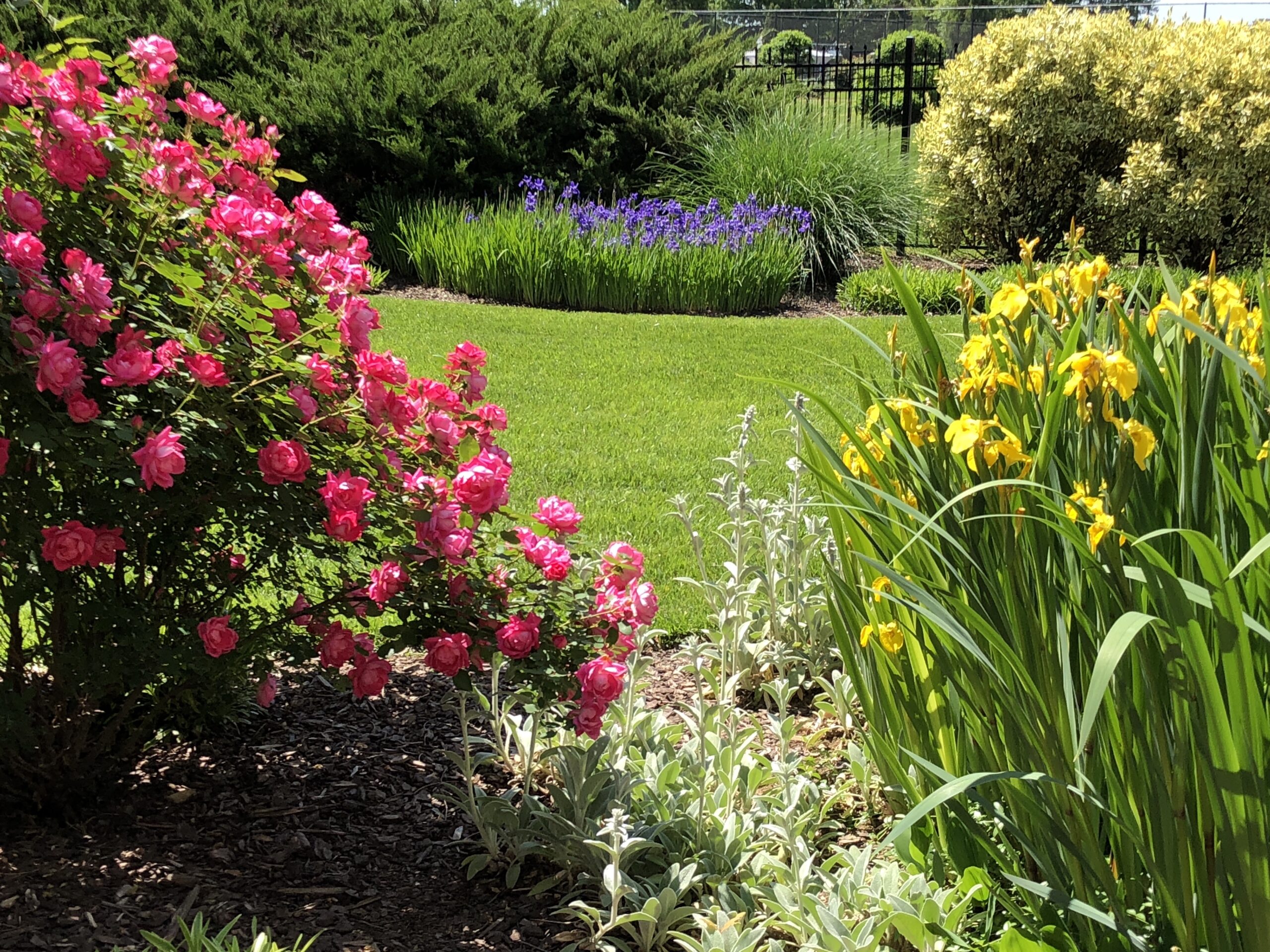
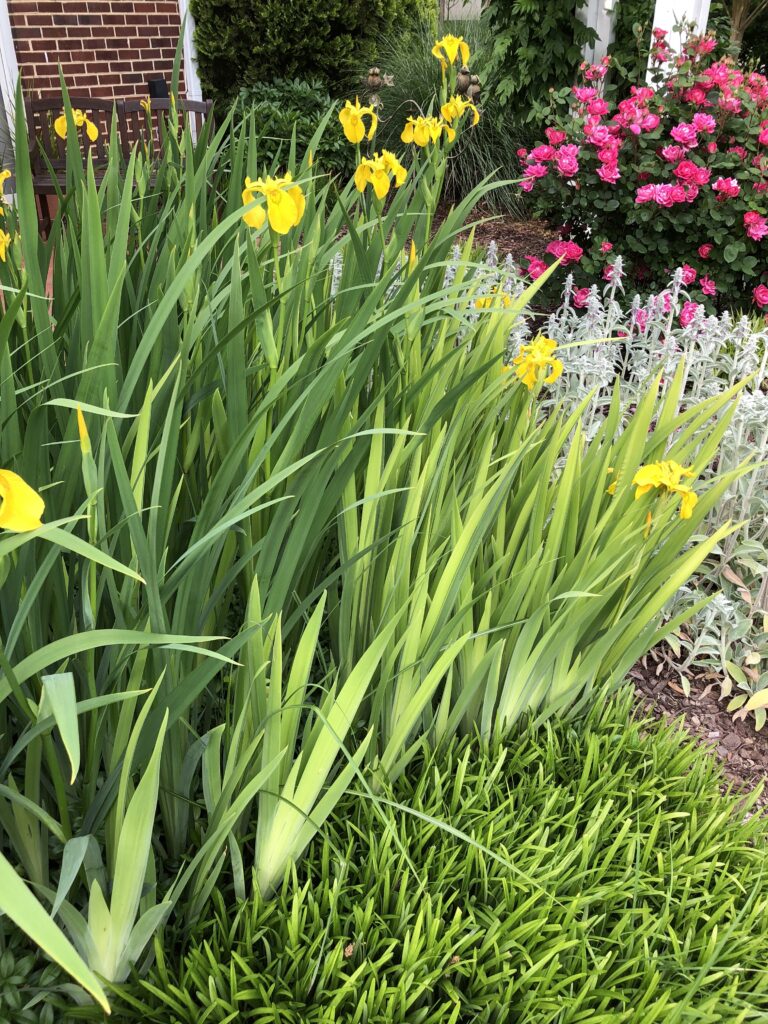
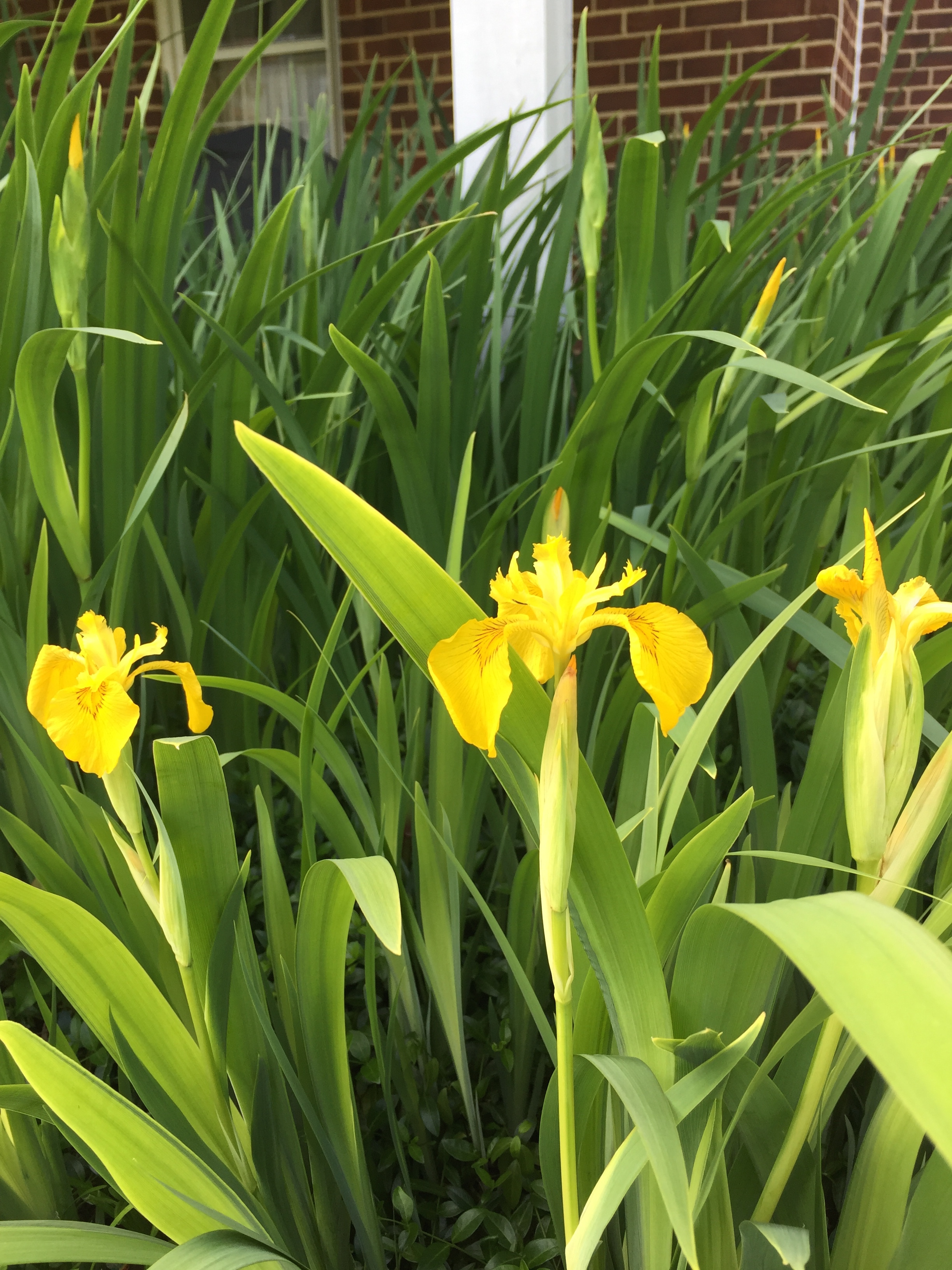
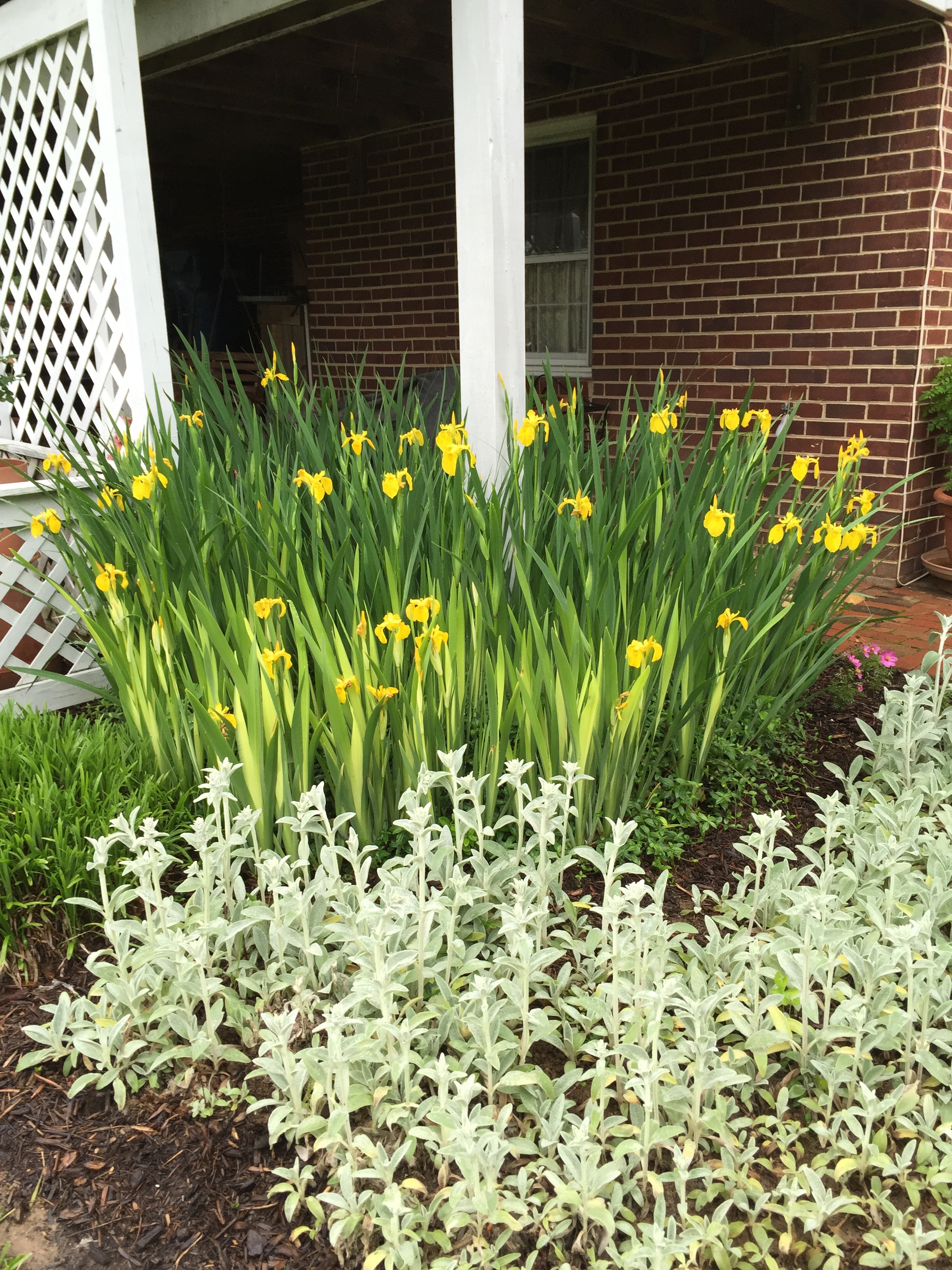
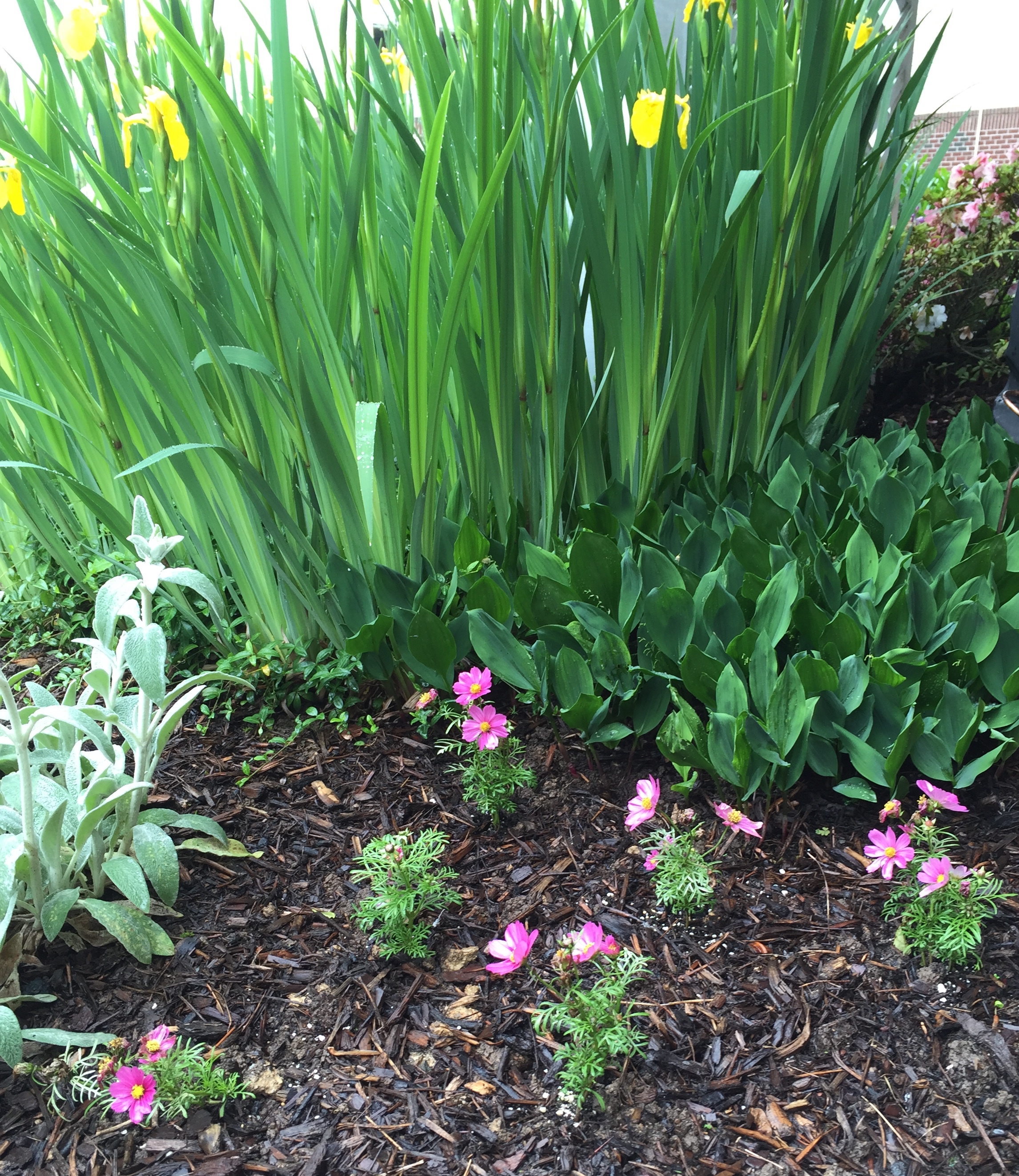
This yellow flag Iris was a gift from a neighbor.

You will need to check every few years for overcrowding. When that happens, just dig out every other rhizome. Check for soft spots, and if you find any simply cut them out and discard. Irises make one of the most desired gifts to other gardeners, so be sure to share your spares! I have three varieties in my yard, all originally given to me by gardening neighbors. My yellow flag iris was originally from one neighbor’s grandmother, who received it back in the 1800′s.

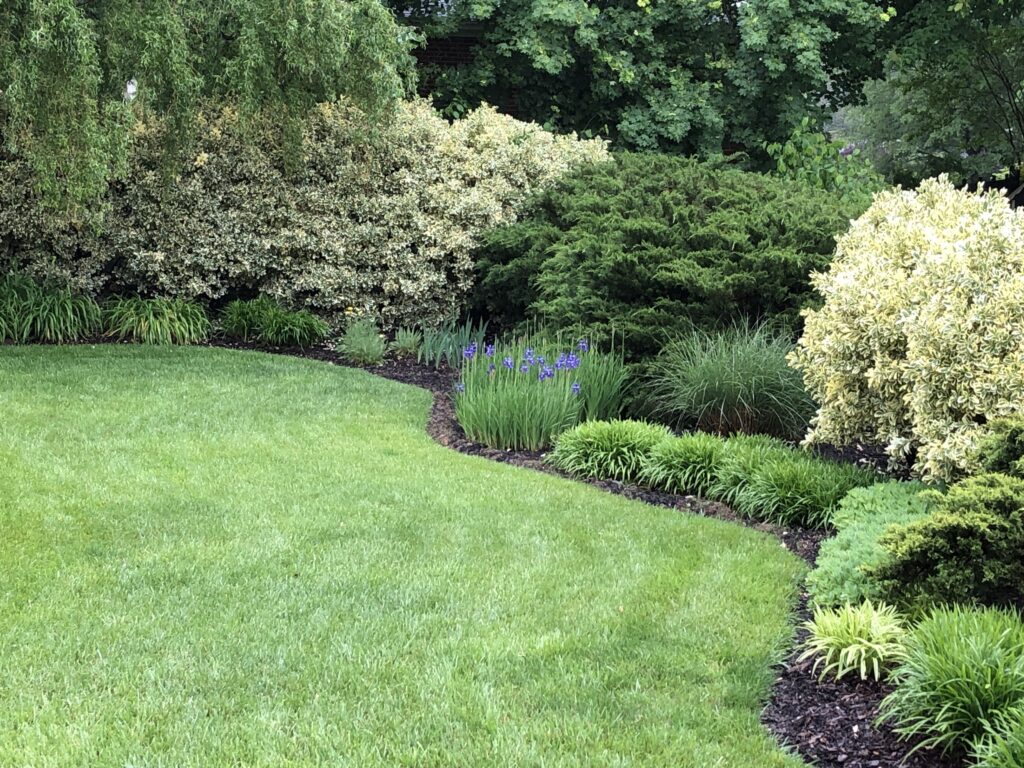
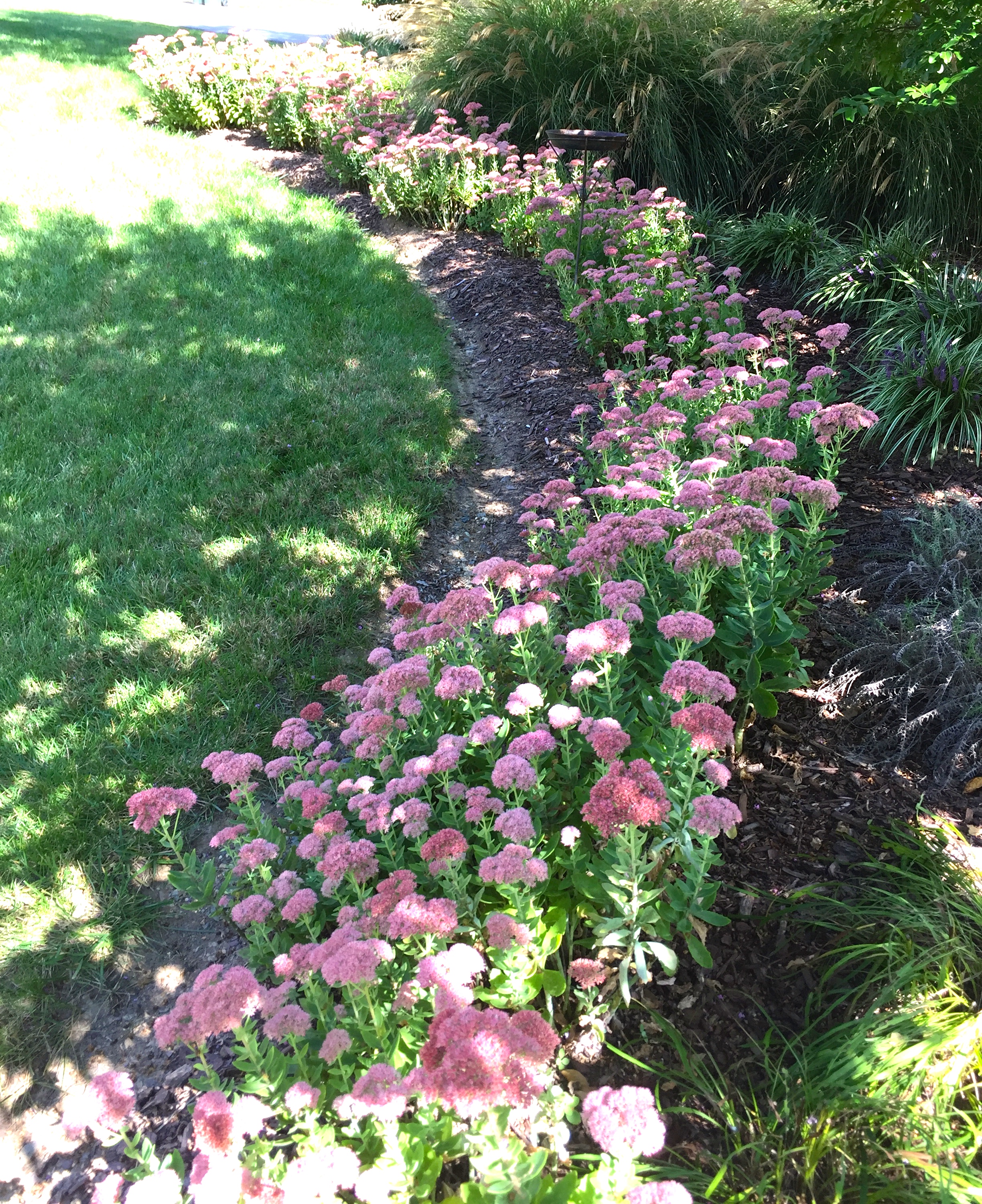
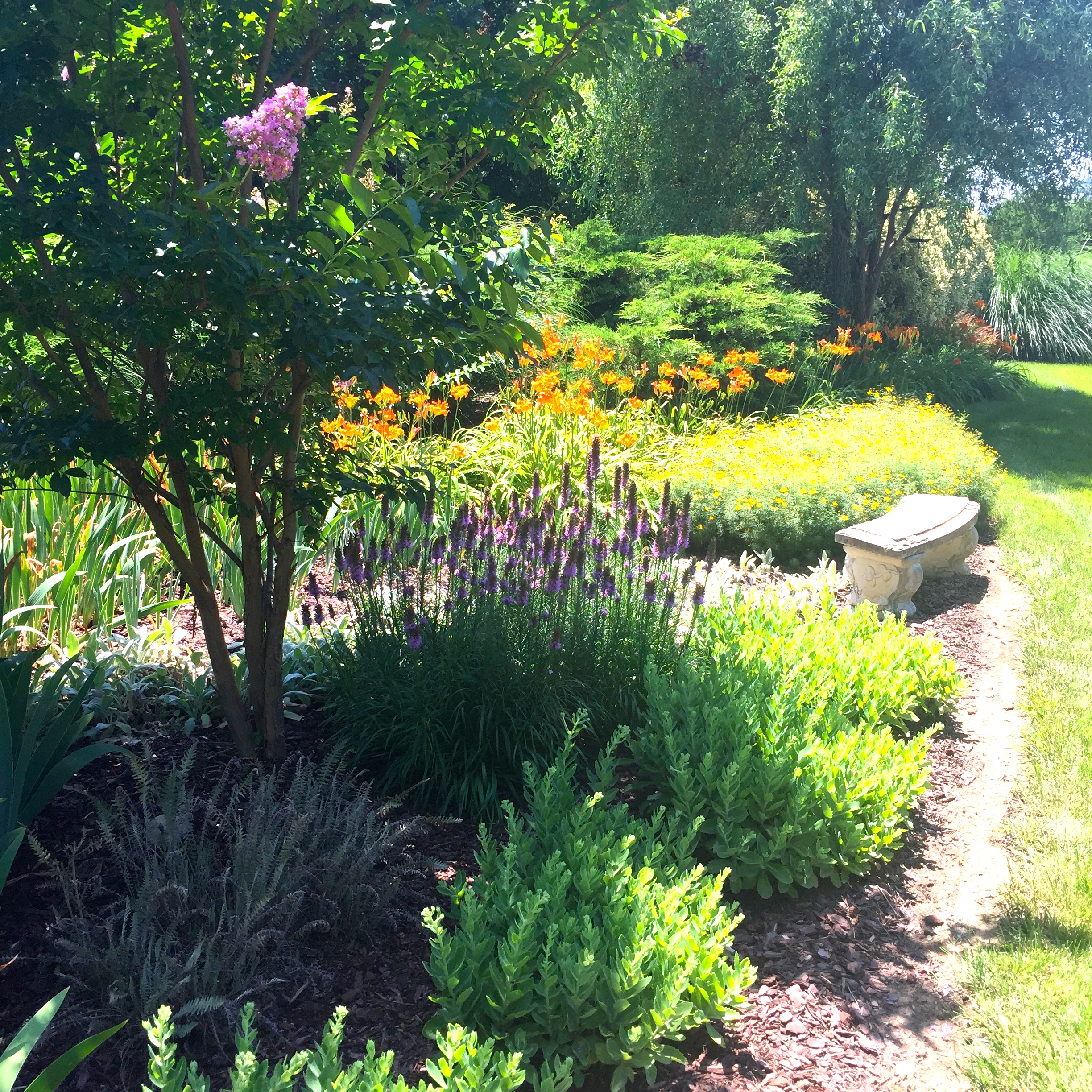
The picture at the top of this post is one from my former neighborhood. This homeowner has devoted his entire front yard to iris. When they are blooming, there is a steady stream of people walking and driving by to gaze. He started collecting them decades ago, and now has more than 100 varieties.

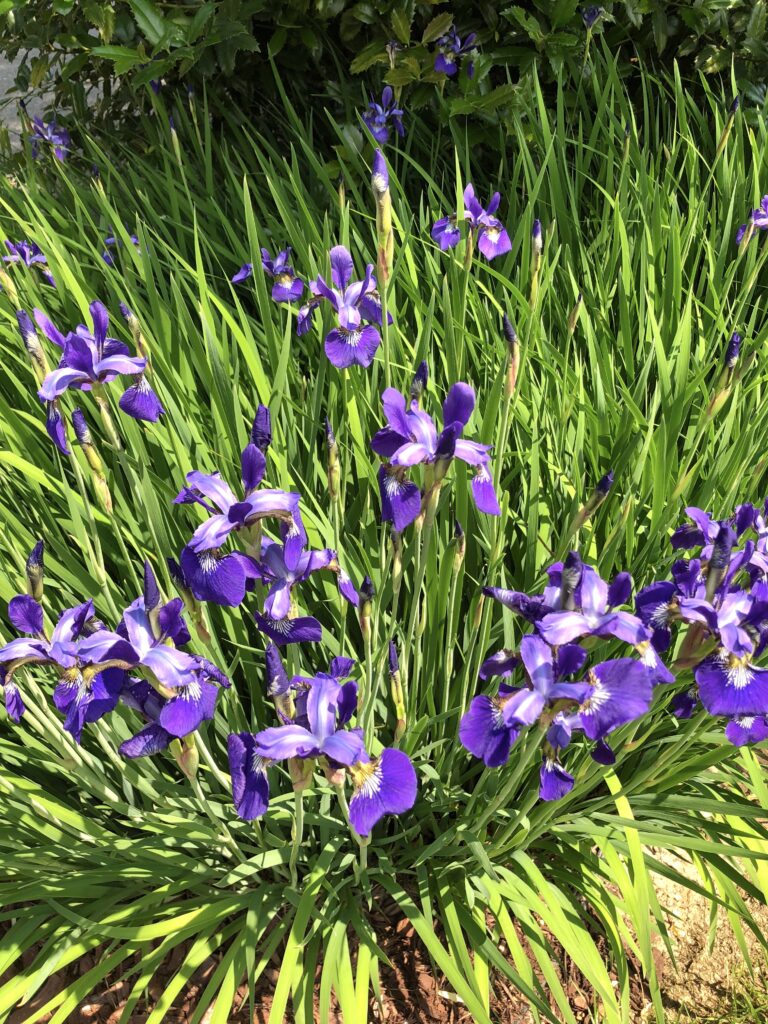
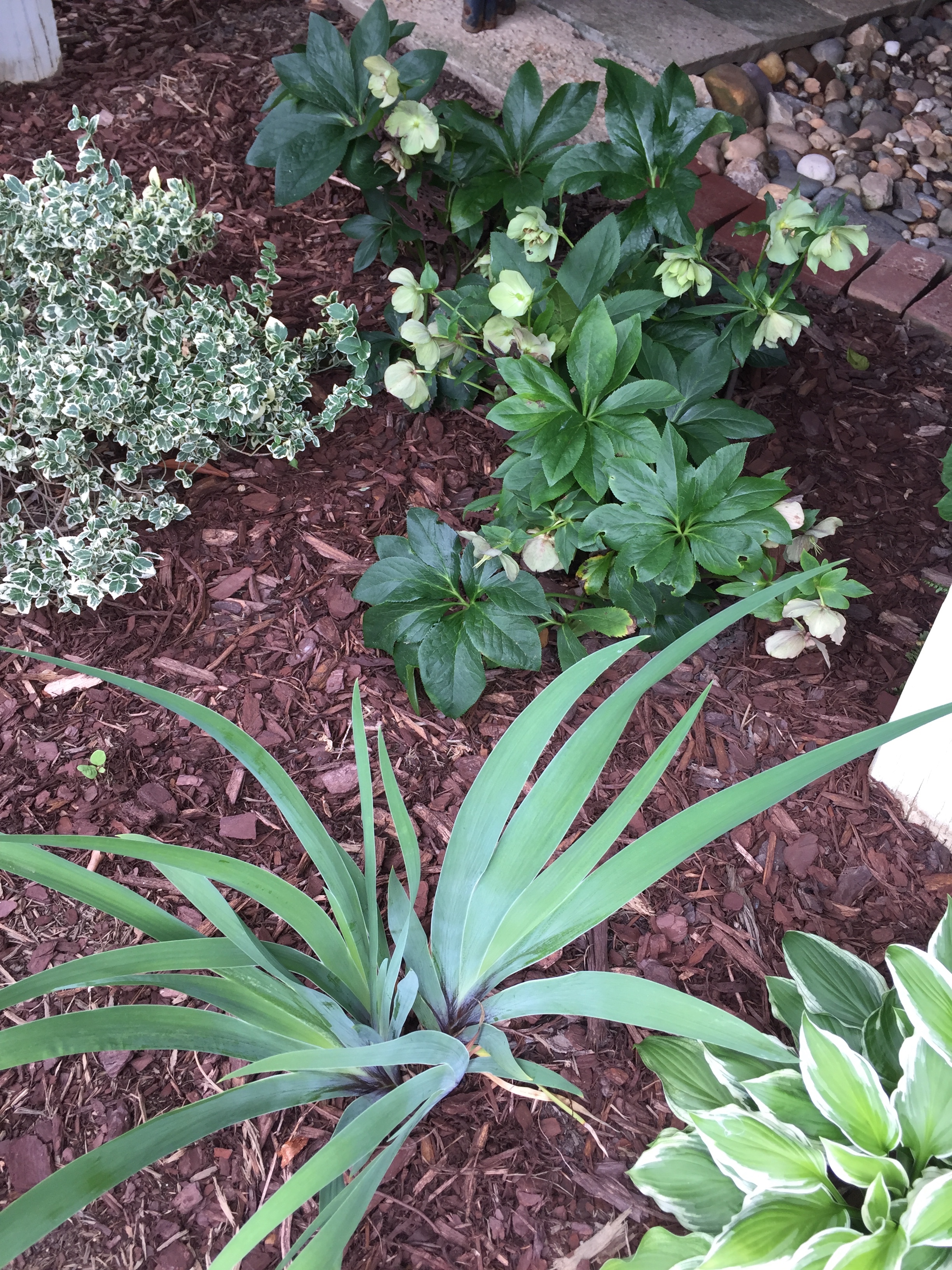
These blue iris in my side yard are small, only about 15 inches tall, with very fine leaves.

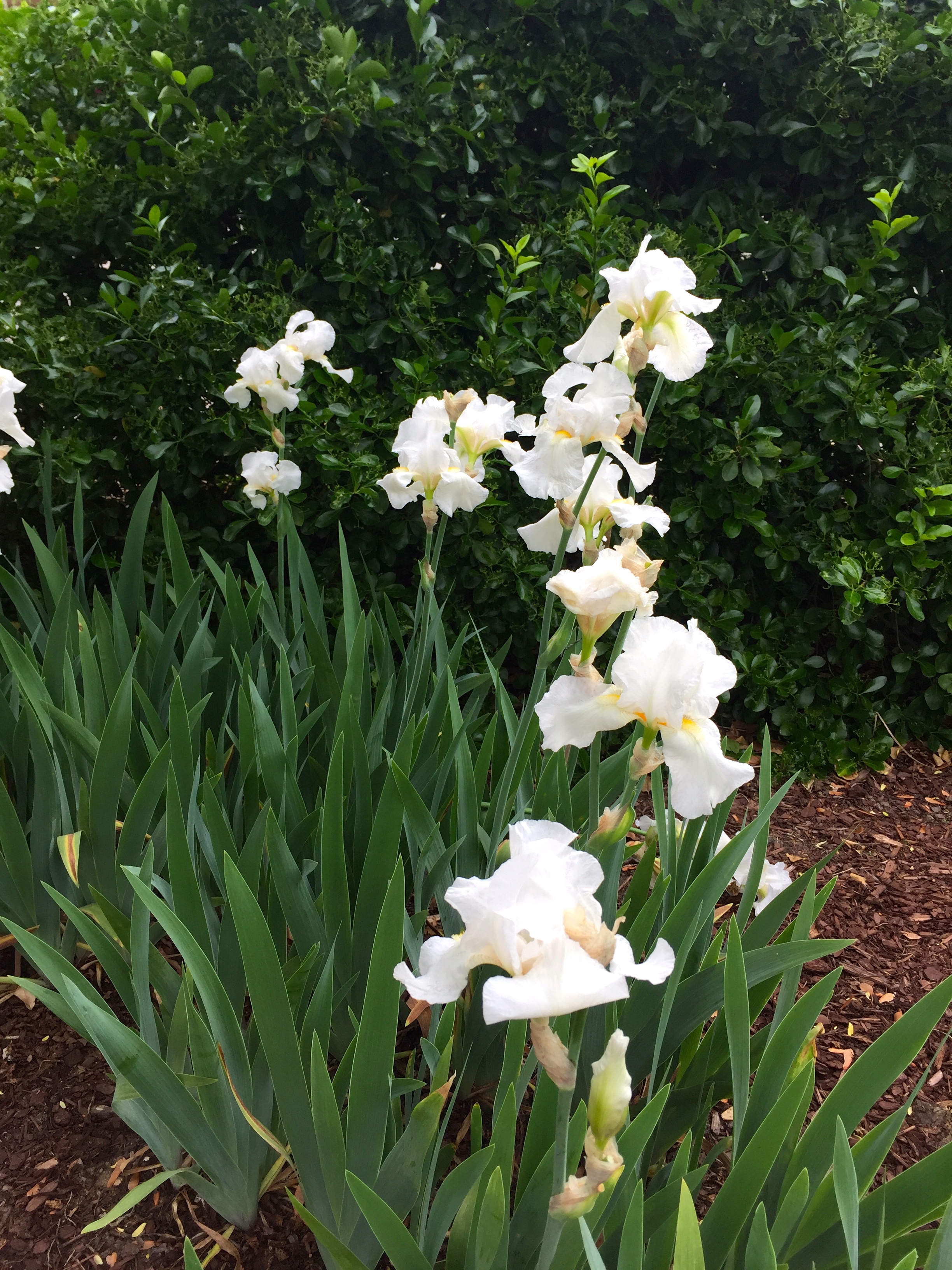
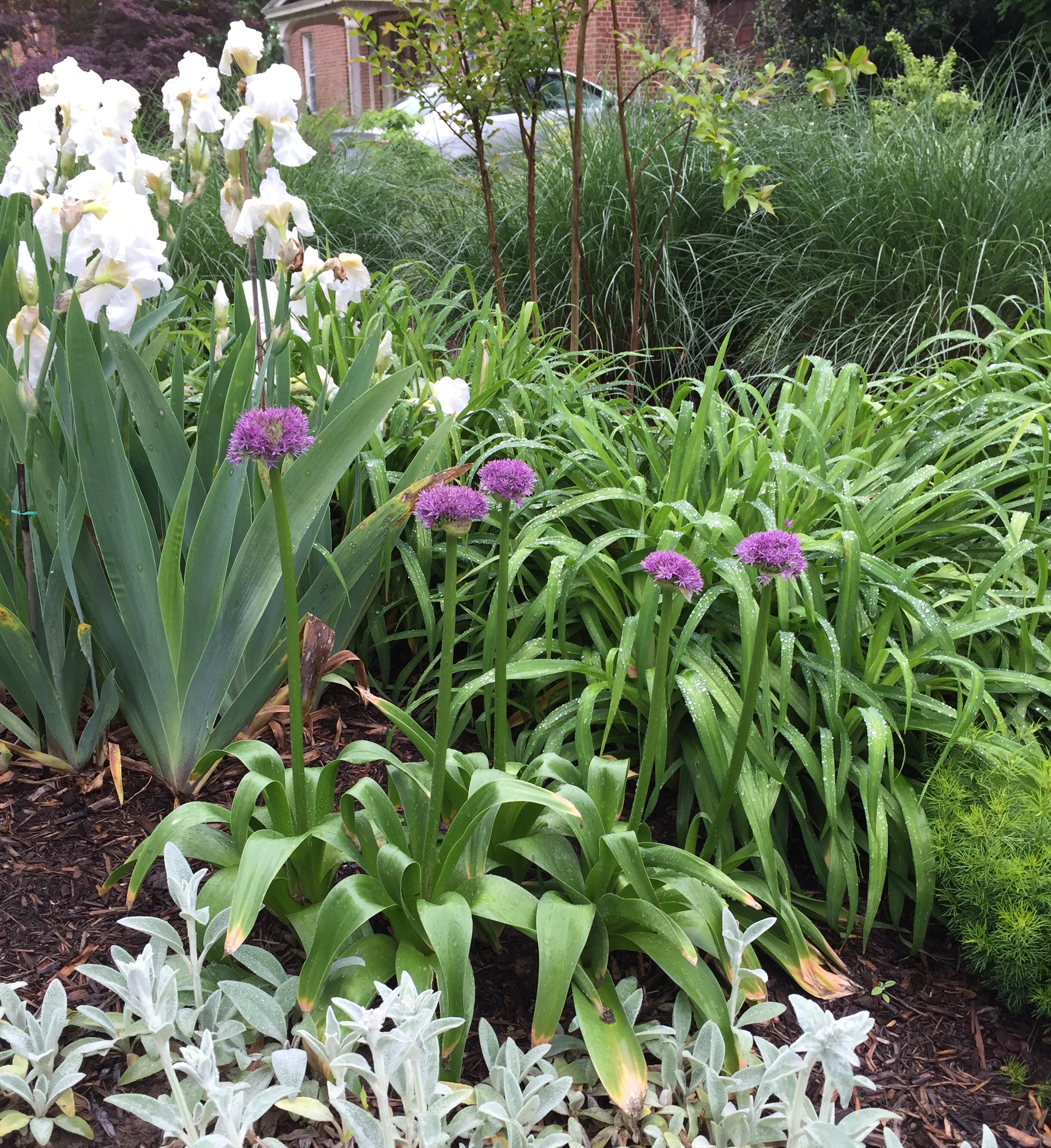
White bearded Iris are also another favorite of mine, these grow about three feet high.

When the blooms are done for the season, the foliage is striking all on its own. I like to trim out the entire stem from the flower, instead of just dead heading. Different varieties vary in their shades of green and the height and width of their leaves. So, it’s easy to choose a variety that suits your exact needs. The best time to divide them is in July through August, if they have become overcrowded. This is also when some varieties may have foliage die back. I trim mine with a sharp knife, to about 2 inches, and they will regenerate new foliage which will look  beautiful up until frost.

So whether your favorite is Siberian, Flag, Bearded, Japanese, or one of the many other varieties that grace our lovely planet, I hope you will plant some and enjoy them for years to come!


Recycling Ideas for the Garden

To honor Earth Day, I have some great ways to recycle in the garden that I want to share with you. I will start with some alternative ideas for things that are commonly tossed out. These are easy, but ones that you might not have tried.

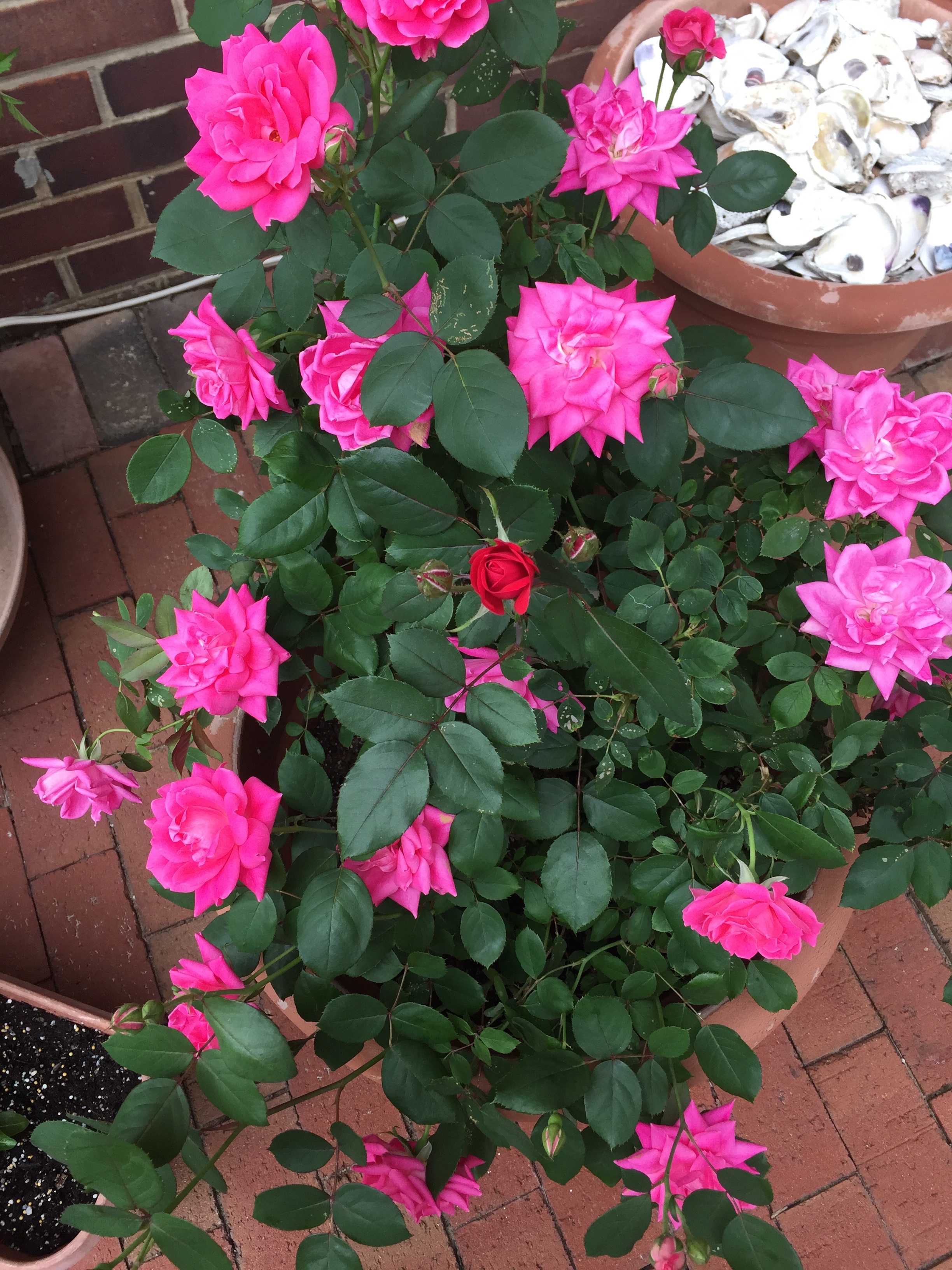
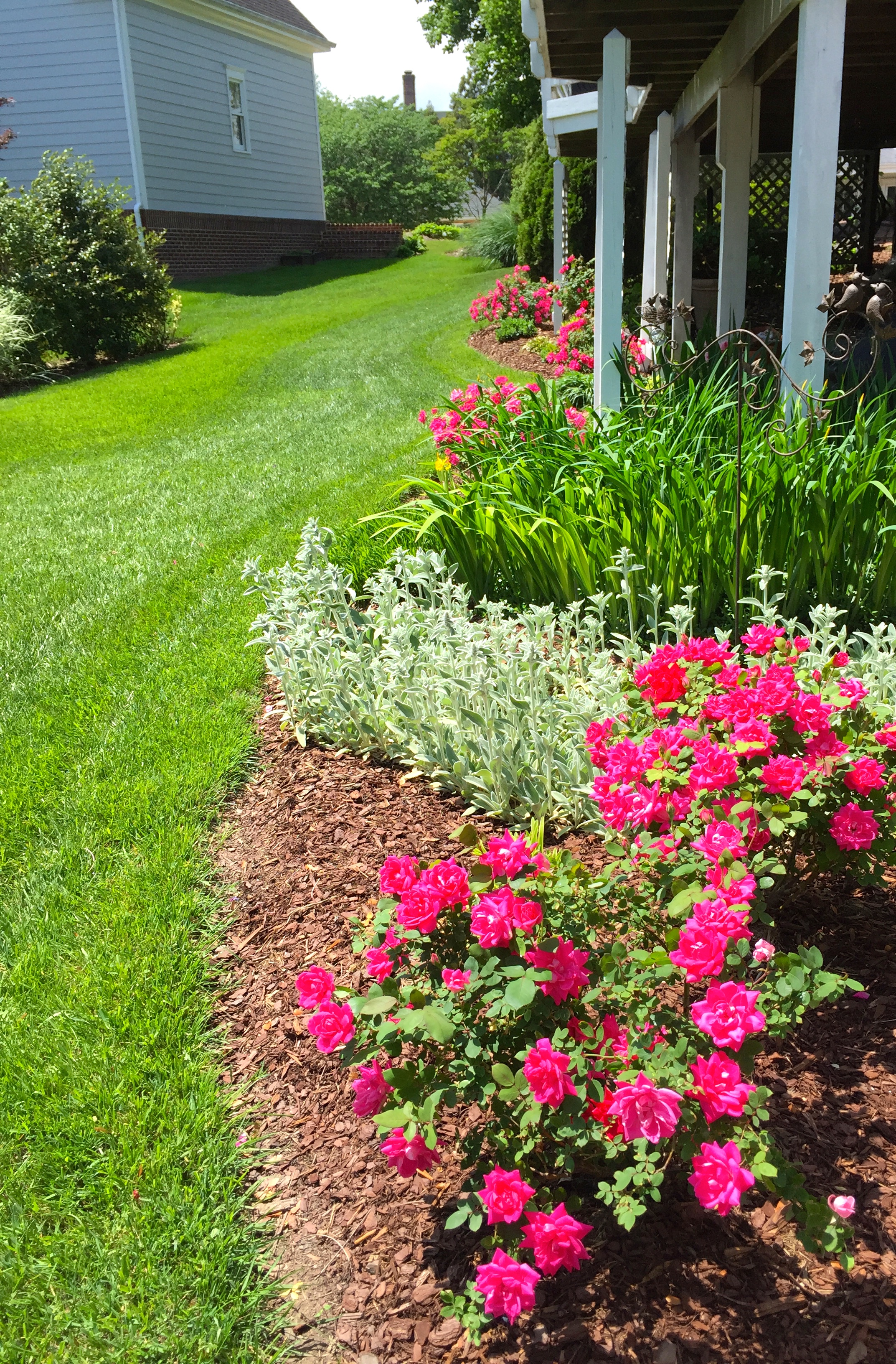
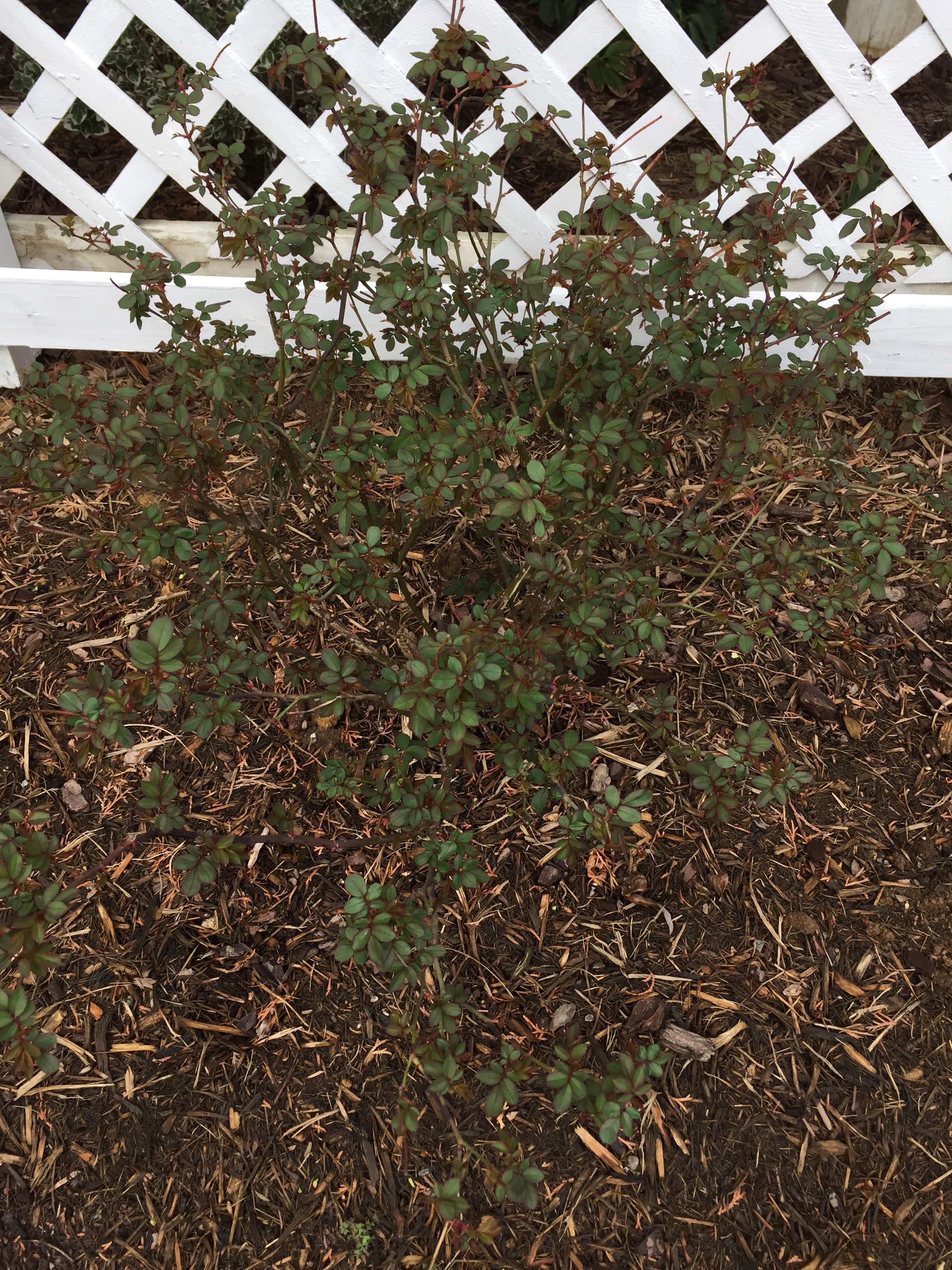
This year I am adding knockout roses to my planters. They have a deep root structure, so it's important to have soil amendments like grass clippings or compost, to keep the soil light and nutrient filled.

We are still having temperatures in the 40′s overnight, so as the grass gets mowed we are collecting the clippings instead of mulching them. In our yard, this can mean eight or so bags of grass each week. As an alternative to adding them to a compost pile, one of the best nutrients  is to incorporate a bag or two of grass clippings for every 3-4 feet of soil. I do this annually where I plant flowers, and it’s great to use in the vegetable garden as well. I add grass clippings to the potting soil to give an extra boost to the roots, and to keep the soil loose. I have even used clippings as mulch in the herb garden in the past, stirring them into the soil every couple of weeks. This provides a constant source of nitrogen for the heavy feeders like tomatoes, too.

I dig up river rocks in the garden all the time. I reuse them by paving the under deck area. They also make great pathways.

It seems one of the things that grows best in my garden is river rocks.  Really — for every shovel full of soil I dig up at least 2 or 3 potato sized rocks. I recycle them by paving the area under my deck with the larger rocks. They have become a wonderful surface which prevents erosion, as well as keeping the area walkable. They make terrific pathway material, or could even become a border around the edge of a bed. Another way I use them in my yard is to disperse the water from the downspouts. I use them in place of the ordinary splash guards made of concrete or plastic.


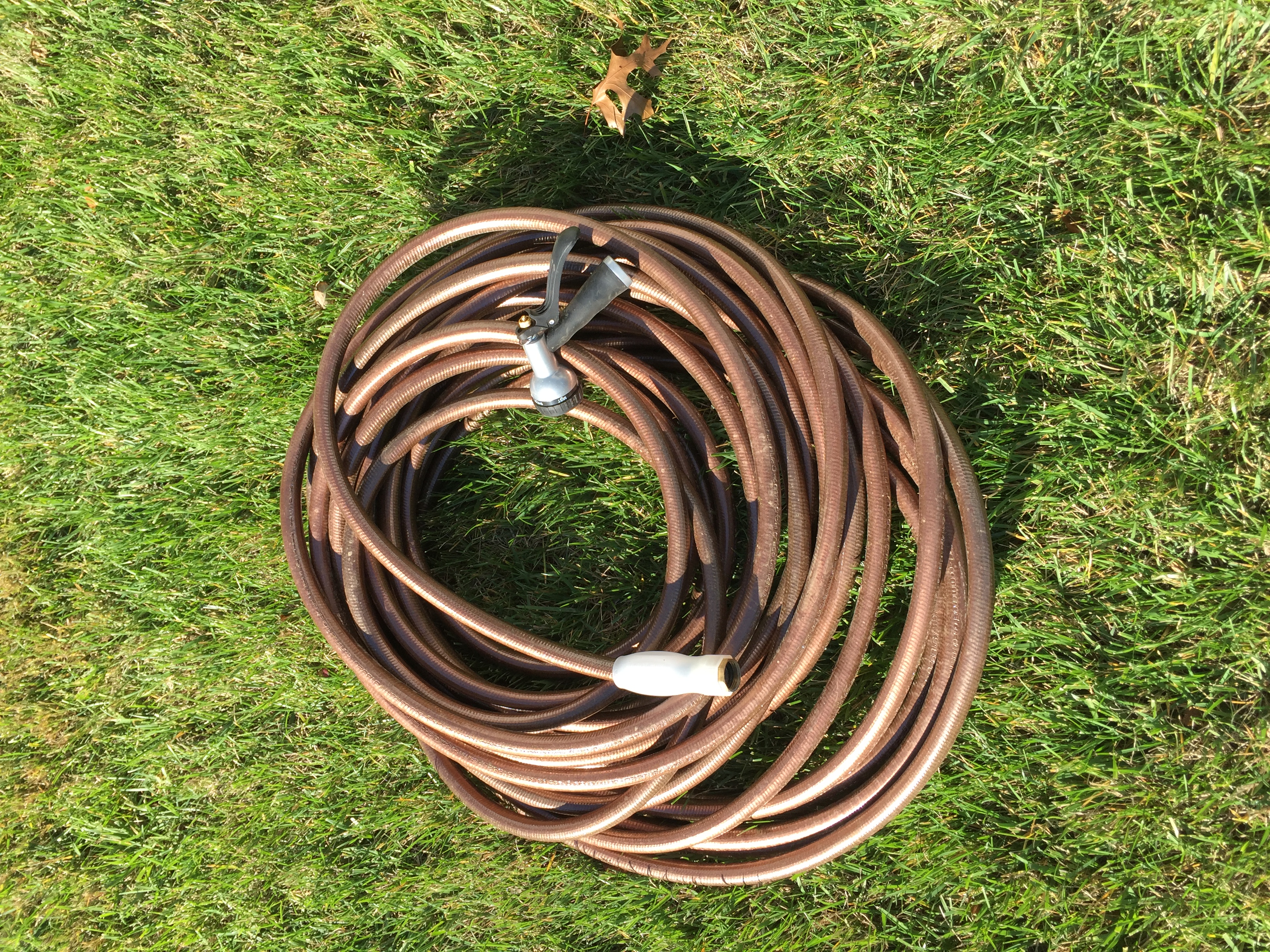
You can make your own "customized" soaker hose by placing it through your garden bed, then puncturing the hose right at the root zone of each plant you want watered. This is a great way to repurpose an old hose that already has pinholes in it.

Instead of throwing away those old hoses — you know, the ones with all the pinholes that have developed over time — here is a creative reuse for them.  Go ahead and add more. This can easily be done with an ice pick. Add them every few inches, and you will have created your own “soaker” style hose. The end of the hose can easily be “plugged” just by leaving an old spray nozzle on it. An even more water efficient method would be to place the hose in the garden and puncture holes into it right at the root zone of each plant you want to water. I like to place mine in the garden before I mulch. Then layer in the mulch on top. You don’t even know the hoses are there. I leave a quick connect on the other end, and just hook it up when needed. (Better for aesthetics!) I love soaker hoses, they are such time savers and so water efficient.

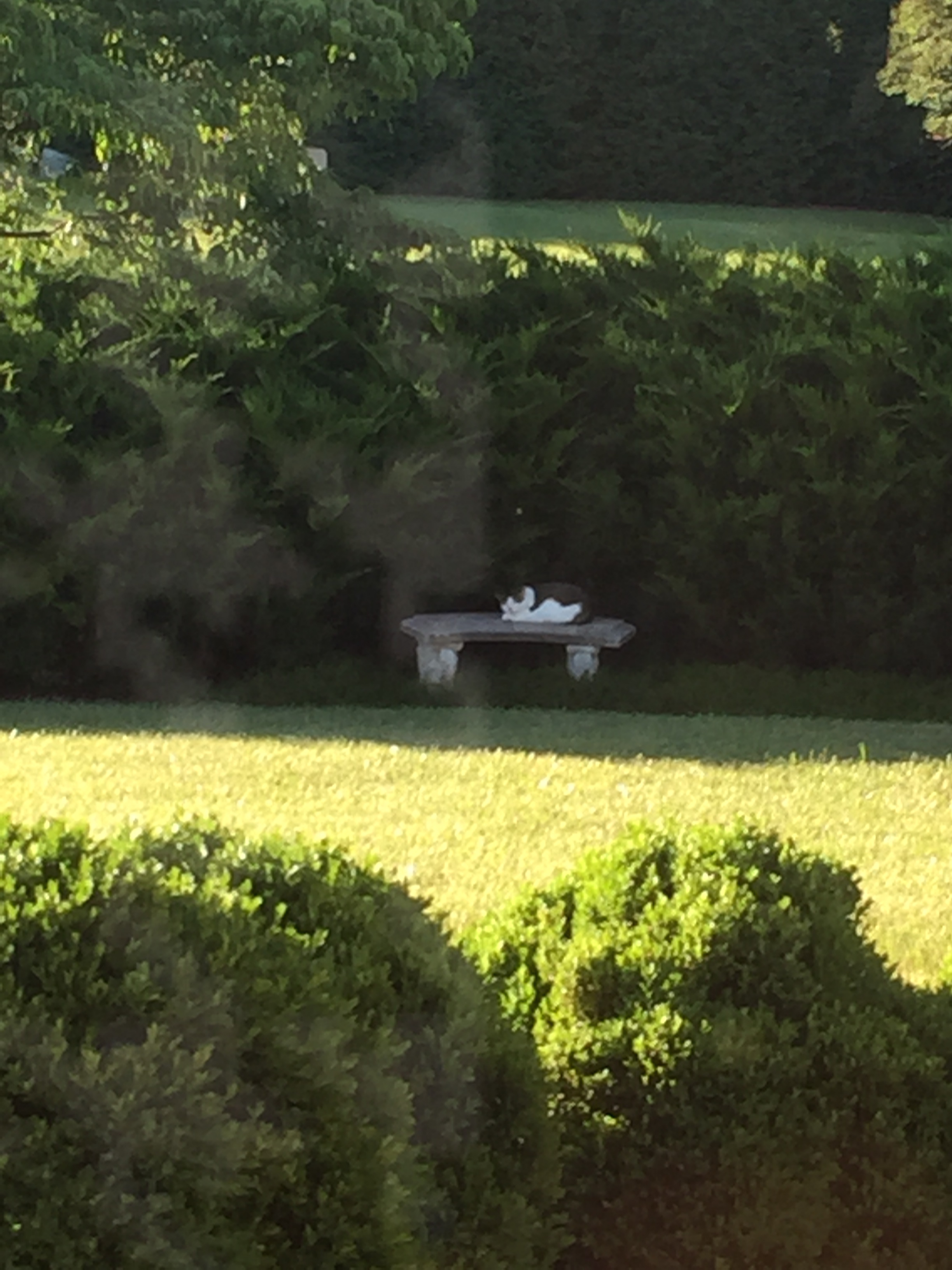
This deck box was created by reusing boards from an old fence. (Those of you who have read my blog will recognize my kitty friend Stomper.)

For the more advanced recycler, don’t overlook the value of reusing old fencing boards in new projects. Quite often some of the boards are rotten, but not all. We took down an old fence some time ago, and have reused the wood in many of our garden projects. This deck box is one. It houses all of the cushions for the deck chairs when not in use, and keeps them handy when we want them. Just take an inventory of the wood you have on hand, then design your project around it. It’s always fun to have a one of a kind, useful piece of furniture,too! From the same old fence, my tool shed and potting bench were created. As nice as it is to reuse the old boards, it’s also budget friendly. You can’t beat free!

Here's another use for rocks from your garden. I use them to channel and disperse the water from the downspouts. It conforms to the terrain better than splash guards, and also does a better job.

These recycling ideas are just a few, but they are ones that if the components had been tossed, it would have equaled a huge amount in a landfill. I will list more recycling ideas in the future, but hope you will send your ideas to me. I would love to share them all. If everyone does just one small thing, the impact is great!


Spring is Here

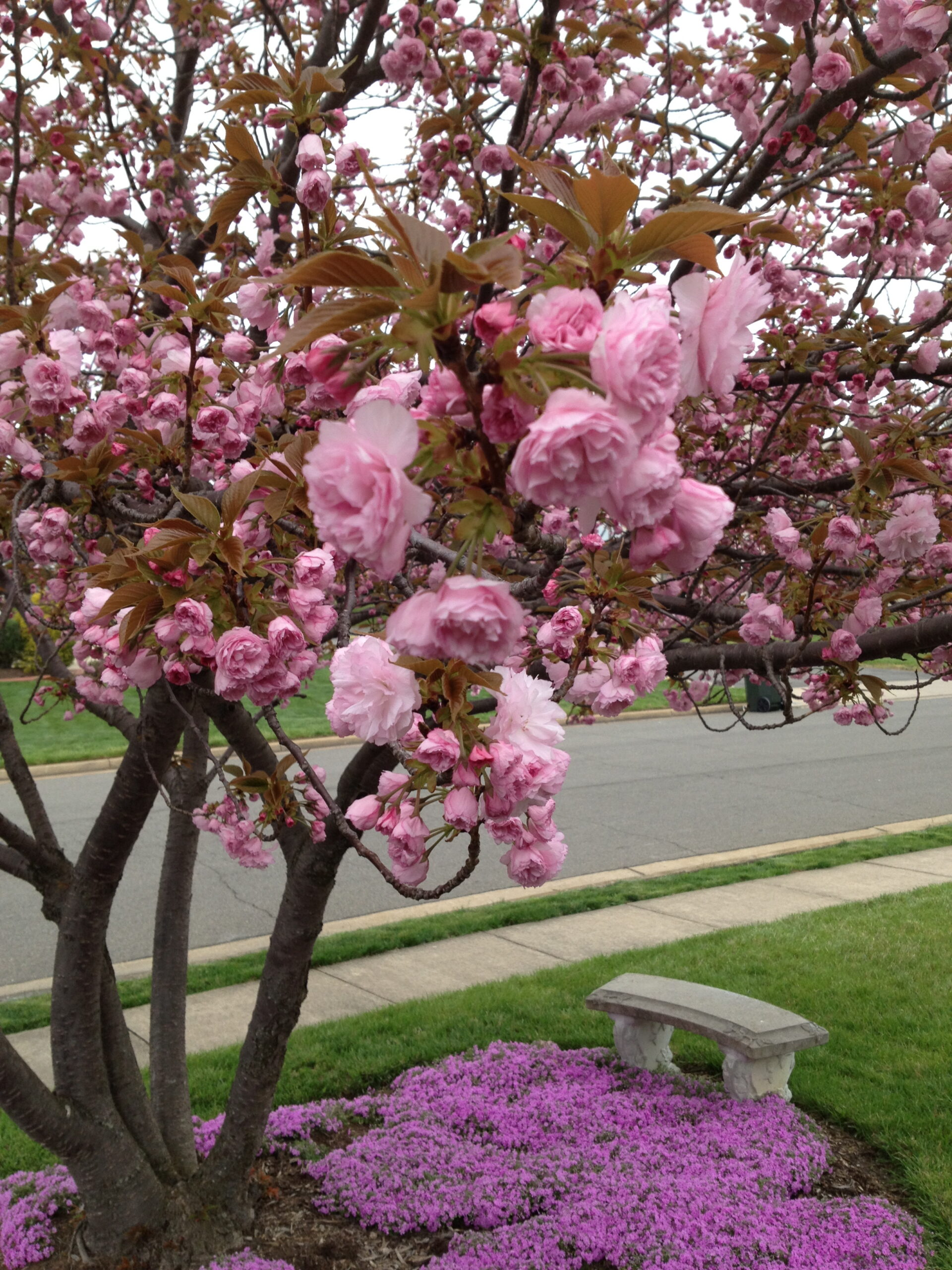
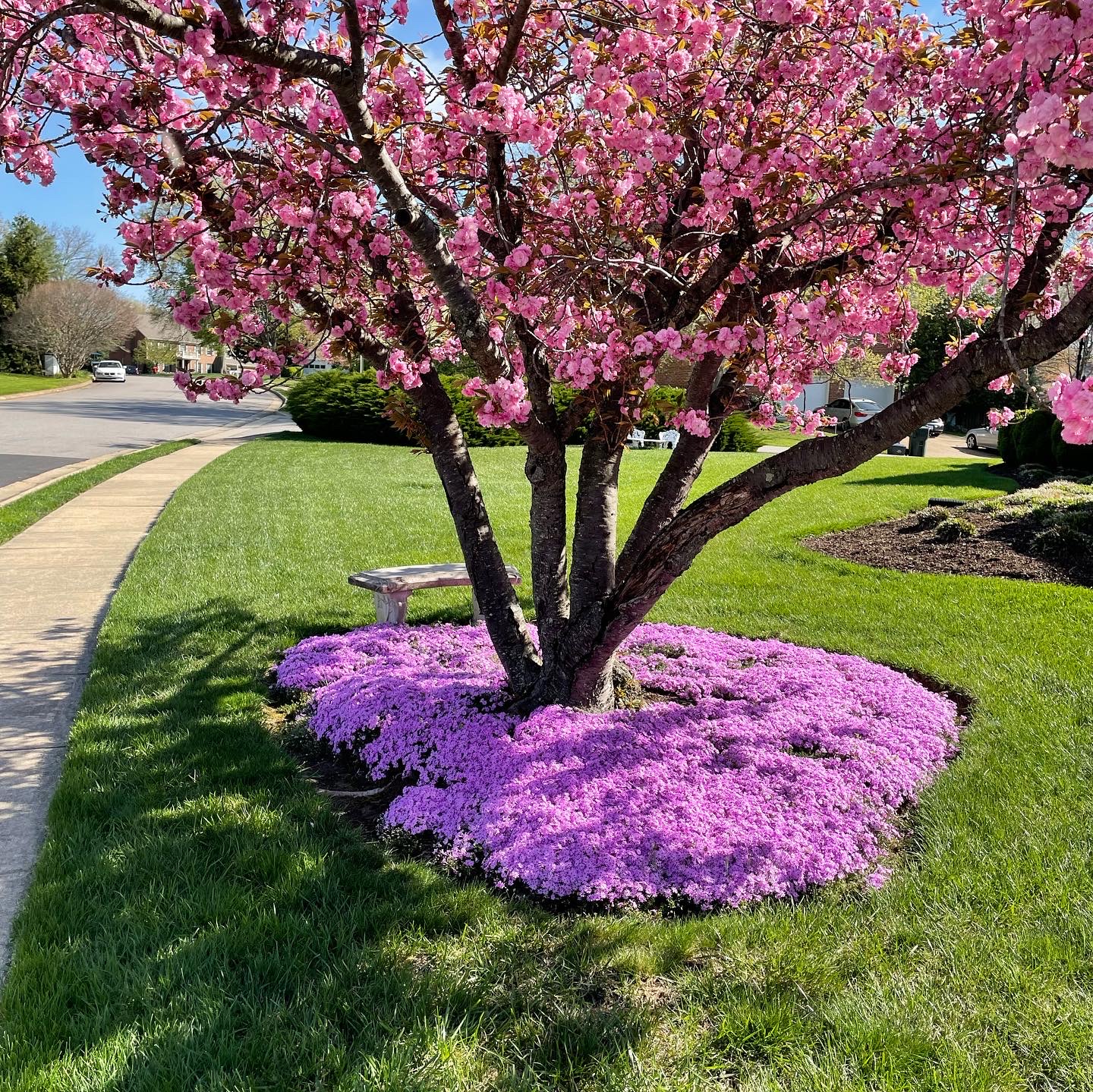
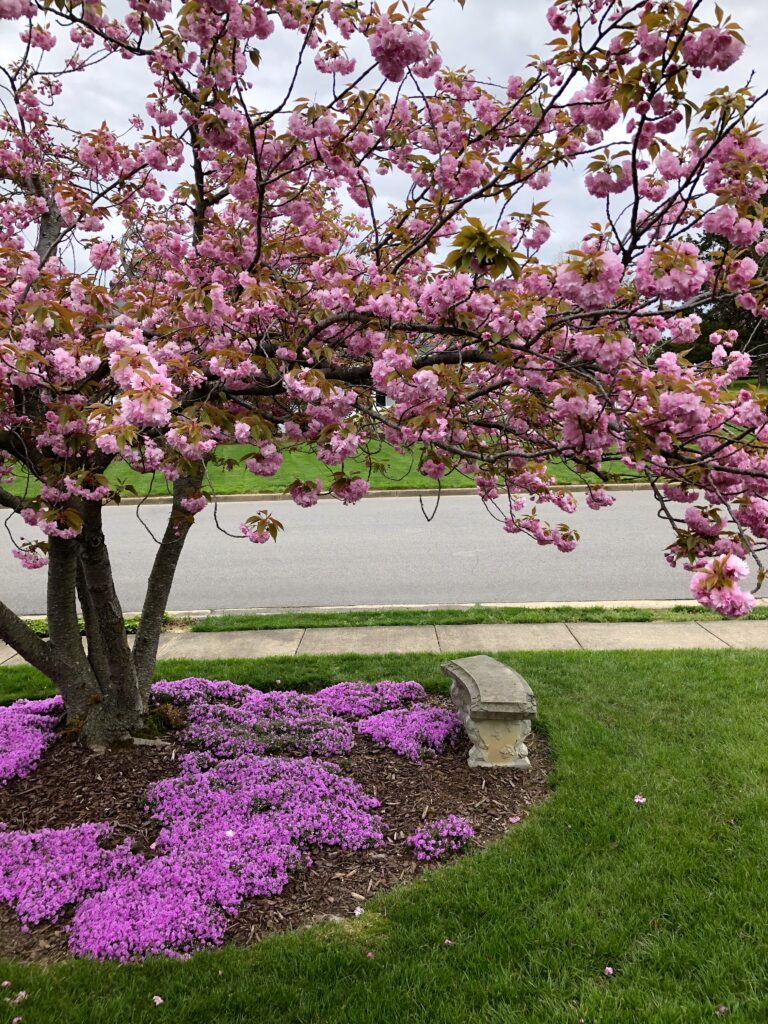
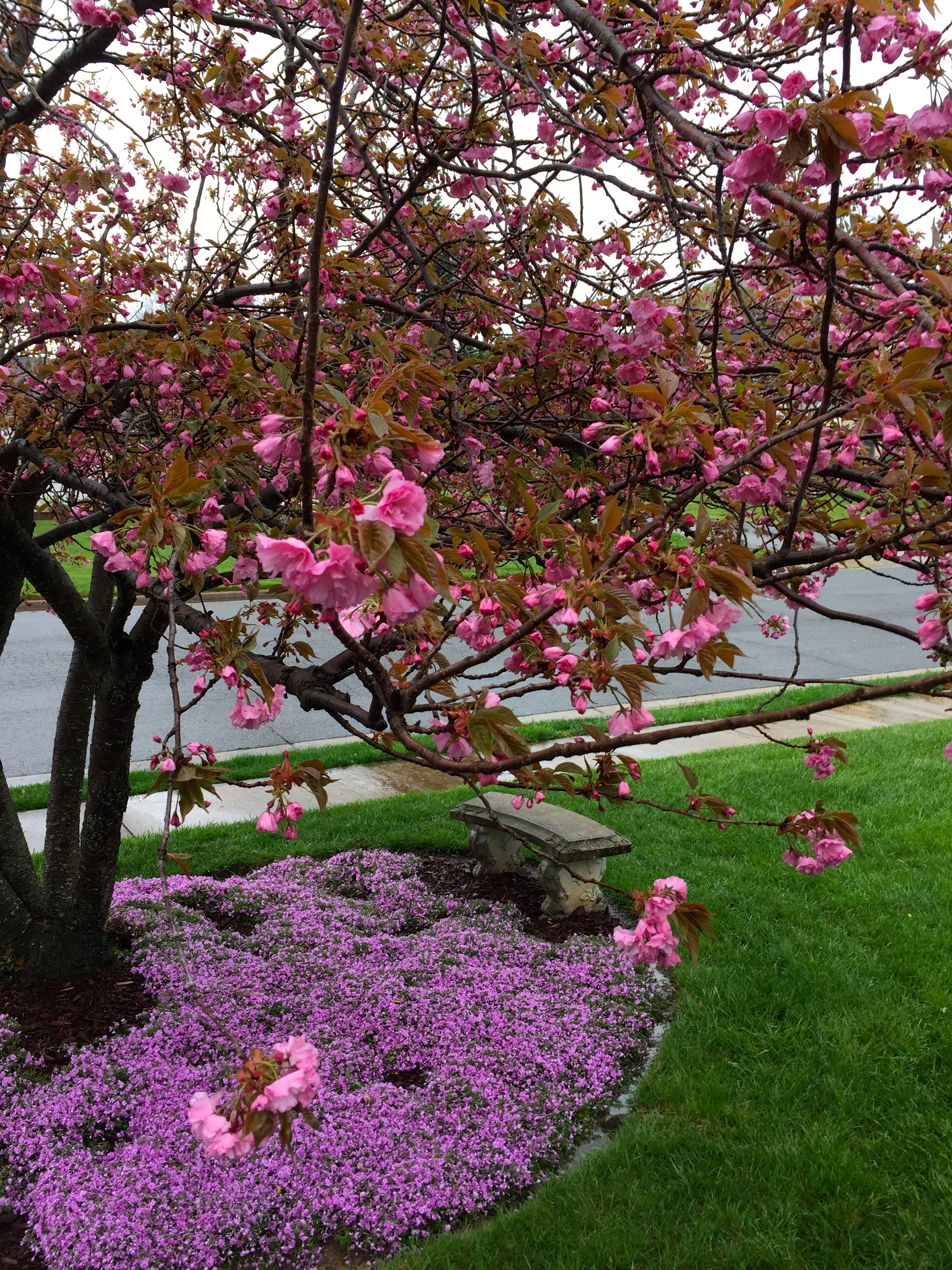
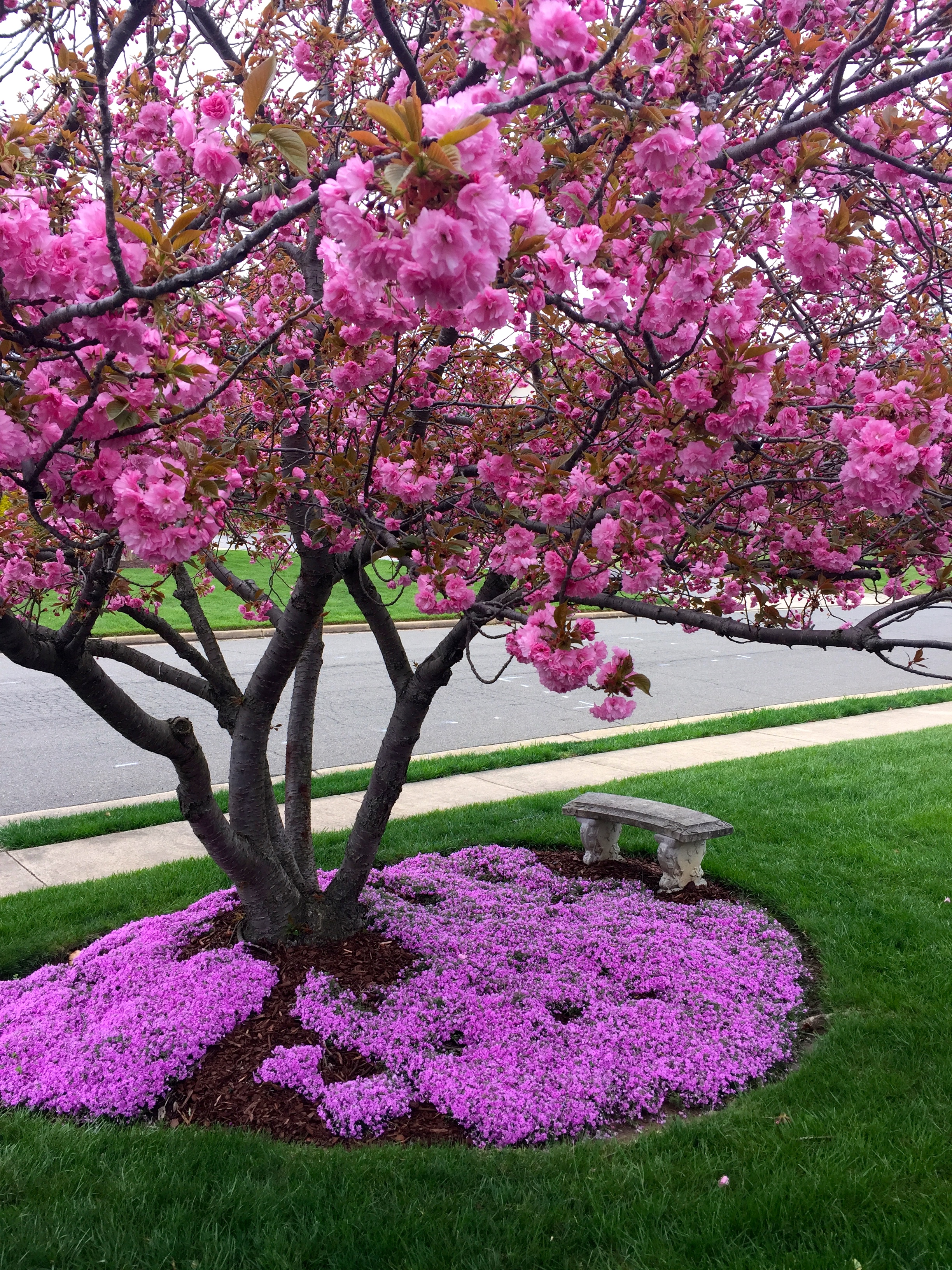
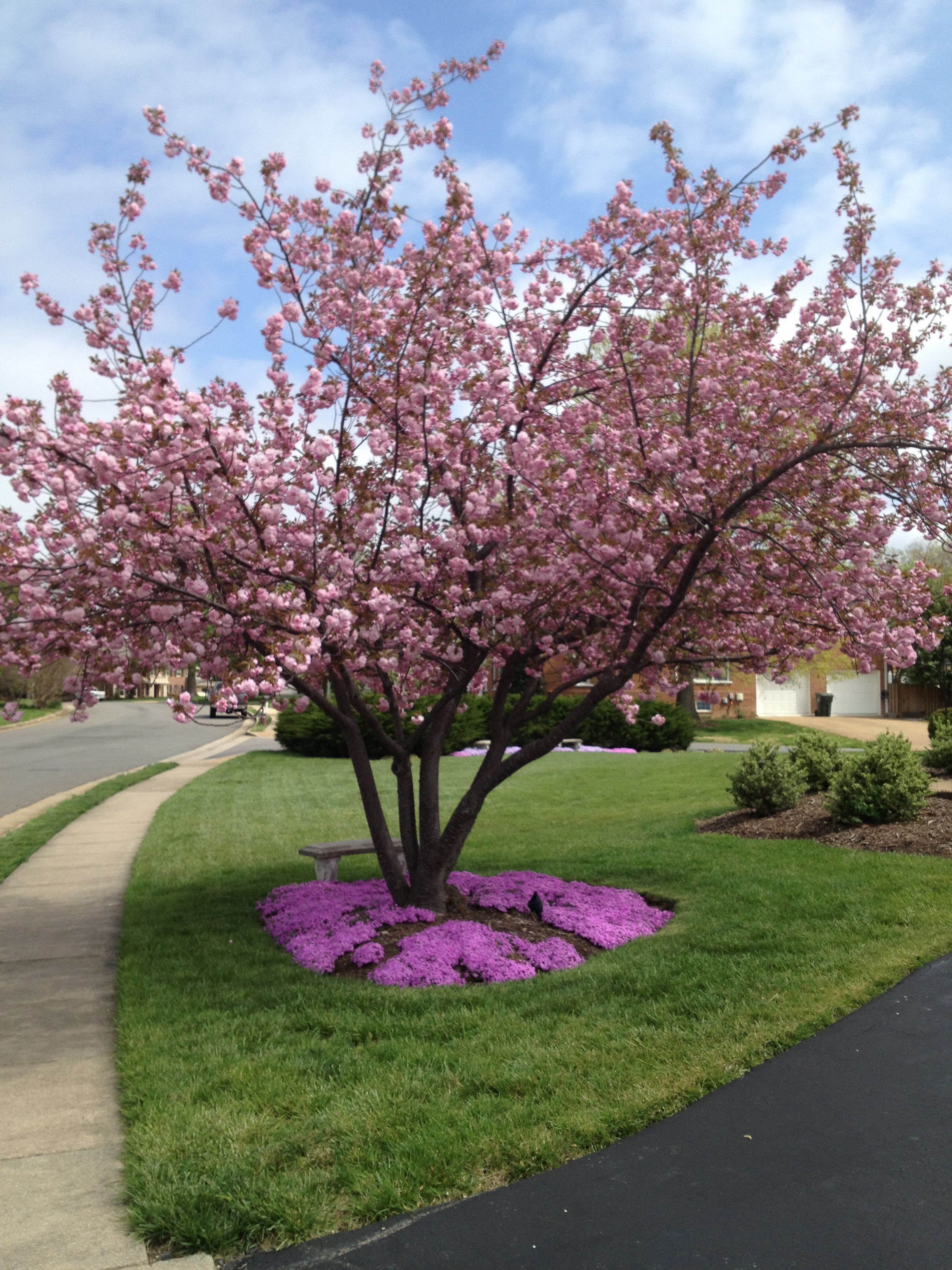
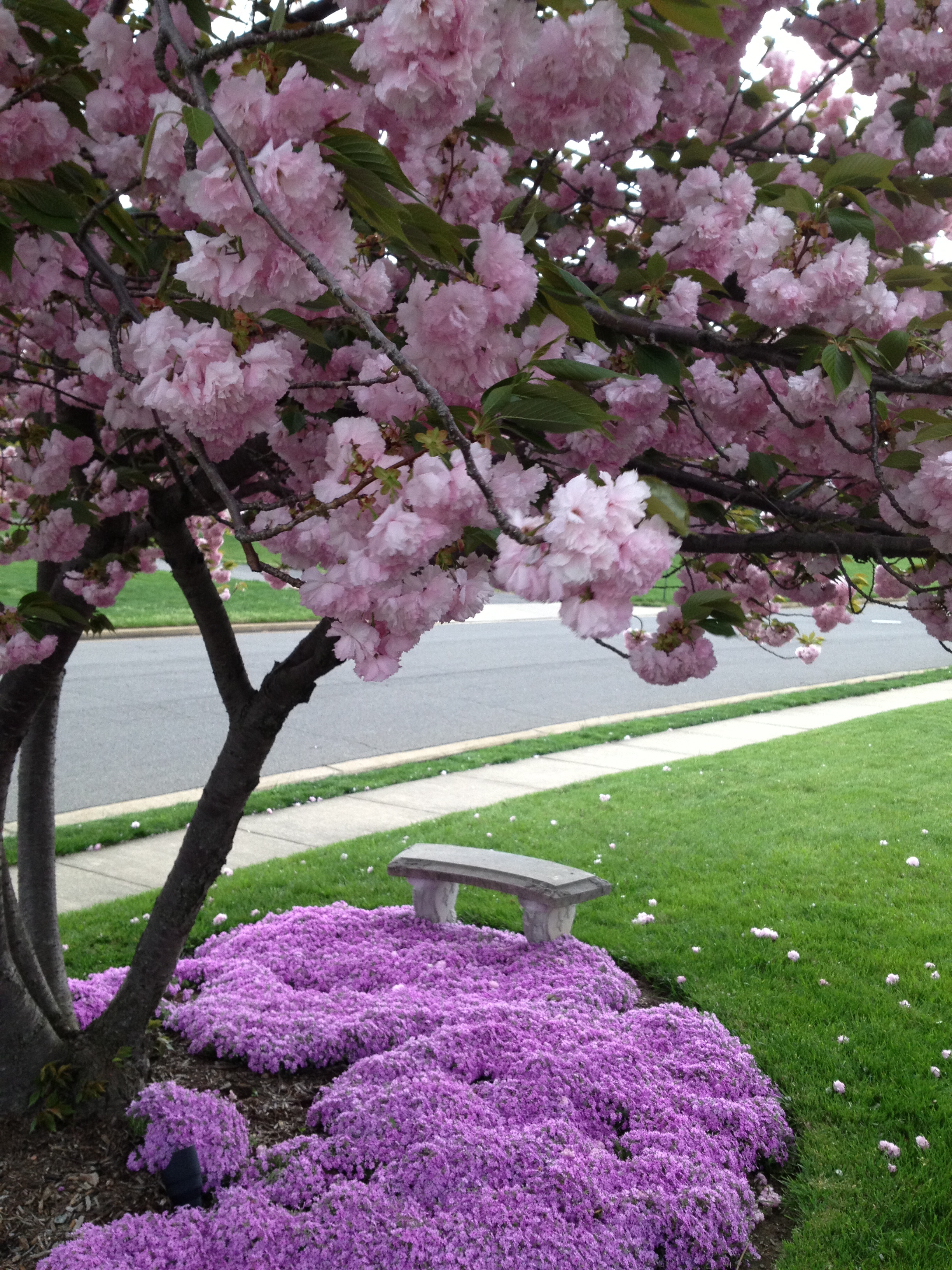
My kwansan cherry tree in peak bloom. (For those of you who have asked, this is the tree in the blog page's background.)

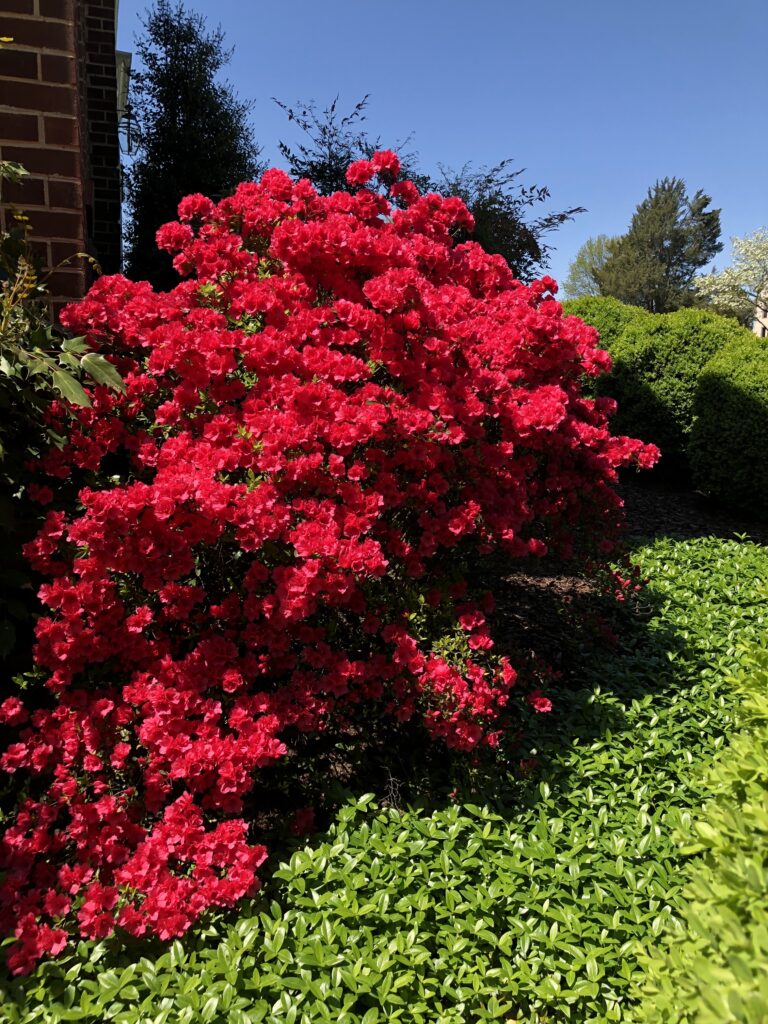
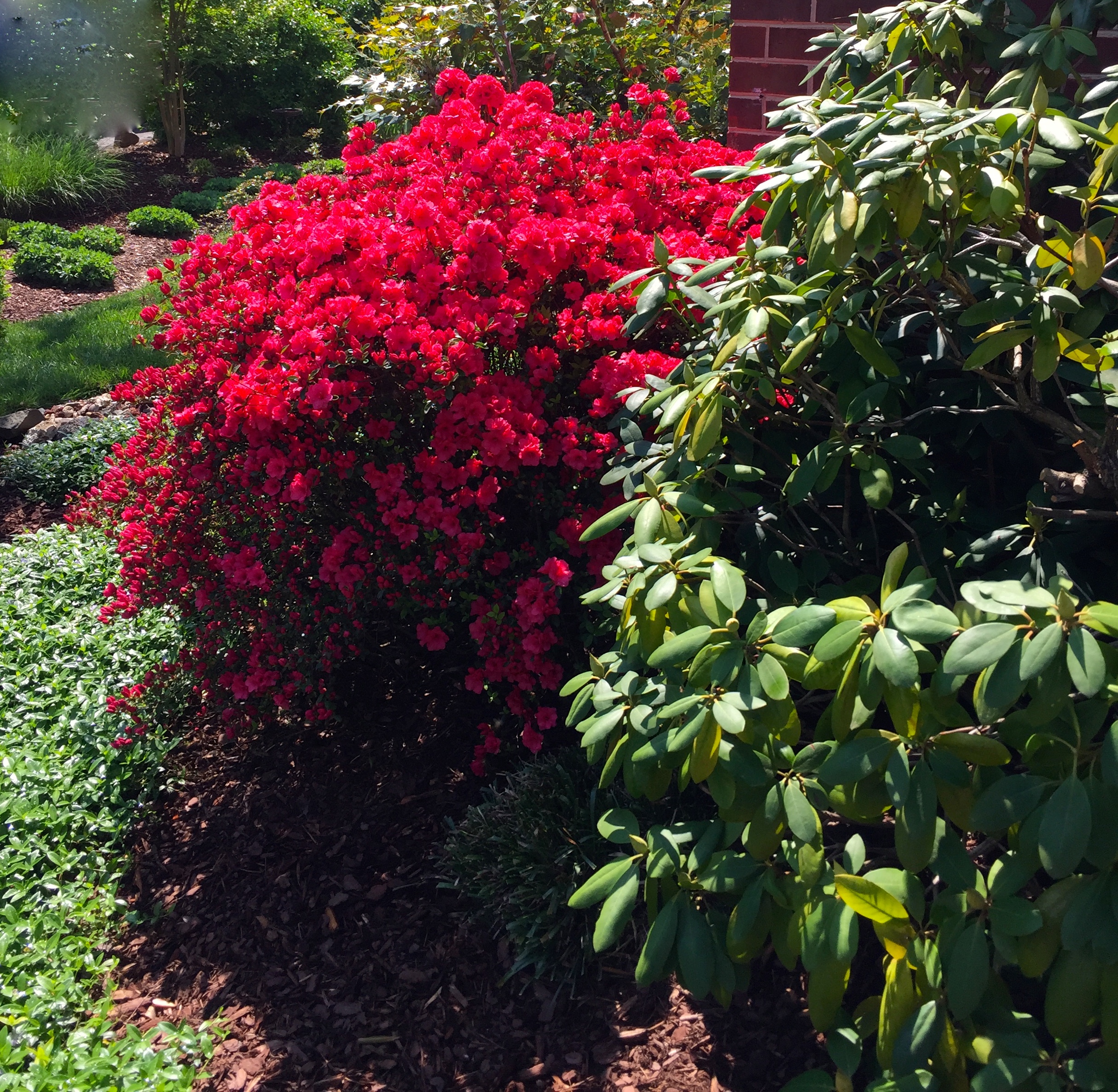
Just like magic to me, spring has sprung. With such a mild winter this year the blooms are very early. The flowering trees are magnificent, and the phlox is beyond compare. All of the bulbs have finished, but the masses of foliage were much fuller and greener than usual. I think that this might be one of the more beautiful displays ever. Even the azaleas are opening, in all their glory.

These are two weeding tools I use. The one on the left is an ergo tool, and rocks the weeds out of the soil. The one on the right is a serious tool which can extract even the toughest weeds.

It seems all of the plants that I transplanted last fall had a very easy first winter in which to spread their roots and become acclimated to their new locations. I was very happy to see the first leaves sprouting on the three crepe myrtles, and am even more anxious to see them grow to fill out the side garden where once the purple maple stood. Really the only downside of this spring is dandelions, which always seem to blow in, and they are doing way too well. Thankfully, I have two terrific tools which easily uproot them. If your yard is prone to these weeds, I wholeheartedly recommend getting one. They make the process a lot quicker. They work great on all weeds, whatever size.

I am almost done with trimming back the liriope, euonymus, and junipers. Not a minute too soon either, they are already sprouting new growth. I am hoping to finish this weekend because it is now time to edge, and add some new mulch to keep the weeds down and the moisture in. Lots to do!

Here is a closeup of the pink dogwood this year. The flowers were so huge and perfect that it almost looked artificial.

A good tip to get your garden off to a good start is after you have prepared the soil with some weed preventer, and stirred in a little compost to add nutrients, give your garden a good watering prior to mulching. This will give it a boost, and ensure that all your plants have everything they need for the new growing season.

One more closeup -- these are the creeping phlox. When first planted, these were just a small plug, they are now more than three feet in diameter, and gorgeous. I would recommend them for my top awards honor this spring.

I hope everyone gets a chance to enjoy this incredible time of the year, whether it’s in your own yard, or even the park. Just a reminder — Garden Week is almost here with lots of inspiring places to visit.

Just Say No! Springtime Don’ts and How To Fix Them

An example of a stump cut dormant Crepe Myrtle. When this is done year after year you end up with a deformed looking tree that is prone to wind damage when in bloom.

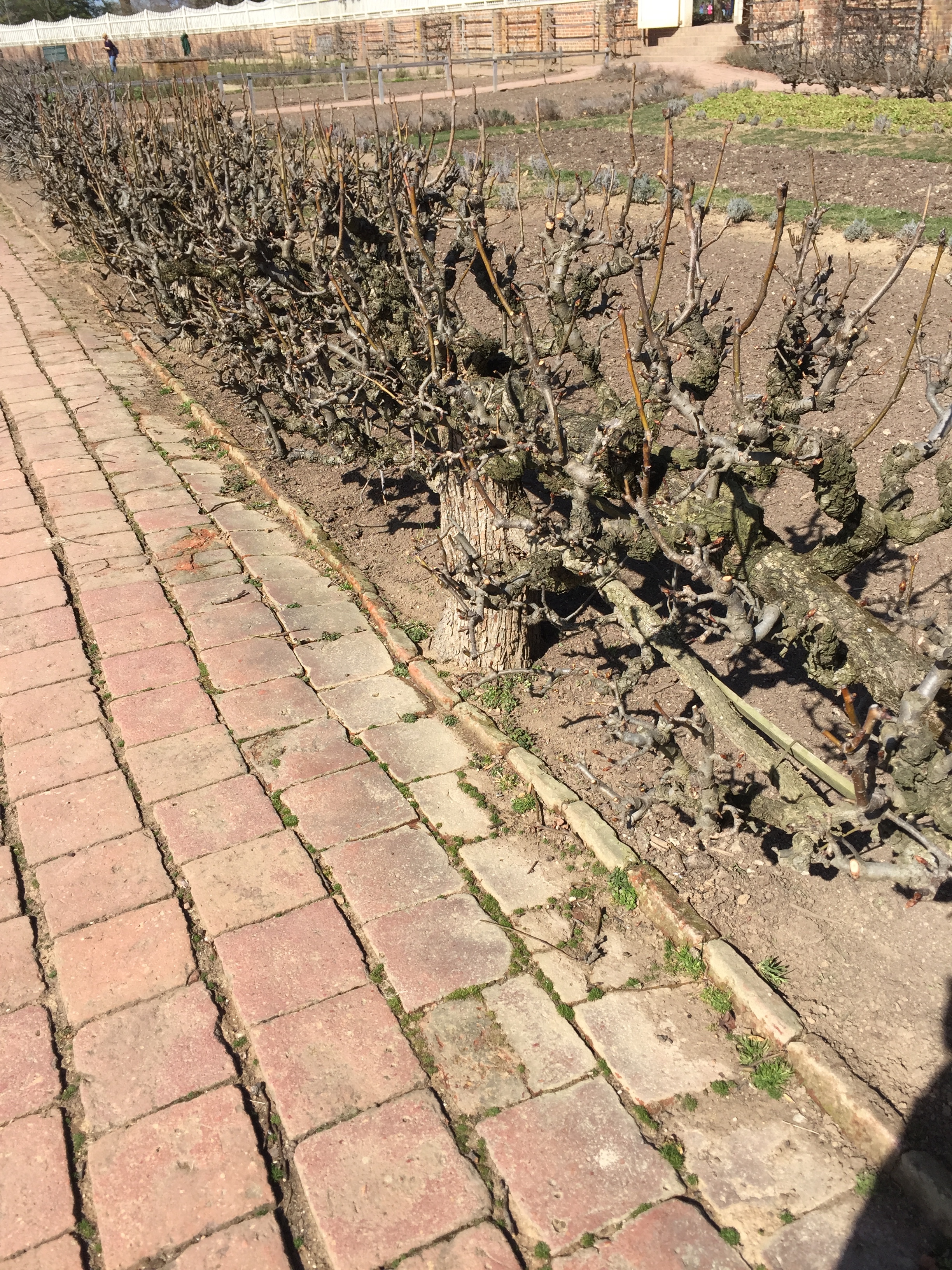
I don’t usually start off a blog in such a negative way, but there are certain practices out there which need to be stopped, and many of these occur in the spring. I recently have seen many timely articles about the annual ritual of hacking off the top half of Crepe Myrtle trees. One in particular hit the nail on the head, titling it “Crepe Murder.” This practice involves stump cutting the entire tree down to a certain height. It is very unattractive and unnatural-looking when the foliage is gone, namely all winter, and when done year after year, you end up with knobby branches. To me, this sort of looks like the painful joints of an arthritic person. I have seen many pear trees mutilated in the same way. Many people do this because they see paid gardeners do this and unsuspectingly think it’s the right thing to do.

Tip — The proper way to keep a Crepe Myrtle trimmed is to cut the branches at the base of the branch, just like you do for most other plants. This will maintain the proper branching structure and keep it natural.

This is what happens to trees which have had the mulch piled too high, "mulch volcano" style. The roots are struggling to receive water and nutrients growing toward the surface, instead of downward where they are needed for stability.

Another really bad practice that I would like to caution against is the “Mulch Volcano.” This is when the mulch is piled really high around the base of a tree with a dip in the center where the trunk comes out from the dirt. Many so called “professional” gardening crews do this as a standard practice, and so again many gardeners follow suit, thinking it is correct. In fact, it will actually kill the tree, choking off all rain and nutrients from ever reaching the poor root system.  The example to the right shows what happens to them if they don’t die. Notice how the roots will try to grow upwards to the surface in order to reach moisture. This can cause a host of new issues to deal with, such as the roots protruding out of the dirt compromising their stability, and causing them to be easily harmed during mowing. Also, it makes the roots easy to trip over if you are walking under the tree.

Another item that I would like to caution about is spraying weed killer. If it is not a completely windless day, the mist can carry quite a distance killing everything along the way. The best tip I have come across is to dip a sponge in the herbicide and lightly touch it to the weeds you want taken out. For a large area, such as killing the grass for a new garden bed, apply it with a paint roller. Quick and easy!

When daffodils and other bulbs have finished blooming, deadhead the spent blooms but leave the foliage for at least a month before cutting it down. This will ensure a beautiful and healthy display the following Spring.

One more quick don’t- when your daffodils and other bulbs have finished blooming for the season, don’t cut the foliage to the ground just yet. Go ahead and remove the dried up blooms, but leave the foliage until the green color fades. This is how the bulb replenishes itself with nutrients for the following spring, so it’s important to allow the leaves to soak in the rain and sun for an extra month or so.

The Changing Climate

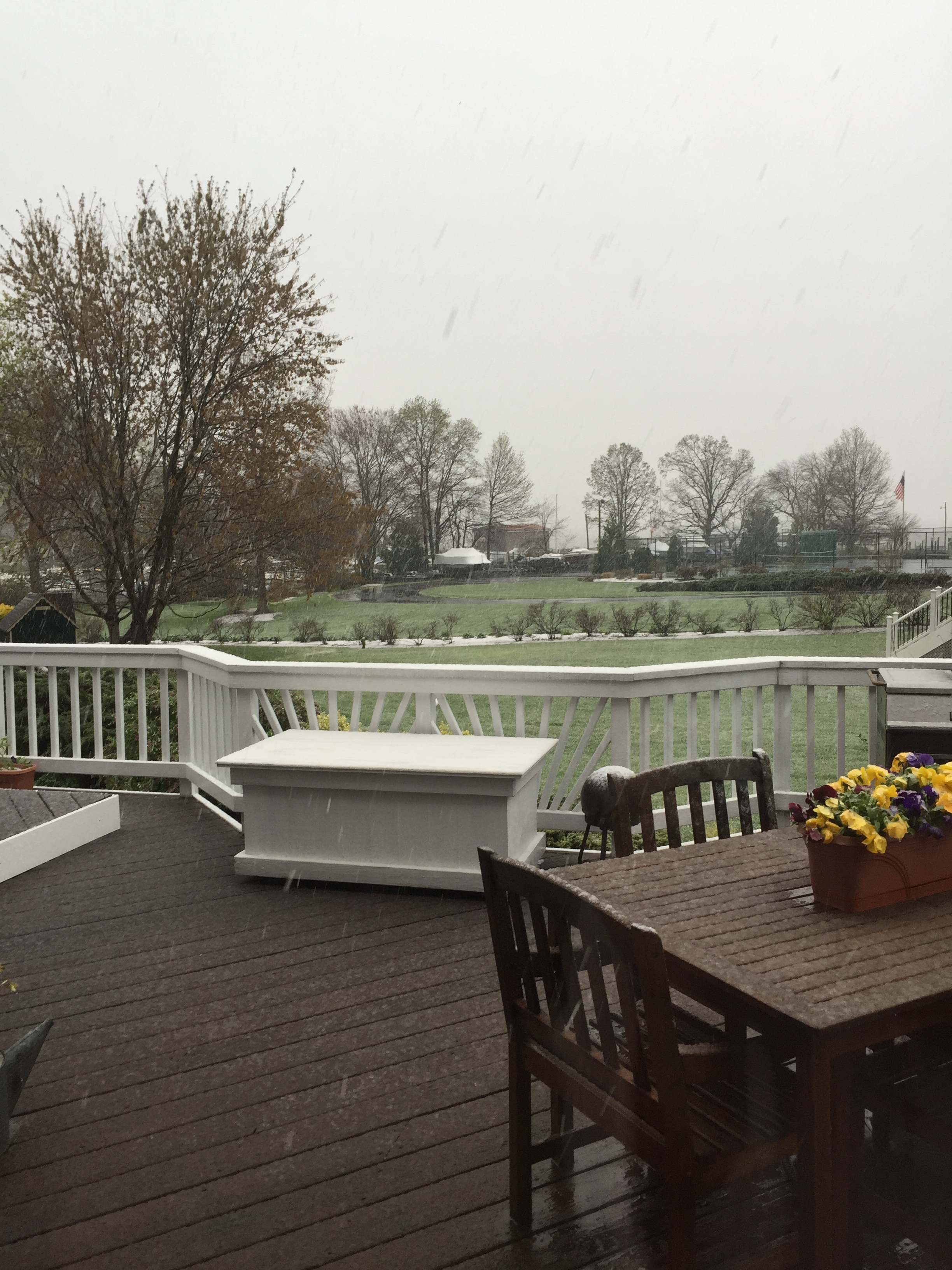
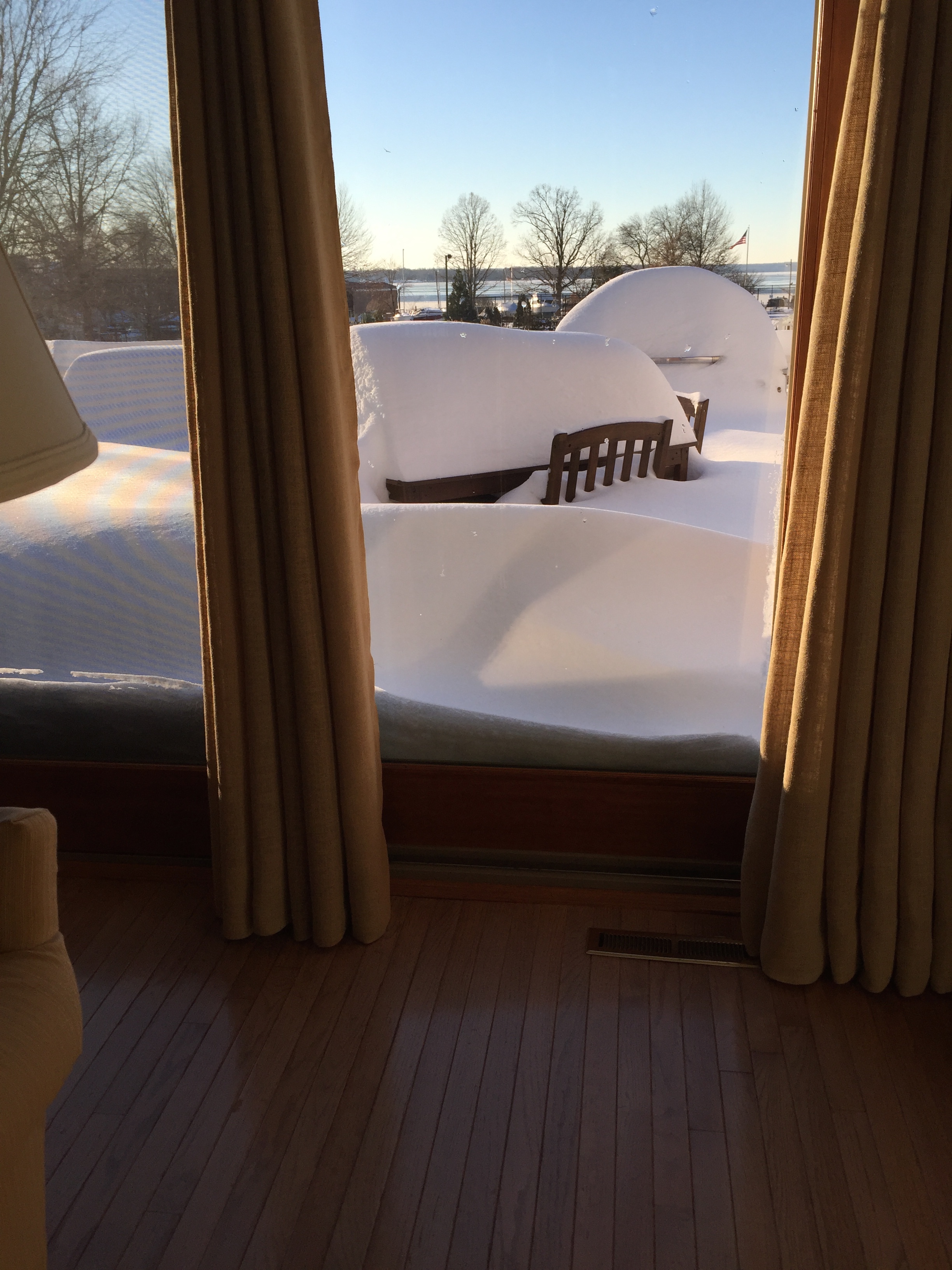
Where's the snow? This year we have not had this scene at all.

It’s official: the USDA has changed our climate chart once again. This was done because the average low temperatures have increased, resulting in many regions in the U.S. changing their growing zones. Unlike previous changes, this data was compiled over 30 years. The new map can be viewed at: http://planthardiness.ars.usda.gov/PHZMWeb/

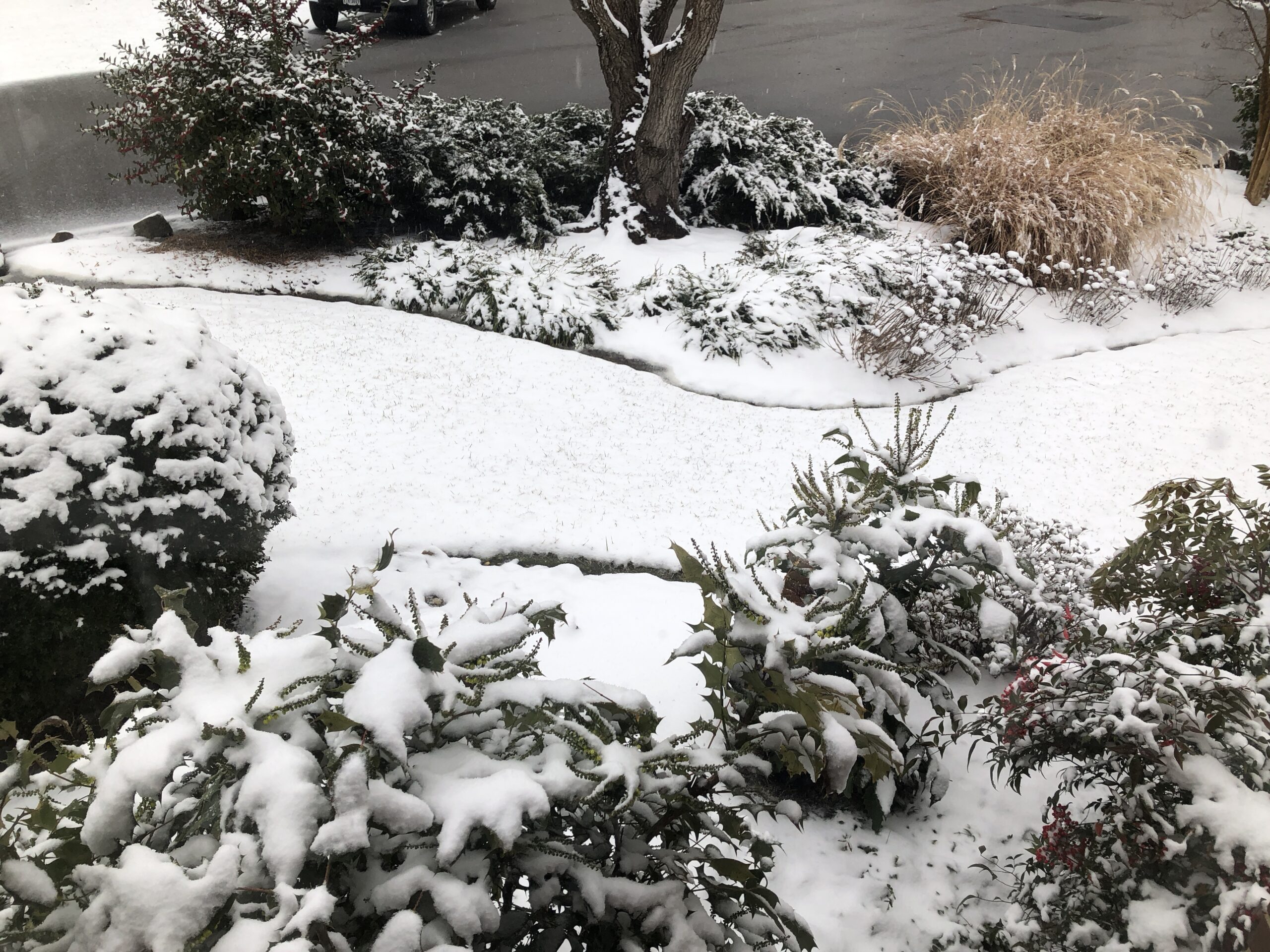
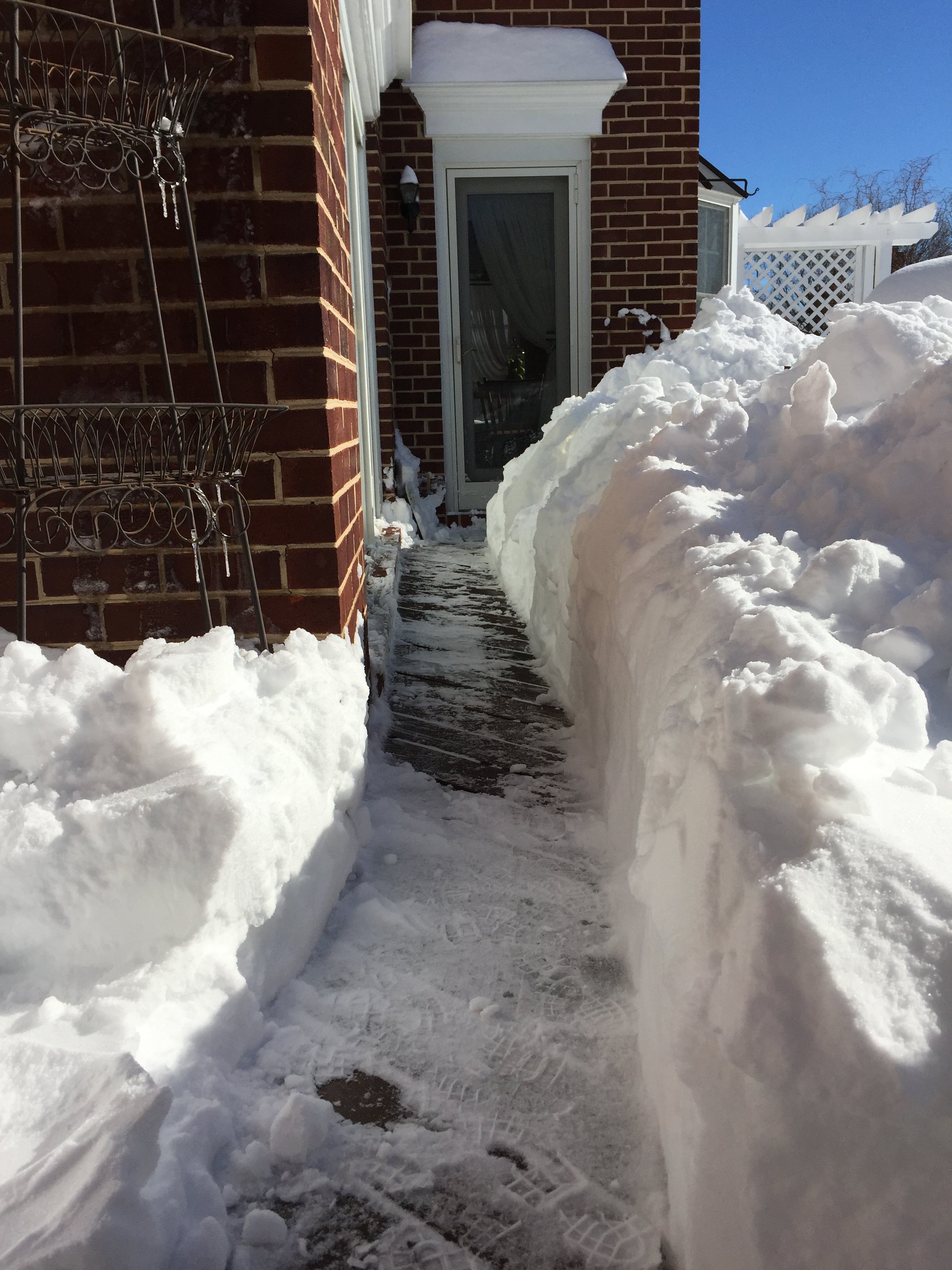
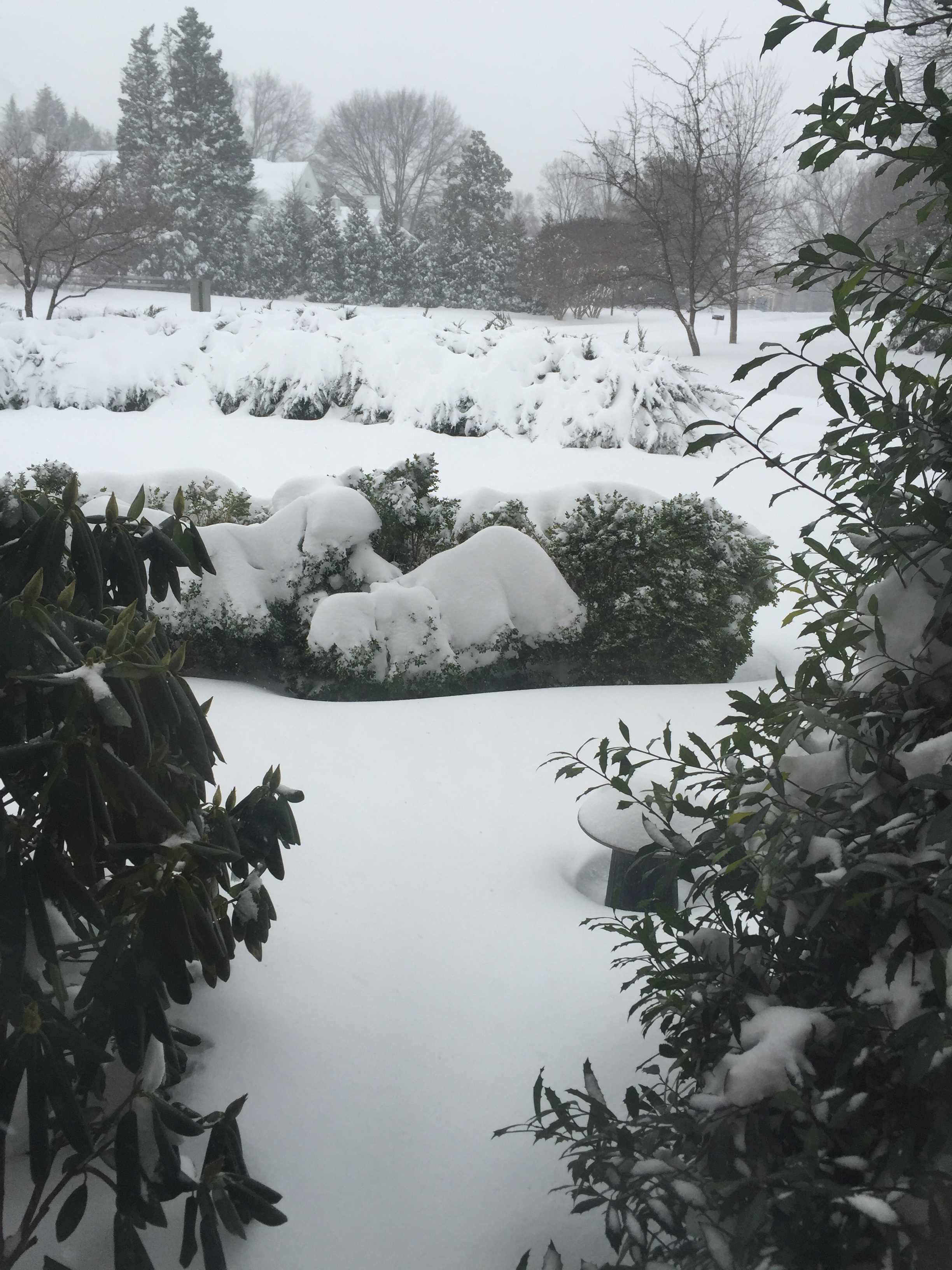
This was just two winters ago. At one point we had two feet of snow which lasted for a month.


My area is now squarely in the “Upper 7″ range. I have noticed that many of the plants which used to be marginal in my yard have not had much winter die-back this year. This is very recent though, and I am not convinced we have really changed that much, since we had an incredibly snowy and frigid winter just two years ago.

This season the rosemary, oregano, sage and lemon balm remained thriving in my herb garden all winter, and the chives were only dormant for a couple of weeks. In the past, I would have been without fresh herbs for at least a couple of months. Here is a tip you can try which can extend the growing time quite a bit: Place a terracotta pot over the herb during cold nights. The pot will hold enough warmth to keep the herb from freezing, while allowing excess moisture to escape. I once kept cilantro (which is very tender) growing for two months this way, even in the snow!

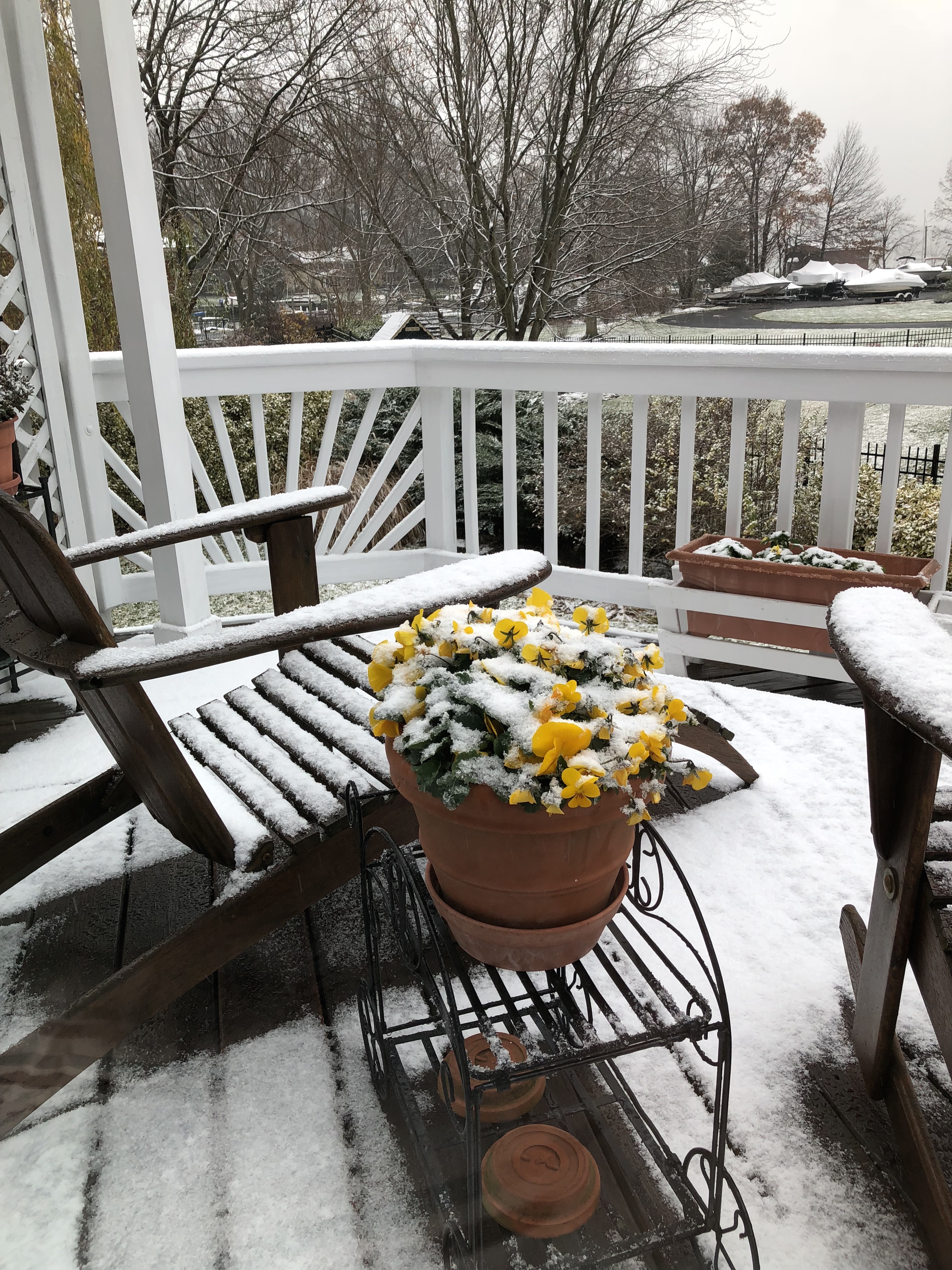
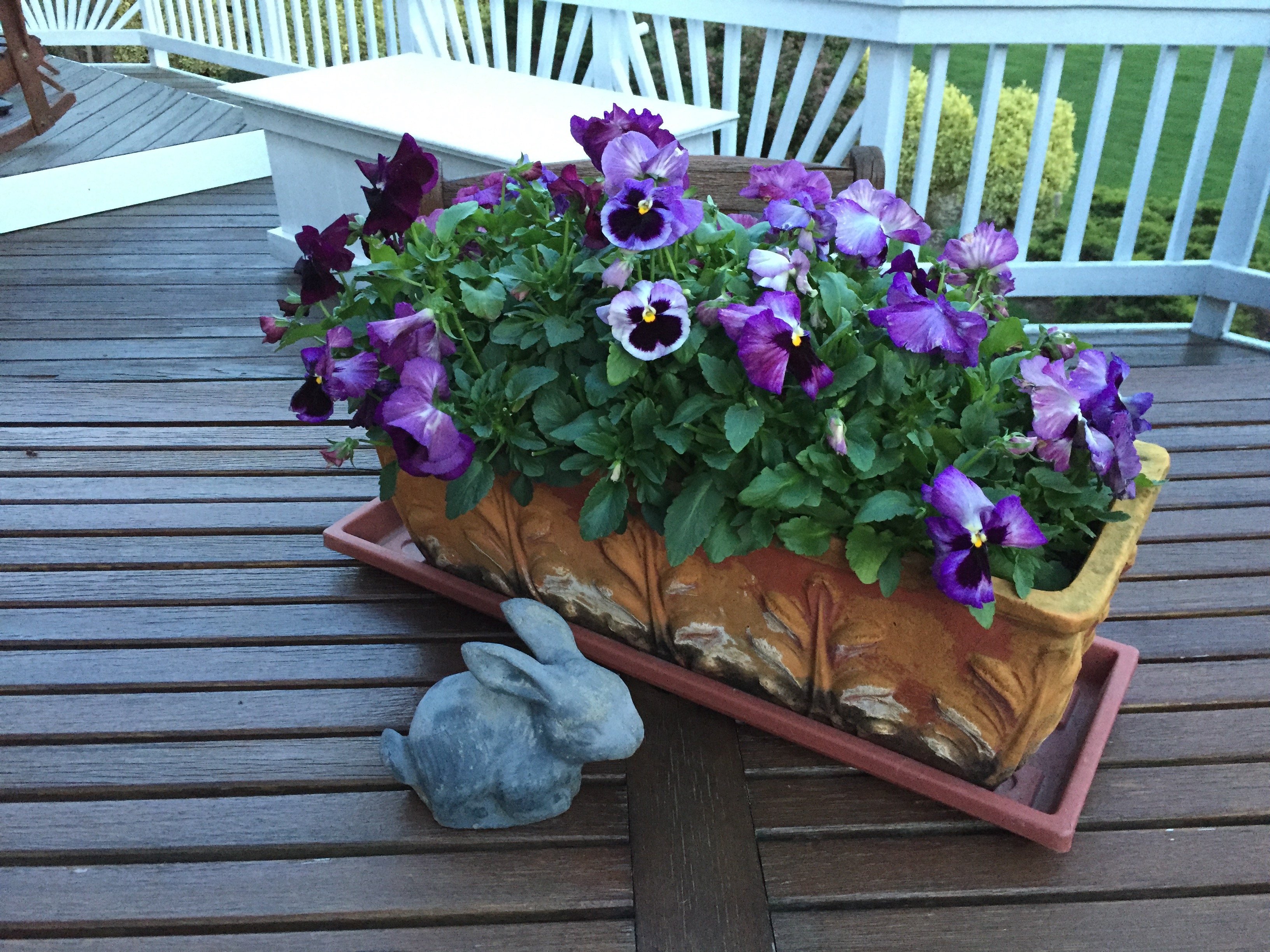
This is the first time we have had flowers on the pansies all winter long.

I am already seeing lots of new growth on the ornamental grasses which I just finished trimming back. Tip: After you have trimmed them down, rake through them with gloved hands (heavy duty gloves — I don’t want anyone getting cuts!). This will help remove the dead leaves and debris which if left behind, can make its way into the crown of the plant, choking the new growth.

The pansies which I planted last fall have been blooming all winter. Normally, they would have died back to the ground and re-sprouted new growth just this month. I am also seeing the strawberry plants sending out new leaves. It will only be a short time now until we have some on our plates, barring any late season storms.

If we do get an ice storm remember that falling ice can be very harmful to humans and plants alike, If you get falling sheets of ice, like I do, make sure that you block the area where they fall.

I hate to sound selfish, but I do love the milder weather this year so far. I am much farther along with my usual winter gardening this season. Tip: We are now at the correct time of year to apply a crabgrass preventer on the lawn. It can be applied anytime between February and April, but must be down before any 80 degree days to create a barrier.

In years past, when we have had mild winter weather, we would be in for a really wet spring, often with ice storms. We will see! It is always something different around here.

Until then, you know where you can find me — I’ll be out in the garden!


A Superhero for Gardeners – It’s Potman!

This picture was taken a long time ago in London, in front of one of my favorite florist's shop (Kenneth Turner). I have always loved the "Potman", and think it would make a wonderful alternative to a scarecrow in the garden.

I know that title is more than a little bit silly, but I’m hoping it caught your attention. We have all seen scarecrows protecting seedlings in the garden before, but here’s a new twist on that idea. How about making one out of clay pots instead of the usual clothing stuffed with straw?

If you are like me, you have probably accumulated way too many clay pots over the years.  Some of mine are cracked or slightly broken. Even still, I hate to throw them away. This is a perfect craft for all of those less than perfect pots you may have hanging around.

It’s very simple to create this fun project. First, lay out on the ground the pots you want to use and stack them in the order you would like them to be in. Once you have come up with your perfect Potman, measure the length of the arms, legs and body, neck and head. The sections are held together by rebar and twist-ties, so measuring will help you to determine the length of rebar you will need. (Add about 2 feet to the rebar for the legs.)

Here is a diagram of the rebar skeleton, and where to connect them with twist ties. This is just a suggestion - you might have a different pose that you would prefer for yours.

Next, pound two of the rebars into the ground about 2 feet deep for stability.  Begin stacking the pots on them for the feet and legs. Add the pot which will become the abdomen next with the rebar poking through the drainage holes in the sides of the bottom of the pot to secure it to the legs. Then attach a bent rebar in the shape of an upside down “U”. This should be secured with long twist ties to the leg rebar. The next pot will be the torso. For this pot, choose one that is one size larger than the lower one, and it will nest nicely on top to create its own seal. Before connecting them, secure a “J” shaped rebar to the “U” shaped one with more twist ties. This “J” shaped rebar should be long enough to protrude from the torso pot and into the pots you will be using for the neck and head, to secure them. Connect the shoulder and arm rebars. You may find this step easier to put together on the ground, then lift into place as one piece. Again, secure with more twist ties, and add the neck and head pots. Your done!

Some helpful tips:  To cover rebars which may be exposed, or to fill in “joints” where pots connect, use sheet moss. Your Potman will look like it has been there a long time, and it will add character to your garden. Also, it’s fun to fill the “head” pot with soil to grow grass, or a vine that you can style into “hair.”

If you live in an area prone to freezing winter temperatures, make sure to give the pots a seal with some polyurethane spray before assembly. This will protect them from the effects of the cold and wet.

I hope you will try this craft, and have him (or her) protect your garden from the crows! Enjoy!


It Might Be Winter, But It’s Always A Good Time To Garden!

This is the perfect time of the year to check bushes for evidence of blackspot or other fungal related diseases. Hollies can be prone to this, but many can be helped by picking the infected leaves and removing the fallen from around the base.

So far January has been a wild ride. There is a saying in the Washington area: “If you don’t like the weather, just wait 15 minutes.” This week we have had gorgeous 70 degree days, snow, rain and wind storms. Which means as long as you are flexible with your time, you might find an hour or so to get into the garden and catch up on things when the weather is tolerable.

I’ve been asked to chronicle the yearly cycle of when is the proper time to do different tasks, so I will start with my own “garden to-do list” each season in hopes that it will help.

As I was putting away the Christmas decorations, I noticed a bumper crop of weeds already appearing. We did have a record warm December, so it didn’t surprise me. I quickly pulled/dug them out, and then applied a layer of weed preventer. Normally, I would not have done that, but we are really having crazy swings in the weather, so better to be safe than sorry. A little diagnostic tip: Make note of what type of weeds you have and where. It can help you determine if your soil needs help. For instance, clover indicates that the soil is too compacted. Wild onion means your soil is too soggy, etc…

When checking out your bushes, be on the lookout for over-wintering insects. These egg masses are destined for the trash. Be sure not to compost, or you could spread the insect problem!

Another task to do this time of the year is to check the bushes for insects that are wintering there. I invariably find large egg masses of scale in my euonymus and juniper bushes. If you cut these out now, you will have far less insect problems next spring and summer. It is worth checking, and you might also locate bird nests more easily with leaves down. I like to make a mental note of where they are so, I don’t disturb them in the spring.

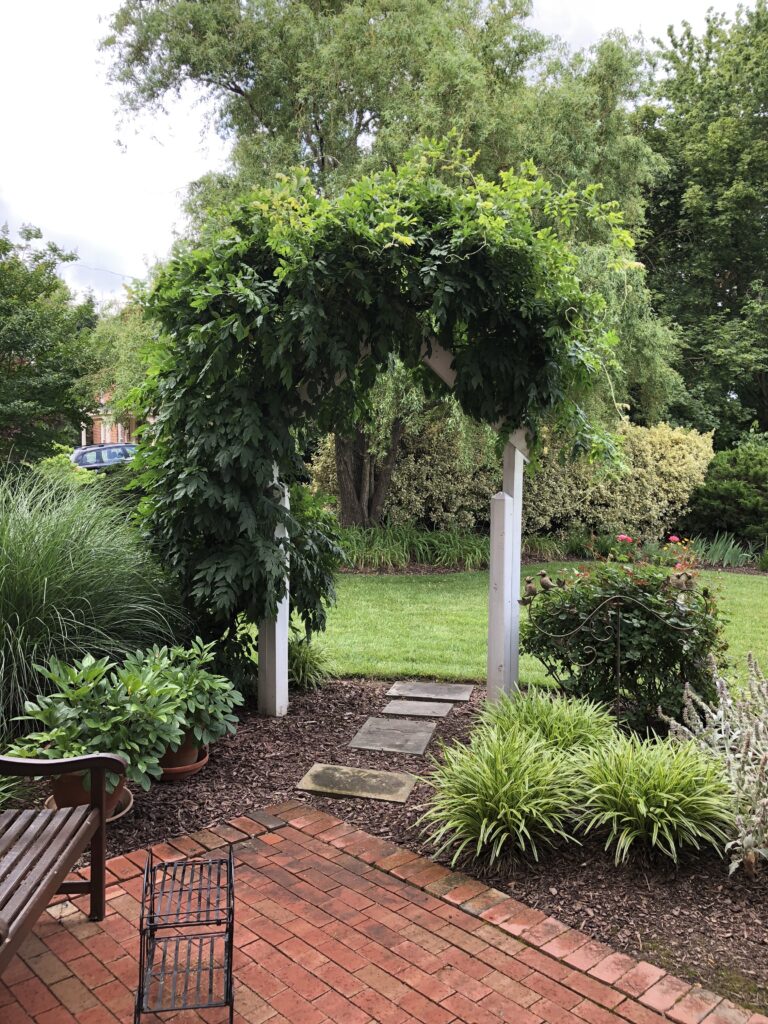
January and July are the two key months to give Wisteria a hard cutting back. It is easy to remove unwanted branching while the vine is bare this time of year, just be sure to leave 2-3 buds per branch for maximum flowering in the Spring. Also, it's a perfect time to check for bird nests, too, so you won't disturb them in the spring. (If you look carefully you can see a robin's nest at the peak of the arbor.)

This is the perfect time of the year to cut back wisteria and hummingbird vine as well as butterfly bushes. If you cut back, leave 2-3 buds on a branch and you will be rewarded with a fuller plant next summer. This will also encourage more flowering on the wisteria this coming spring. I am also working my way around the yard, cutting down the ornamental grasses, one by one, and the remainder of the other perennials. I have dozens of irises, sedum, coreopsis, liriope, and many others, so if I cut a few back each day it will add up. When I have finished with these, it will be time to move on to the larger bushes. I like to have the hollies and the junipers trimmed back prior to March. They will then set their new growth and fill out shortly after.

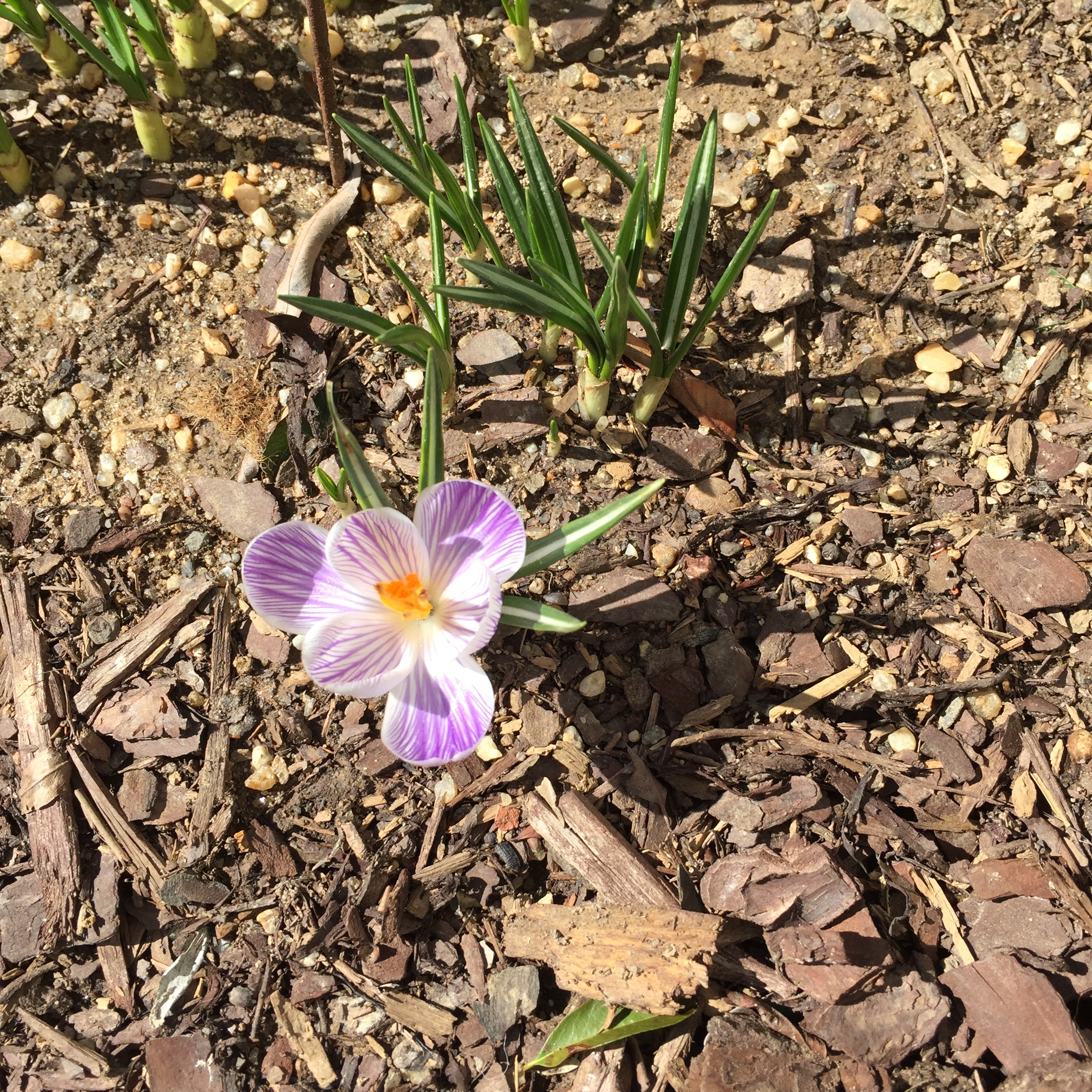
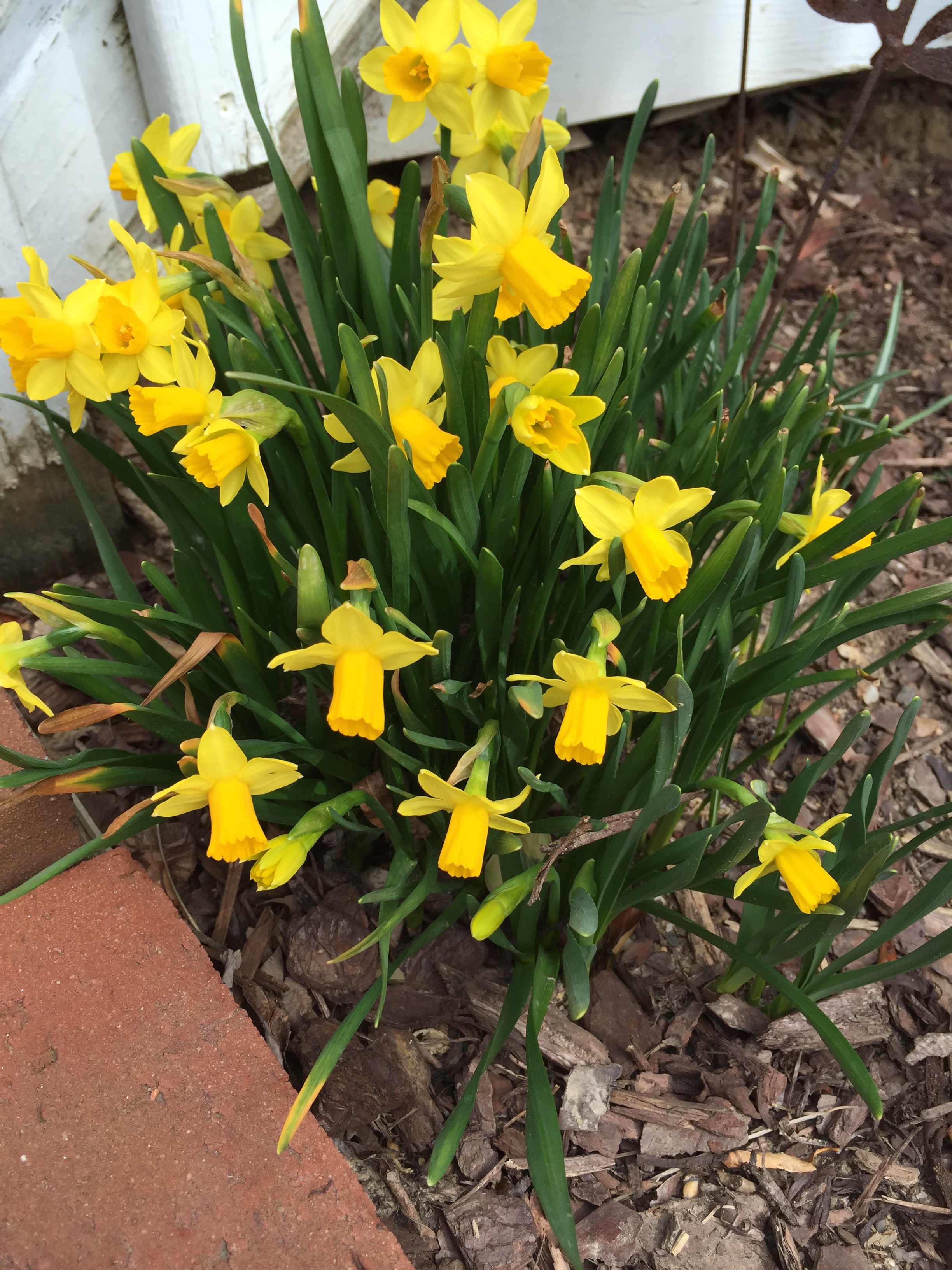
It seems like this will be an early spring in this region. I am already seeing my crocus and daffodils breaking through the soil, and flower buds swelling on the trees. Here’s hoping we have many more moderate days to enjoy, and give us  a head-start in the garden!


Winter Curb Appeal – A Fun Project to Enjoy All Season

I want to wish all my readers a Happy New Year! It has been a busy couple of months. Please check out the new page I have posted on the 2011 Christmas Tour in which I participated. This was sponsored by The Wyndham Garden Club in central Virginia as a fundraiser for their projects. It was well attended, and they will be making it an annual event.

The house looks so festive at Christmas time, but when the decorations come down it's nice to have something to replace them with to cheer things up for the rest of the winter.

I am always looking for ways to cheer up the deck and doorways in the winter months. Things can be so drab after the summer flowers are gone, and the Christmas decorations have all been put away. I have a remedy sure to bring a smile, and brighten things up for not only the winter but the early spring as well.

Once the annuals have bitten the dust and been discarded, empty the old potting soil from your pots into your garden bed. It will help to improve the soil there, and each season of flowers should receive fresh soil when in pots. Next, with a 5 to 1 solution of water to bleach, scrub out your pots and let them dry in the sun. This will keep diseases from getting started or passed on from reusing the pots.

Closeup of a pot filled with daffodil bulbs, then topped with boxwood branches. It will look fresh through the winter, then beautiful with bulbs in the spring.

Now we are ready for the fun to begin. Using a deep pot with drainage holes, fill with potting soil up to 6″ below the rim. (If you live in a cold climate it’s best to use a resin pot for this project because of freezing issues.) Flatten out the soil and add a layer of daffodil bulbs. These can be placed closer together than you would ordinarily place them if you were to put them in the garden. I usually leave only about 2″ of space between. Try to fit in a dozen or more depending on the size of your pot. Next, fill the pot the rest of the way with additional potting soil, and water really well. These are going to sprout next spring for a beautiful show, but in the meantime (from now through March), I like to create what I call “instant plants” on top. To do this I trim boughs from my boxwoods and junipers, then simply fill the pot with the trimmings. I like mine to look realistic, like miniature boxwood bushes, or juniper bushes using single types of foliage in the pots, but a mix of greens looks gorgeous, too. Simply push the stems of the boughs into the damp soil. The soil will hold them in place and they will last for months outside. If you haven’t gotten rain, give them a watering each week.

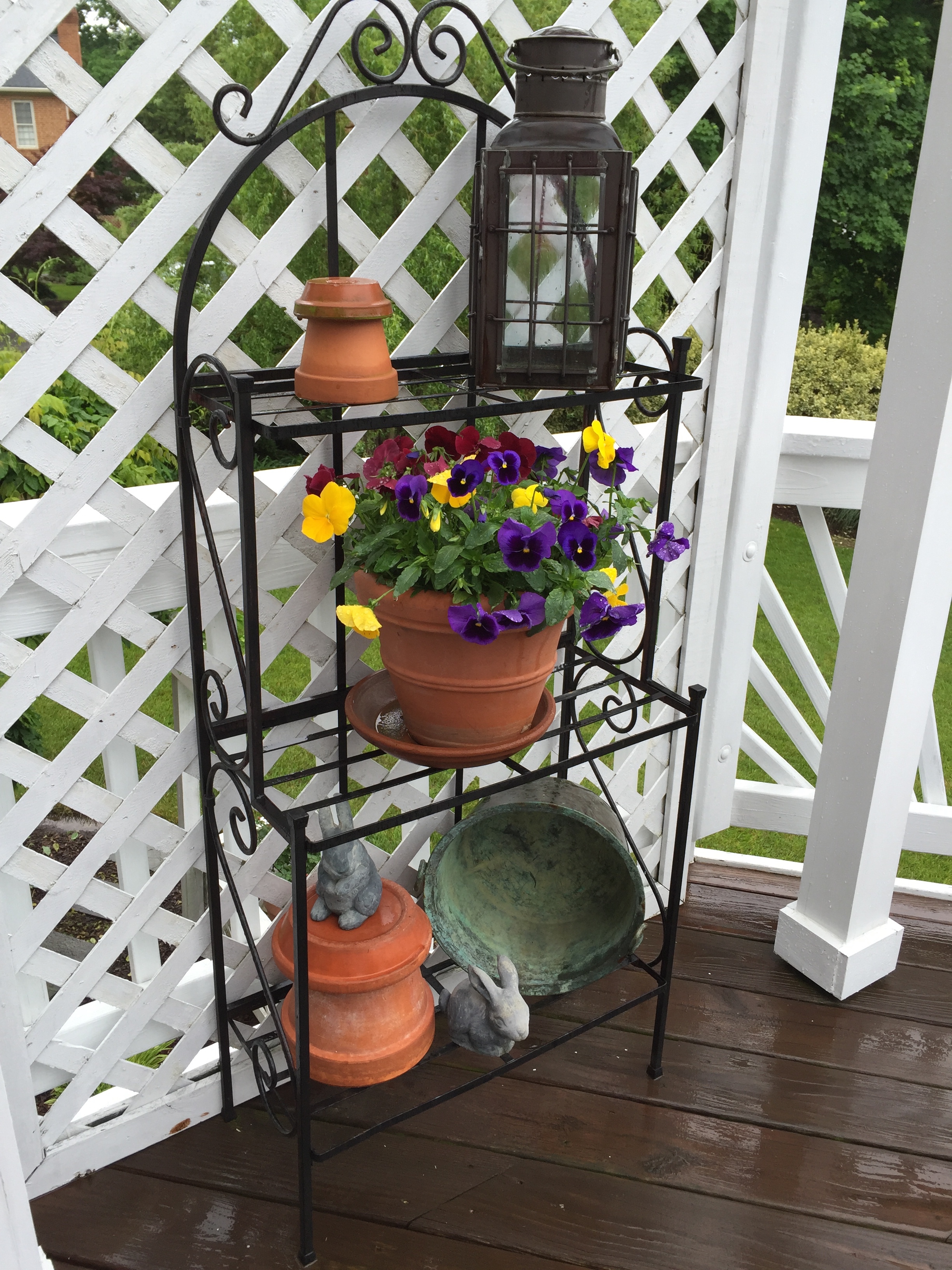
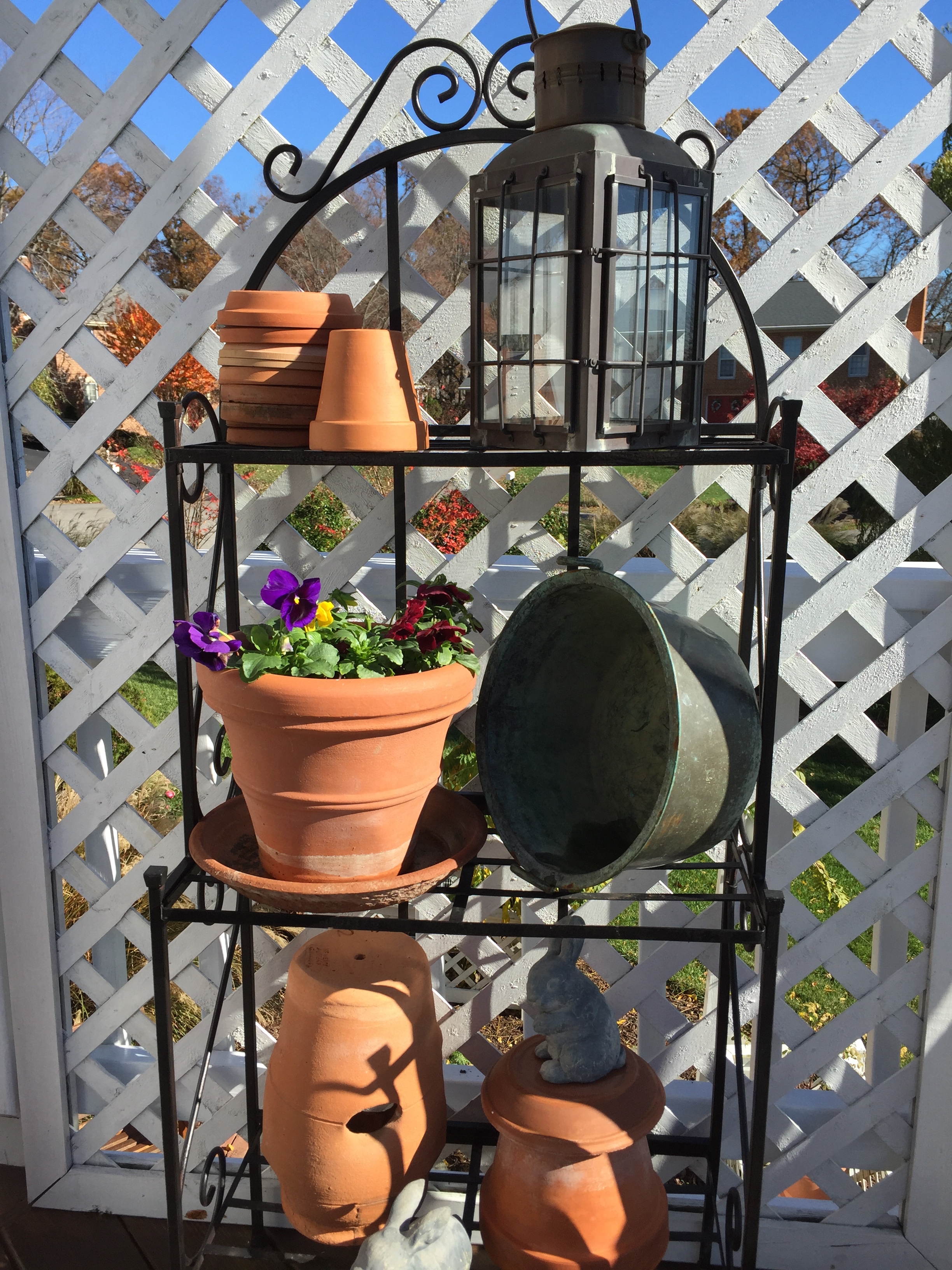
I like to place a really large pot next to each of the doorways and smaller versions on the iron baker’s rack, plant stands, the patio table, and even the window boxes get filled with these “instant plants”.

When the winter starts to break, you will notice the bulbs pushing their new growth to surface. This is when you need to pull out the boughs and discard (carefully so you won’t disturb the new growth), and then you will be rewarded with a second season of beauty as the bulbs bloom!

I hope you will try this project, it can be done with crocuses or tulips as well. Enjoy!

It’s Autumn – What to Do with All the Leaves!

Gourds by the front door -- it must be Autumn!

Autumn is here, and with it an abundance of fallen leaves. There are always questions as to what to do with them all — rake, mulch, compost, or ignore. There are many options. I will help you figure out what is best for your yard.

If we are talking about the leaves which fall on the grass, it is my opinion that it is best to collect them. When they are left on the lawn, they can compact and mold can soon become a problem. If they are mulched into the lawn with a mulching mower, they can be too acidic and wreck the delicate PH balance that is so important to a beautiful healthy lawn. Also — a little known fact — they will not decompose properly and will become a thatch problem, once the overnight temperatures are below 55 degrees.

You will notice that these crepe myrtle leaves have spots. This is common on many trees as the leaves lose their chlorophyll. Do not apply a fungicide; when new leaves emerge in the spring they will be all green.


One of the easiest, back-friendly ways of collecting leaves is to bag them with the mower.  Just be sure to empty the bag frequently, as it will fill quickly! This works well if your leaves are less than an inch thick on the lawn. If they are thicker than that, your best option is raking or using a leaf blower. My personal favorite style of rake is the really wide plastic sweep with a padded handle so you do not get blisters on your hands.


My favorite style of leaf rake. This one has a very wide sweep and a padded handle. It lasts forever, too! This one is 20 years old.

I also like using a mower to collect the leaves, because it starts the composting process by chopping the leaves up into small pieces. If you have the space in your yard for a compost bin, this is the perfect time to start one!  Just layer in brown (fallen leaves), then green (grass clippings). When you have a few minutes give it a stir with a garden fork, just a few times over the winter should do it. By spring you will have a wonderful amendment to stir into your flowerbeds or as a top dressing around bushes.

The only place it is best to ignore the fallen leaves is in a wooded setting where there is no grass. They will provide a layer of warmth to the tree roots over the winter. As they decompose, they will be the perfect PH for their setting, because they are falling onto the soil below the tree where they came from. Thank you, Mother Nature!

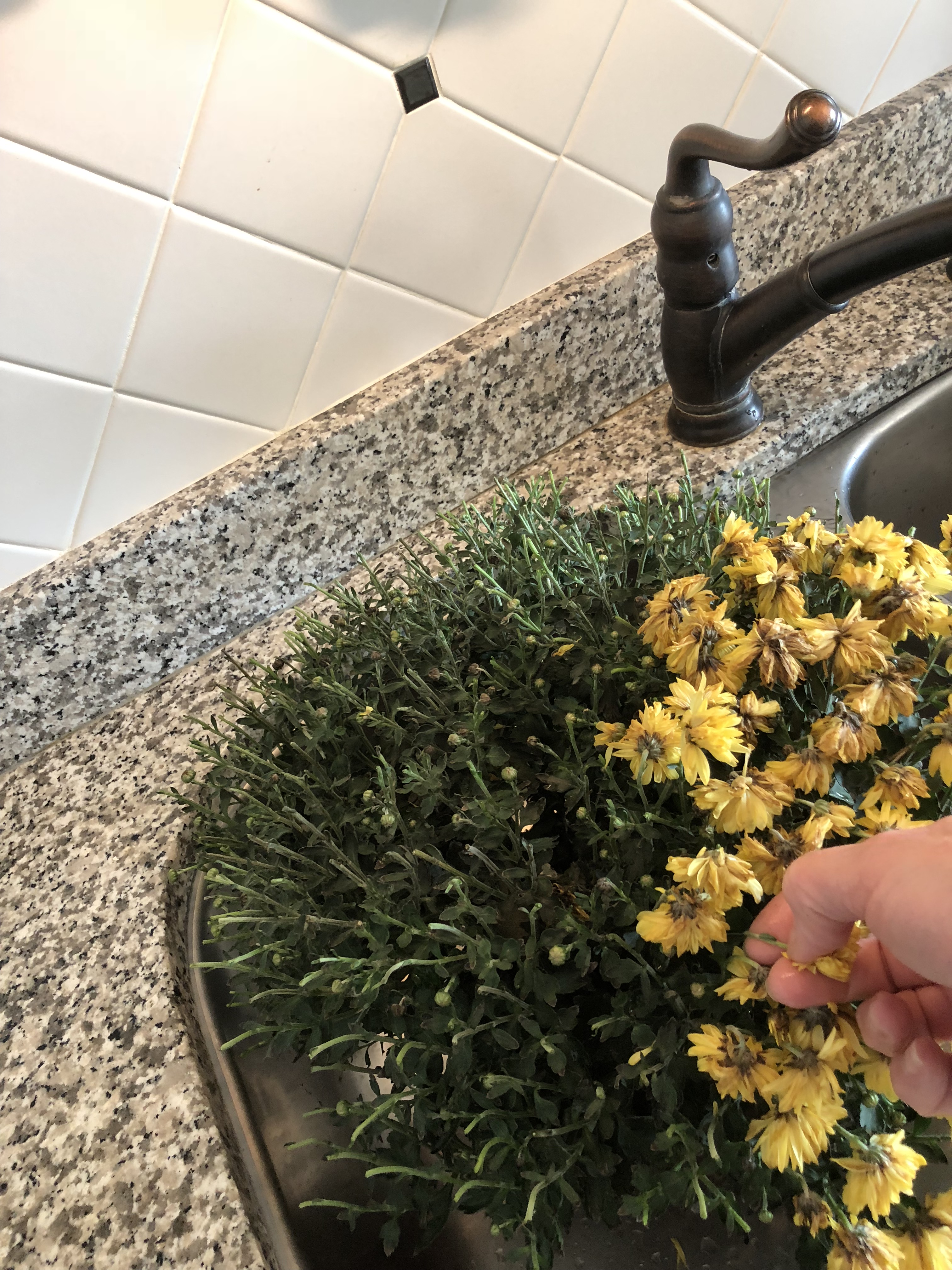
One of the most beautiful flowers of Autumn is the Chrysanthemum. It is best to hand pick the leaves out of flower bushes, their delicate branches can break easily.

I know it is a common practice to use a blower in the garden beds; please do not do this. It is like putting your bushes through a hurricane with the force of the wind the blowers produce. Never a good thing! Even though it takes a bit more time to pick the leaves out, or rake them out, it’s worth it for the health of your plants.

It is so nice to get out into the fresh Autumn air. I like the chance to put the yard to rest for the winter to come. I hope you think so, too. Enjoy!

Getting the Most from Your Late Season Garden

Chrysanthemums have an entire new set of flowers beneath the first set. Deadheading will result in double the flower time!

Perennials, as you know, only bloom for a month or so, and then you are left with an ugly mass of dying flower heads and usually declining  foliage on the remainder of the plant. I am often asked about what to do and when to cutback, as opposed to just deadheading, and when to just tear something out. There are many tips I can share with you on all of these questions.

Many plants benefit from cutting back after they bloom. I regularly cut back the foliage on the hosta, yarrow, daylillies, salvia, lamb’s ears and iris to just above the crown of the plant when the flowers are finished. The foliage will re-sprout, and the plants will look fresh throughout the rest of the growing season. This is true with many perennials and herbs.

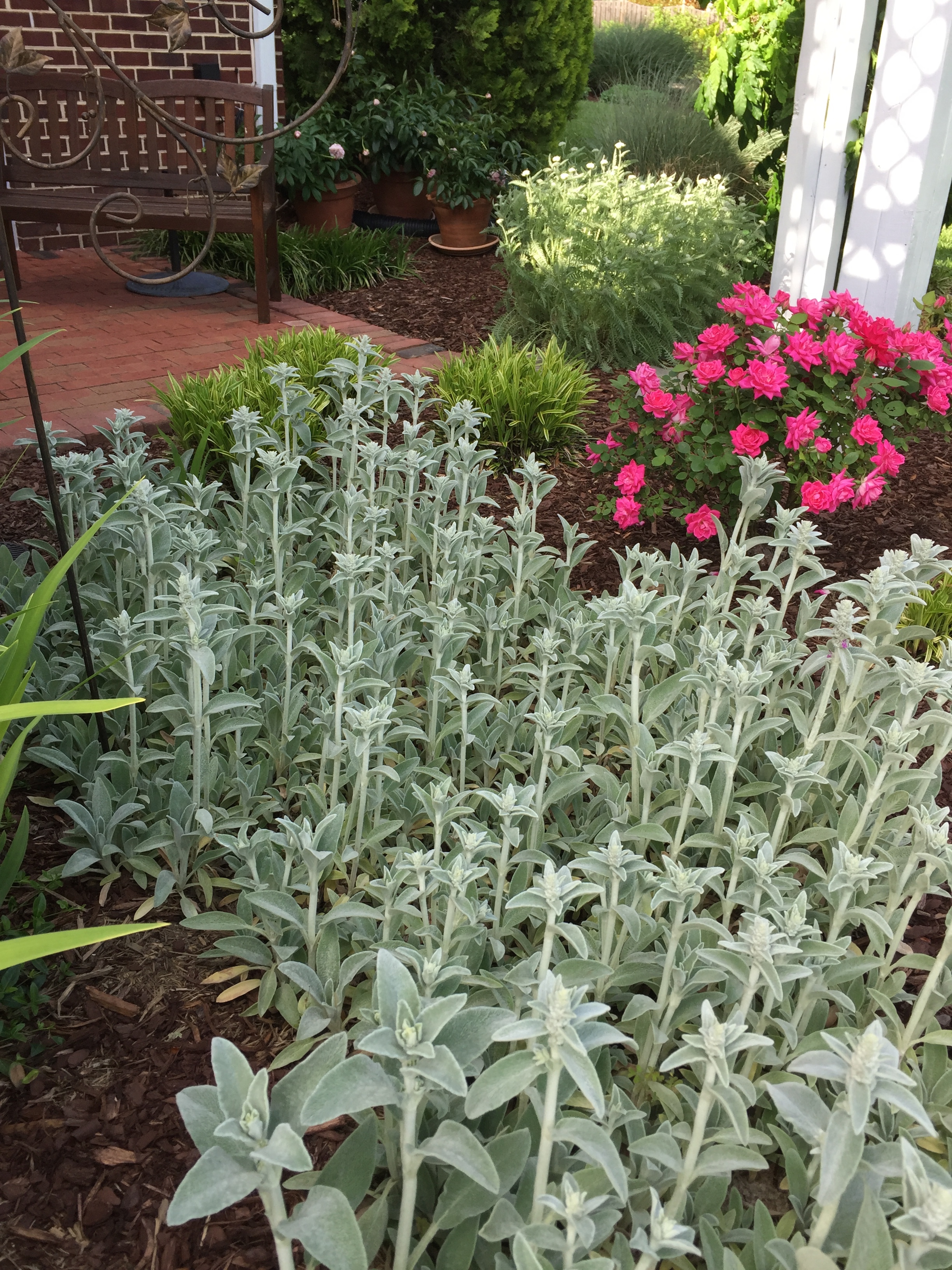
Here is an example of the second growth on daylillies and lamb's ears. Once the flowering has stopped, cut back to just above the crown and you will be rewarded with a fresh new crop of foliage to last the rest of the season.

Deadheading is a good way to keep your annuals looking at their peak. I would also recommend this for roses all throughout the summer and fall. Even some perennials like mums and dahlias will have a repeat bloom if deadheaded, giving you a repeat performance in the same season. This is also true of pansies. Budget tip: I prefer to plant pansies in the fall, they will come back into bloom in the spring in all their glory, giving you two seasons for the price of one!

I reserve tearing out only for the annuals, and usually between mid-September and mid-October. When the temperature at night starts falling into the 40′s the flowers decline rapidly, so this is when I like to replace them with pansies, ornamental kale or cabbage, or some other Autumn beauty.

Cutting back Sedums and Mums mid-season will yield fuller, more compact plants which will be less prone to splitting open under the weight of full blooms.

When laying out your garden design make sure to consider the texture of the foliage. Try to group differing kinds, because this will give you visual interest when the plants are not in bloom. I also try to stagger the groups in drifts so that as one is blooming it can mask the decline of another variety. For example: If you plant daylillies and daffodils in the same place, the foliage from the daylillies will hide the daffodil leaves as they decline for the season.

This is also a good time to give the mulch a good scratching up to make it look fresh again, and give it one last application of a weed preventer for the year. Fall weeds are really tough, so I do what I can to prevent them from ever starting.

One last tip to take your garden over the top health and beauty-wise is to apply  a coating of Horticultural oil (Volck oil) to your foundation plants. This will safely keep the spiders off while giving your plants a really beautiful sheen. This will also protect the leaves from winter burn. I find the easiest way to apply this is with a hose end sprayer, but you can also use a pump sprayer for smaller gardens.

With just a little bit of change your garden can be just as striking in the Autumn as it is in the height of the growing season. Enjoy!

Garden Lighting

Highlighting certain trees or plants at night can really enhance your landscape.

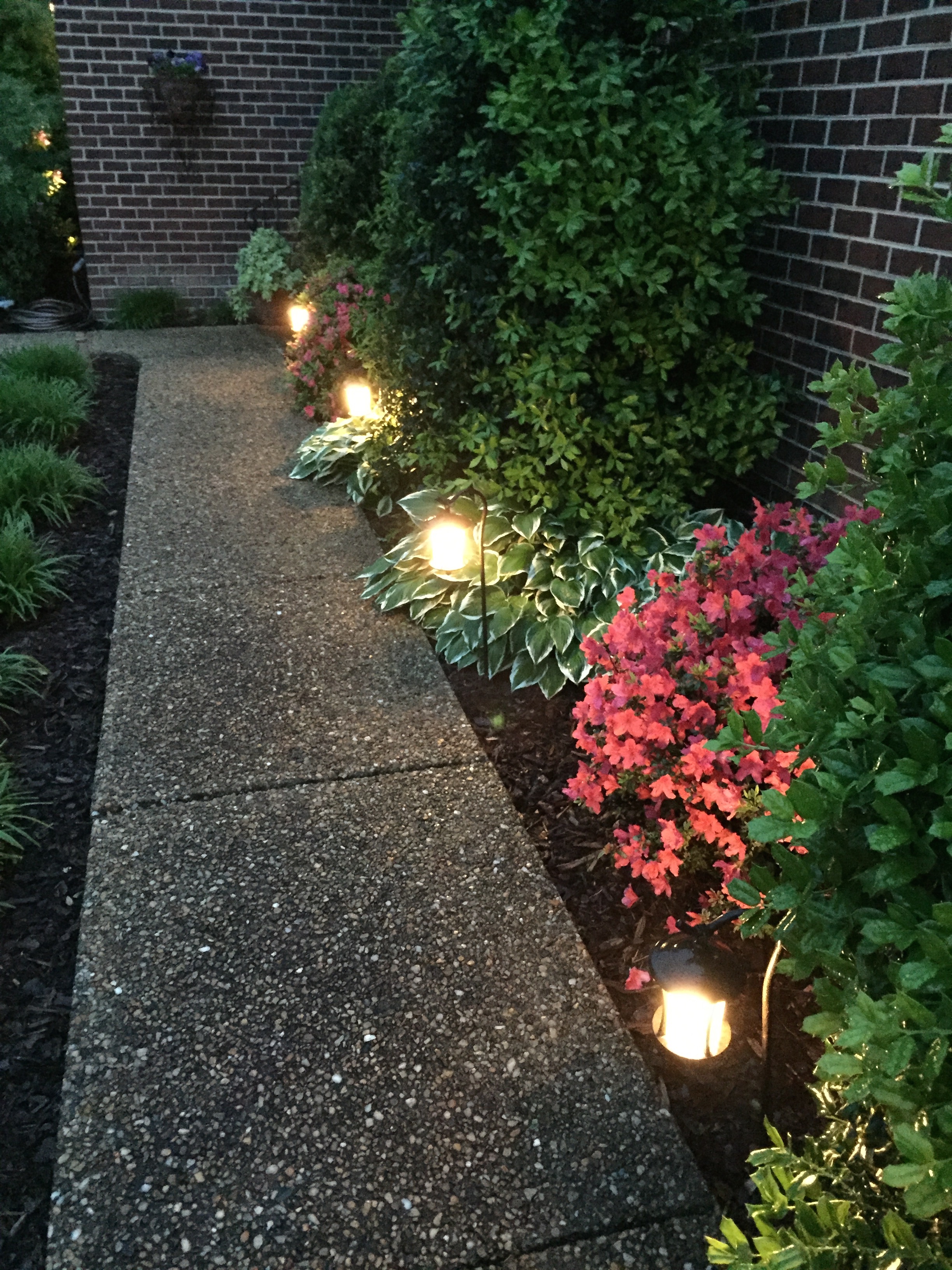
With the days getting shorter, I thought it would be a great time to talk about garden lighting. The kind I would like to highlight are the ones beyond the normal entry door lights and post lamps, and move further into the garden. There are so many types out there to choose from, and they can really enhance your landscape as well as provide some safety.

Whether you choose hardwired, low-voltage, or solar here are some things to consider. With hardwired you need some electrical knowledge, permits, and may need to bury your lines quite deeply, to pass code. Usually the hardwired lights are installed during a new build, but can be added later. Solar has come a long way in the past few decades, and has some clear advantages in some applications. You can easily find kits with multiple pathway lights, deck post-cap lights, and even stair tread lights in solar. About the only drawback is that you must get six or more hours of sun on the panels each day for them to work, and the light that they cast is not very bright, but is good for guiding your way as an accessory to a brighter light source. That leaves us with low-voltage, which I personally think is the best. It is consumer friendly being easy to install, and very flexible. You can change your layout as needed without to much effort. Also, you can determine what wattage is best for your personal application.

Low-voltage is the type that we chose for our yard, and my husband installed it more than a decade ago. We have changed it around a few times, and learned a lot about what works best. Here are some helpful tips he wanted to share.

*  When you are planning your lighting layout add up your total wattage and get a transformer that is the next size up. That way if you want to change it around, or add an extra light or two you will have the capacity.

* Up-lighting is truly a great way to highlight your house. To do this place the spotlights about 2-3 ft. away from the foundation with a slight angle toward to house. It will highlight the brick or siding and bathe your house in glow, a real professional look.

When up-lighting a tree, aim the spotlight mid way on the trunk for a great effect.

* When highlighting a tree, aim the light about half way up the trunk. It will cast light up into the branches, and highlight the bark.

* When connecting the individual lights to the main wire, leave the junction above ground. Even though it is “waterproof,” the connectors are the weakest link, and are usually the first part needing to be checked.

* We have found that using 40-50 watt bulbs works best for us, the lower wattage is just to dim to cast light beyond a few feet. Also, please be considerate and do not aim your lighting beyond your property line.

* For safety’s sake make sure to light your property’s address number, in an emergency it could make a difference!

I hope you will add some lighting to your garden, you will be amazed at how much beauty it adds.

And The Winner Is…..

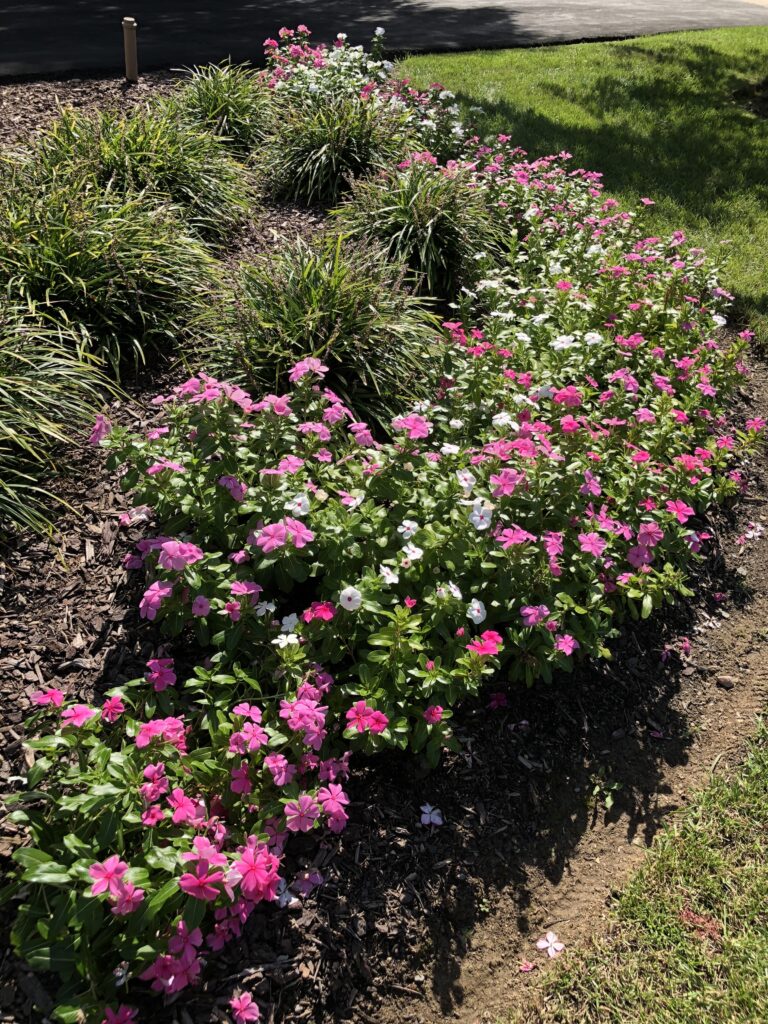
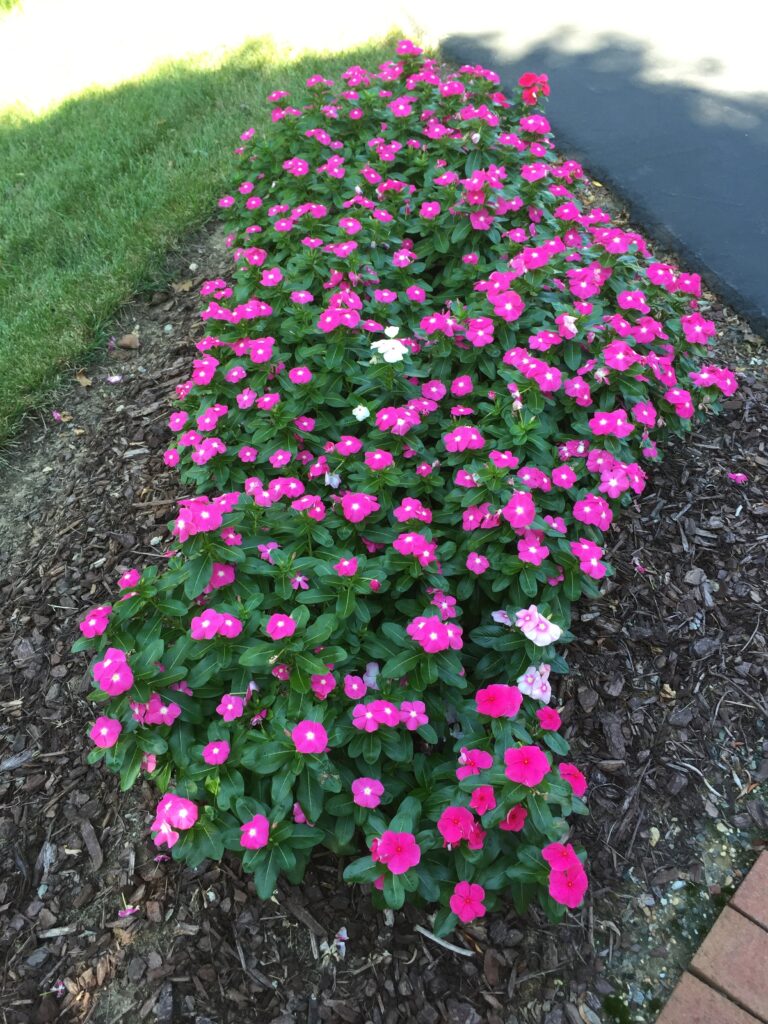
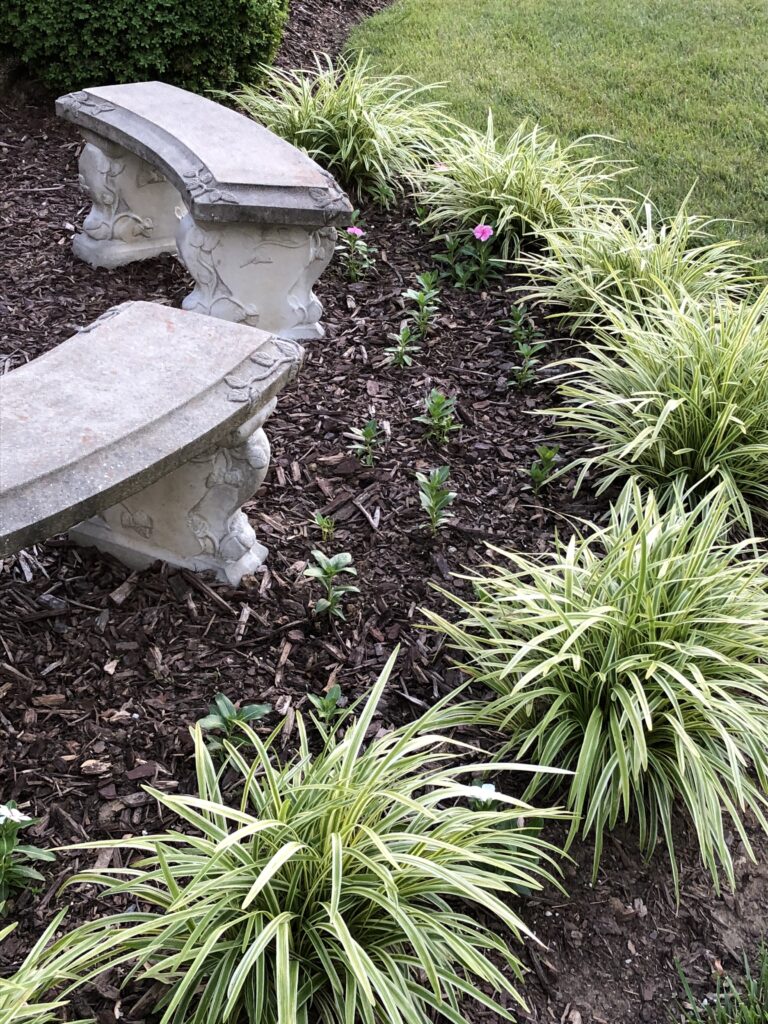
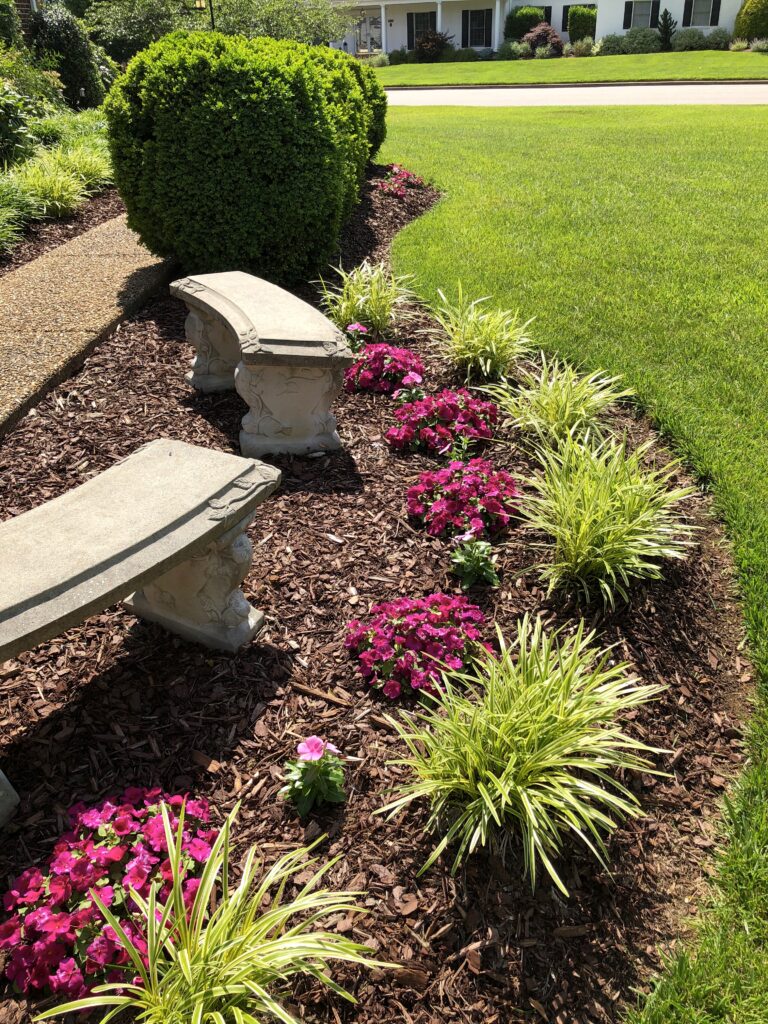
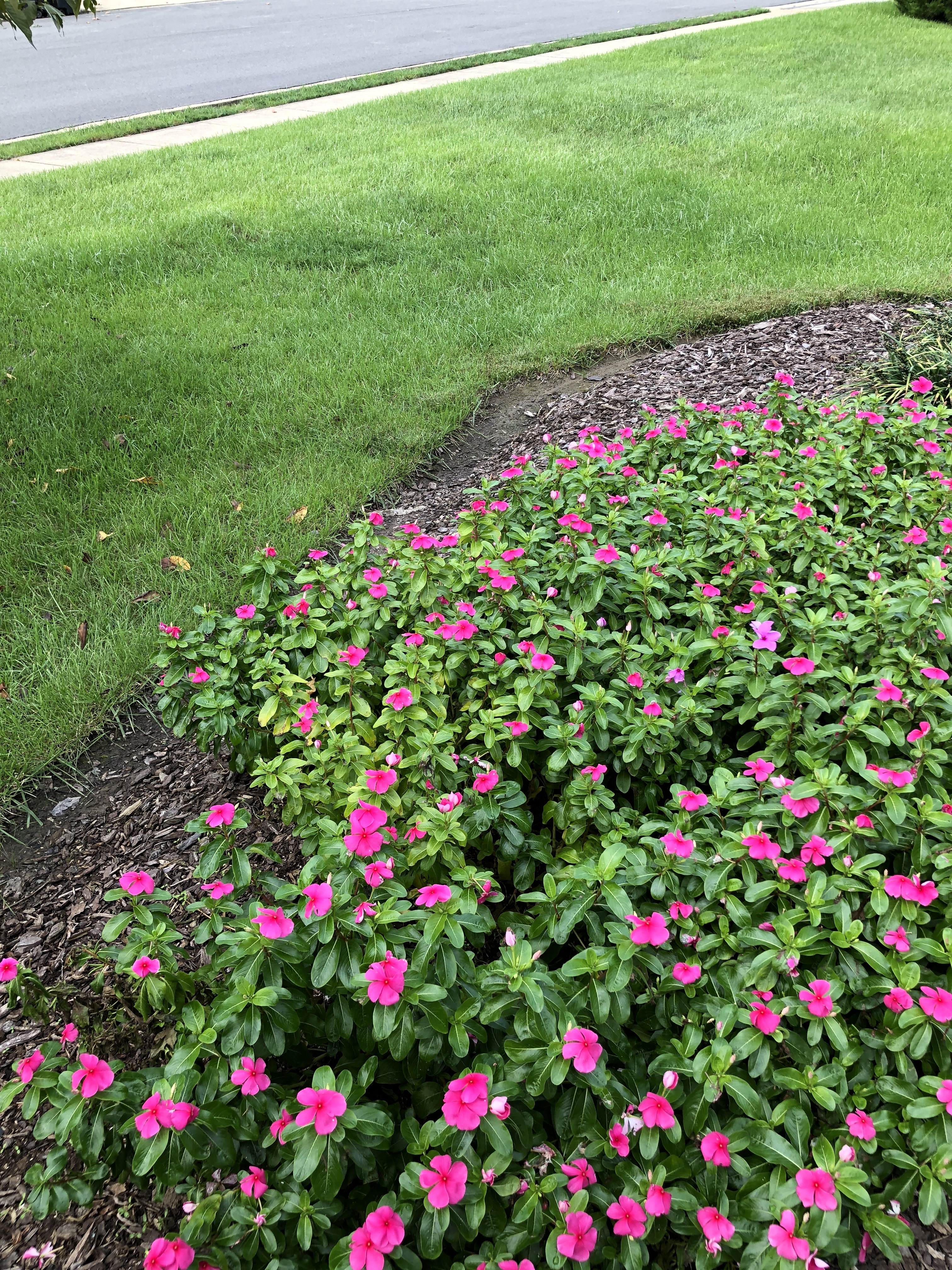
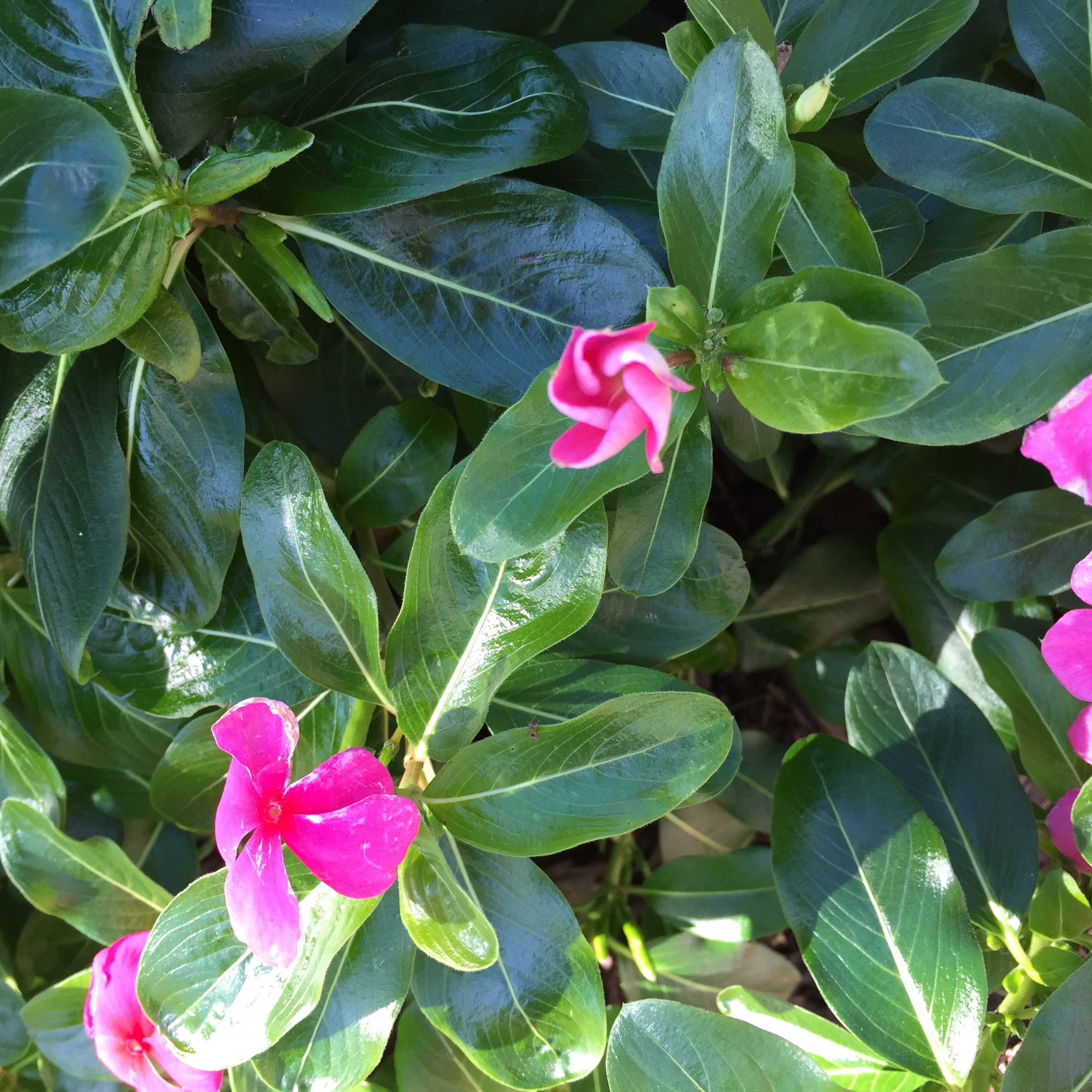
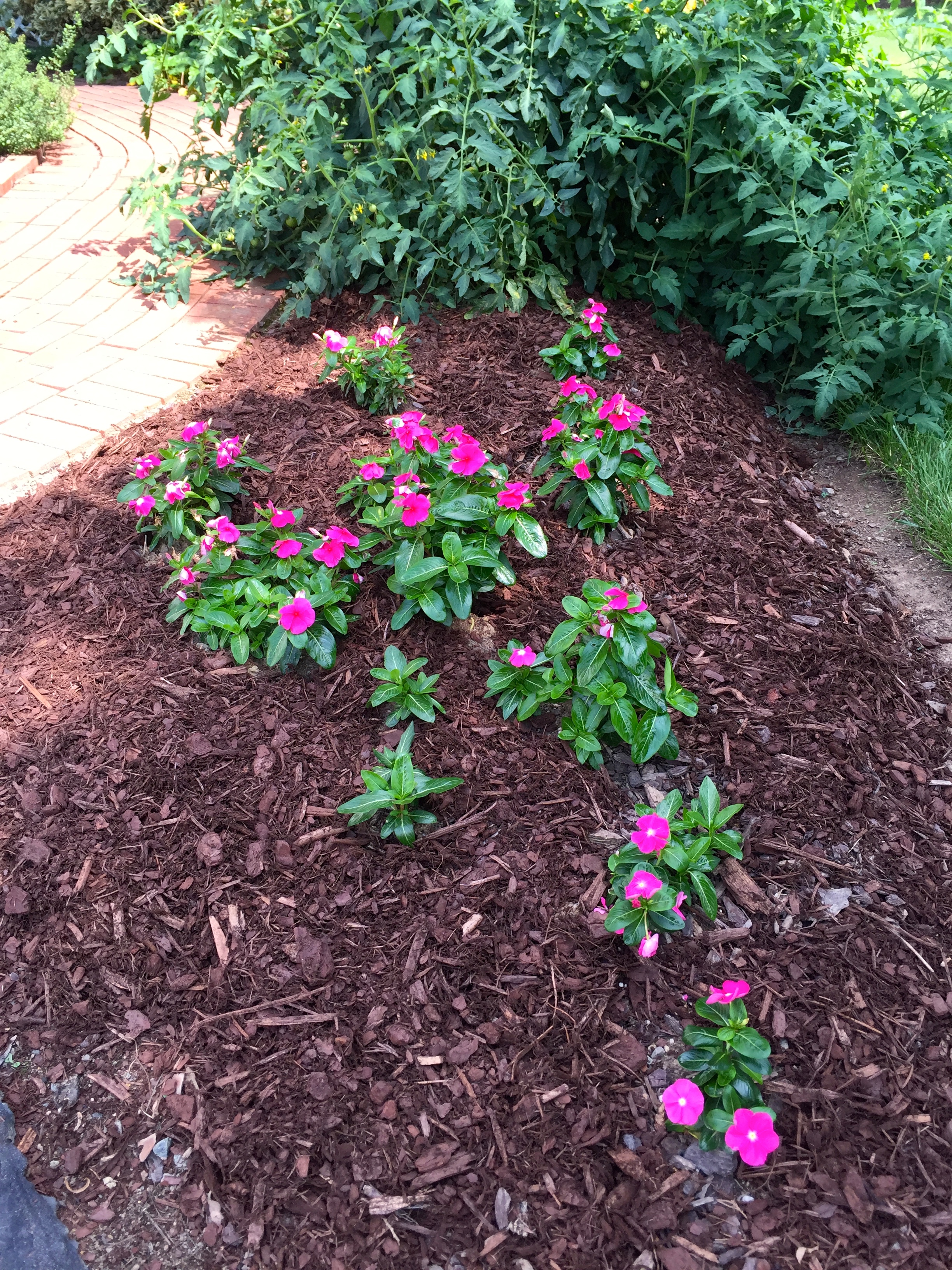
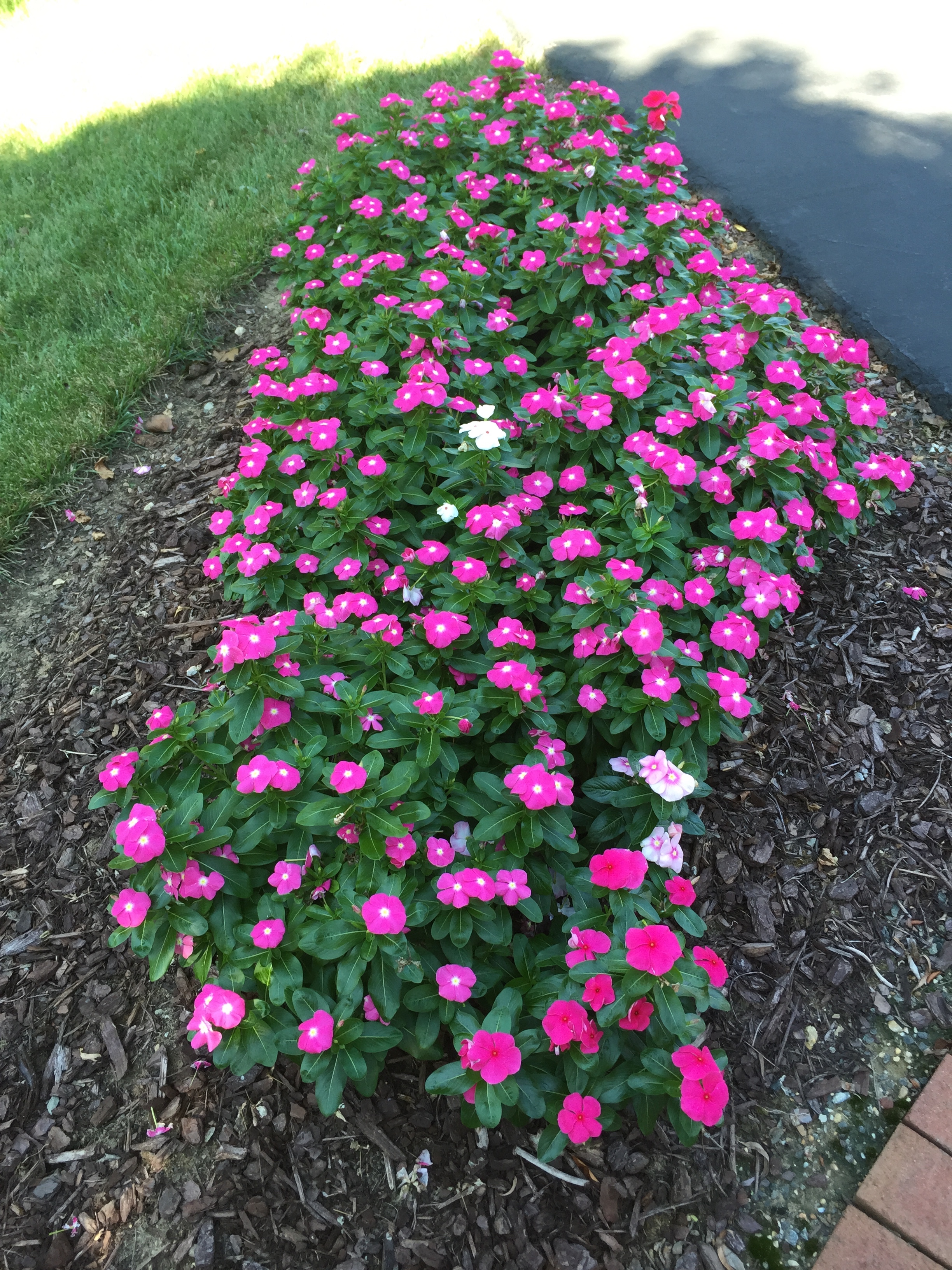
The Vinca was the best performer of all the annuals in the garden this summer.

With the Emmy’s around the corner, I thought it only fitting to write about the winners in this summer’s garden. Even though the temperatures soared, and we had little rain to speak of, there were still some true winners.

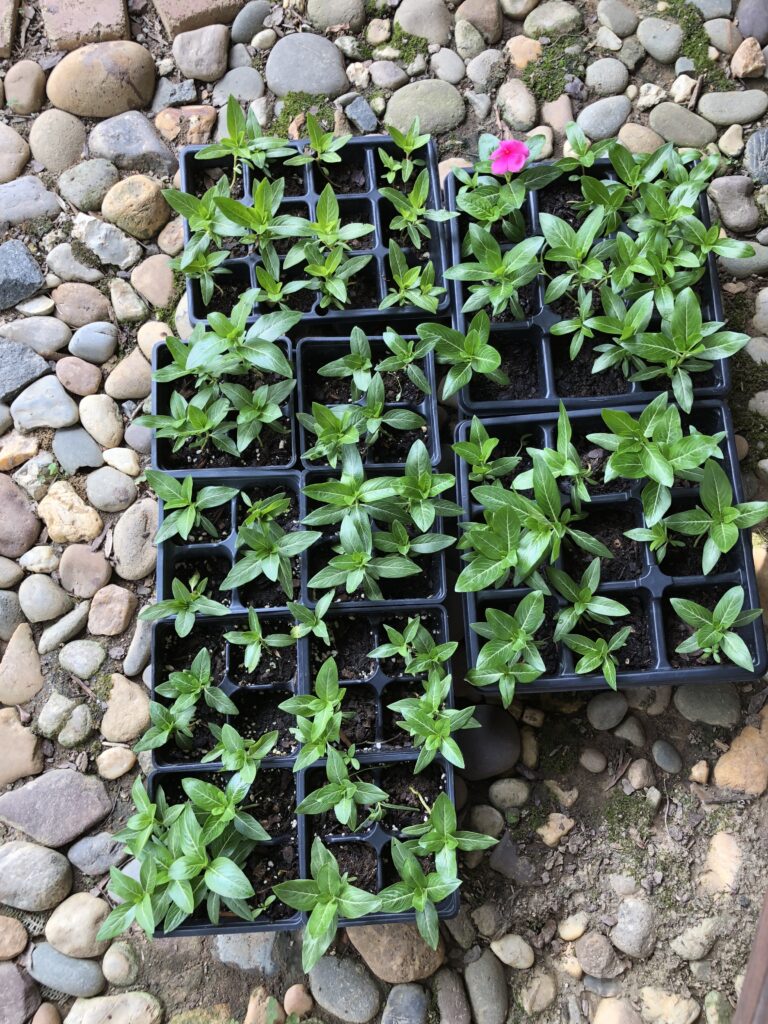
I give top honors to the Vinca which bordered my driveway. It is in the full afternoon sun, on the west side of my house. It not only survived, but thrived on the awful 100+ degree days! In past years I have planted Ageratum and Begonia with fairly good results, but in comparison, the Vinca is a clear winner.

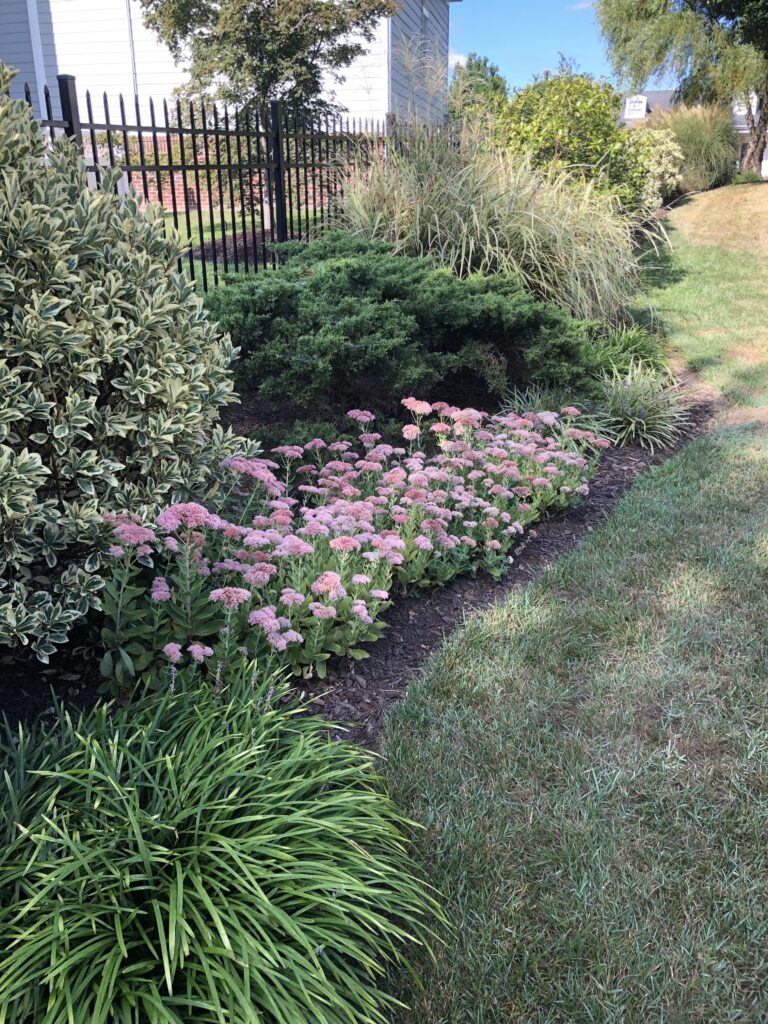
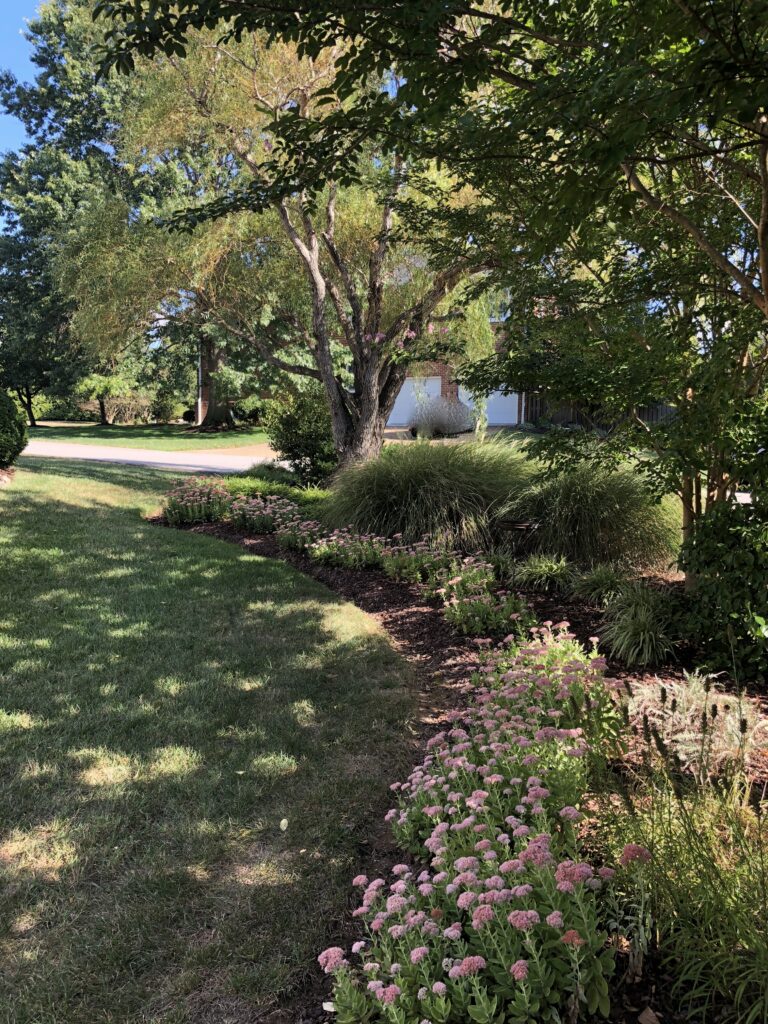
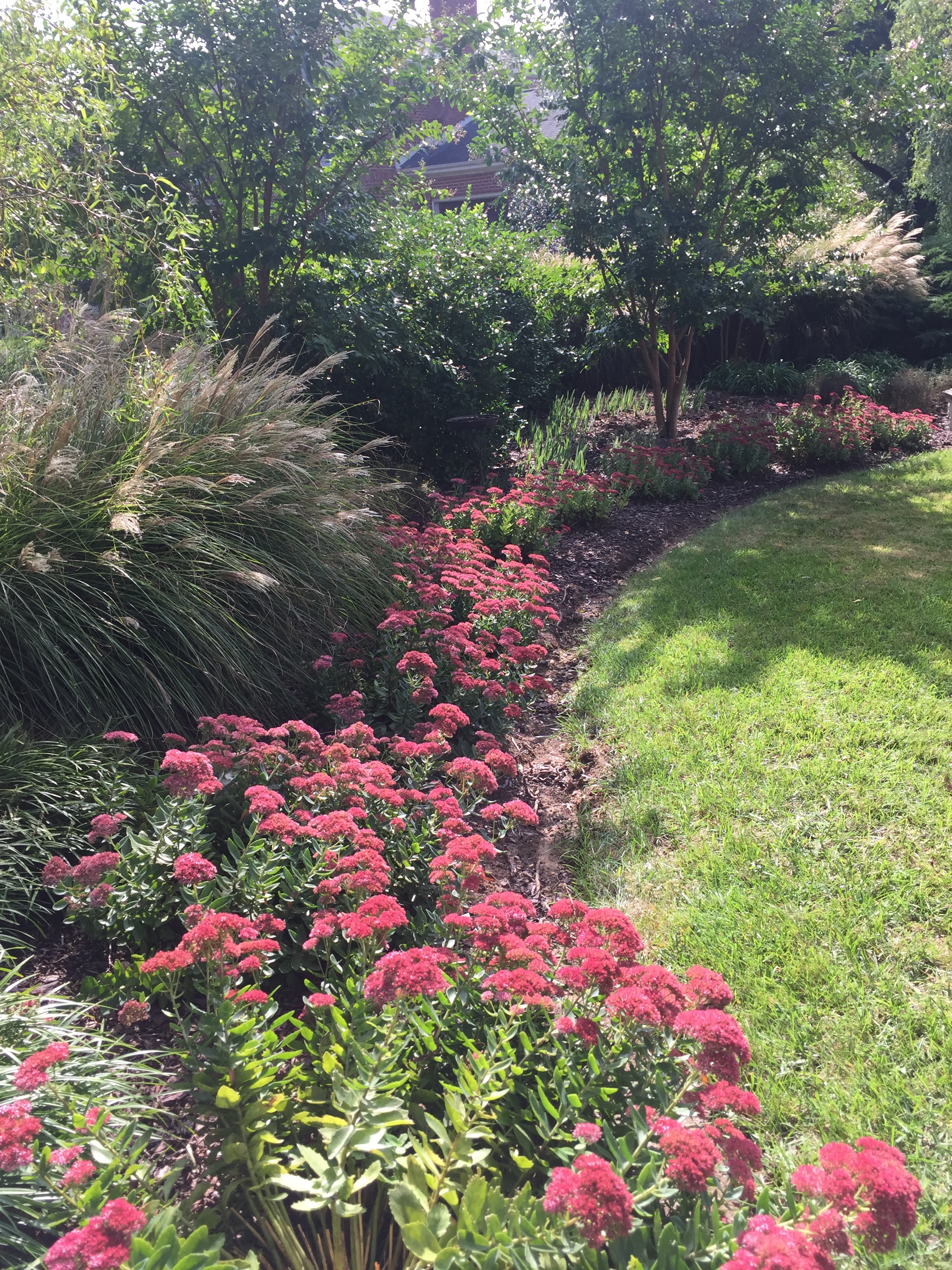
The Maidenhair Grasses add height and motion to the garden. Sedum borders the front edge, and gives color late Summer through the Fall.

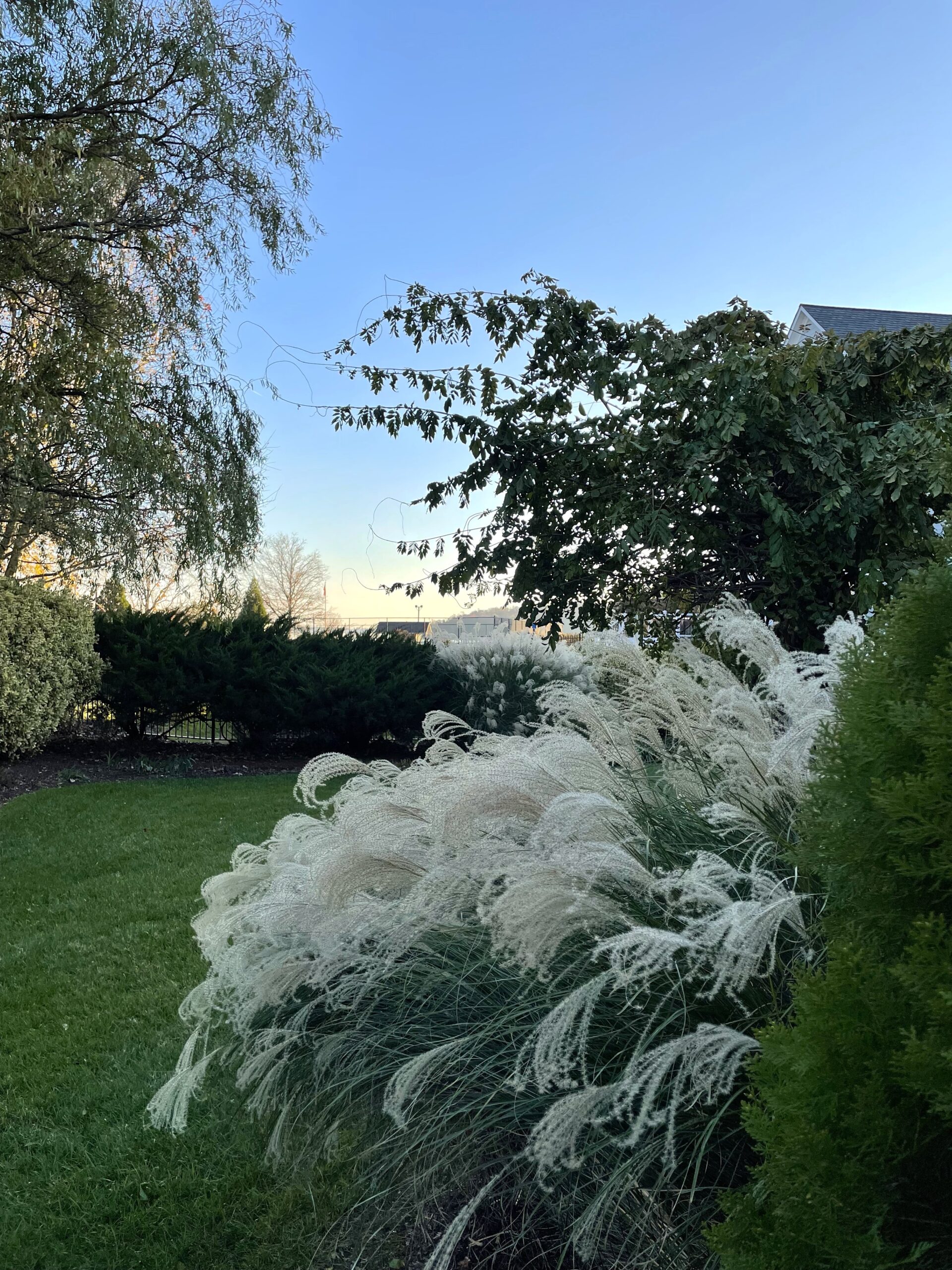
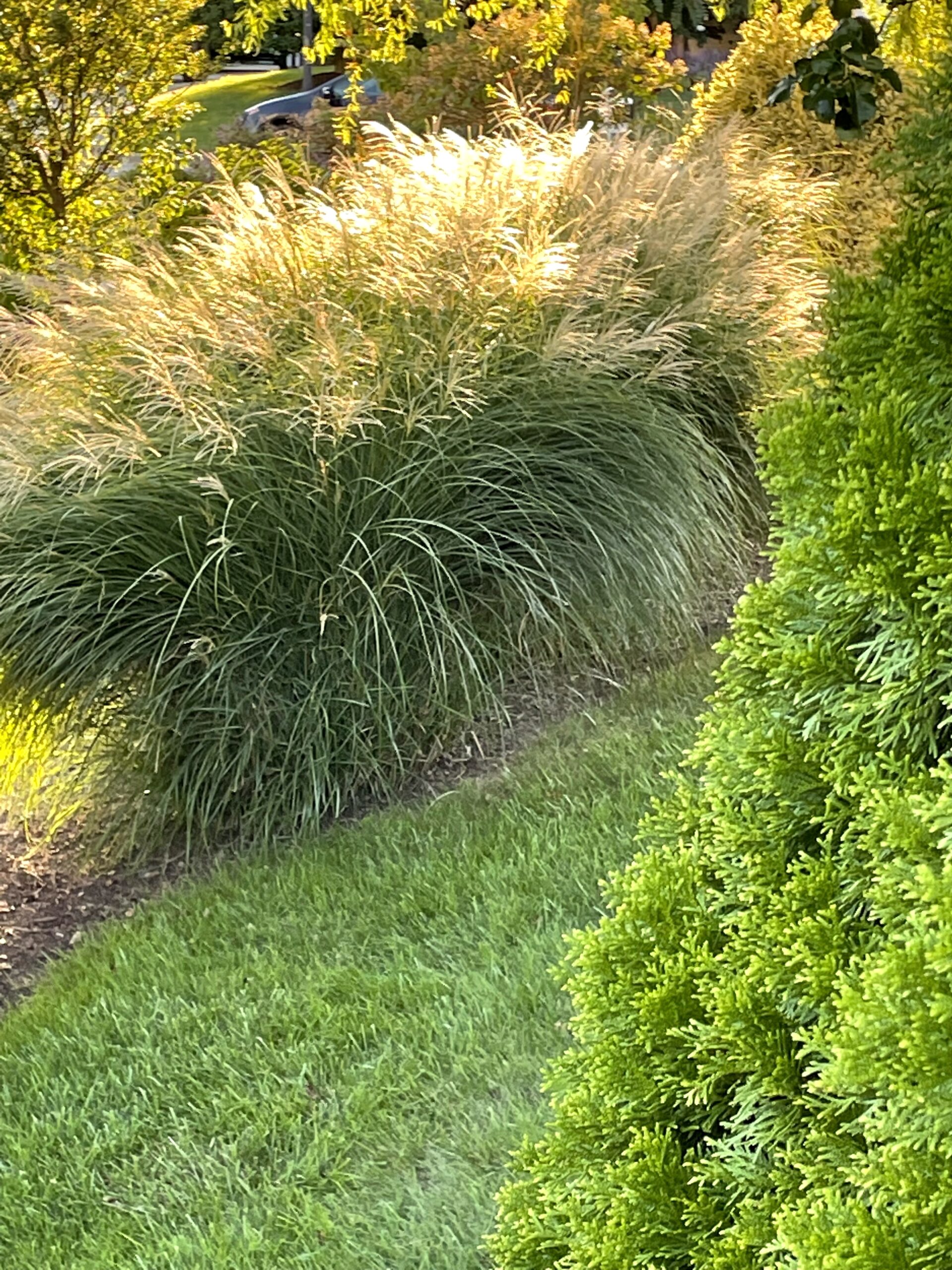
I will also give kudos to the Ornamental grasses in the yard. They have just come into bloom and are spectacular. The variety that I have in my garden is Maidenhair, which has very fine leaves, and white plumes. Also, the liriope has just sprouted its lavender spikes and is a terrific ground cover for all exposures.

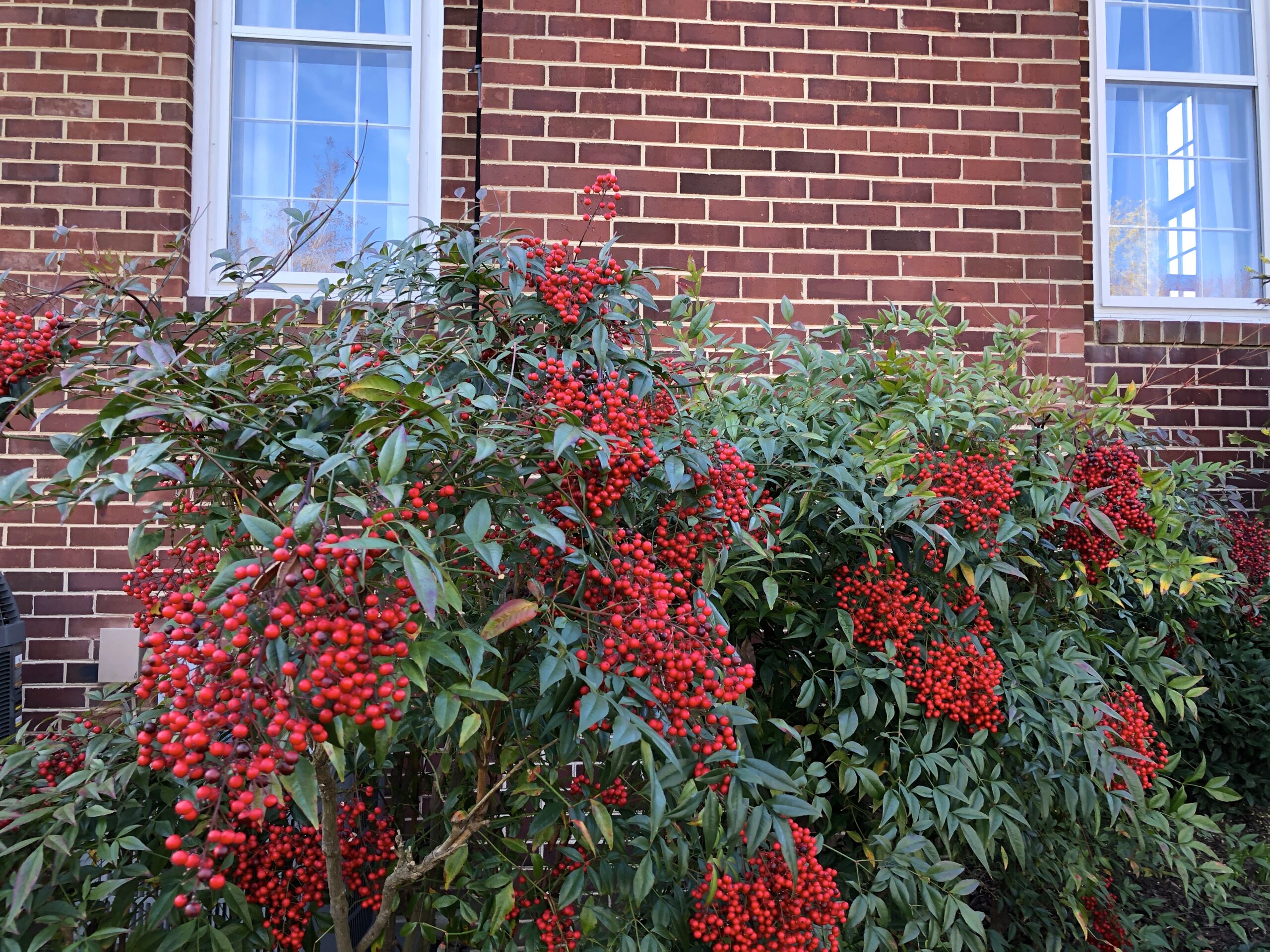
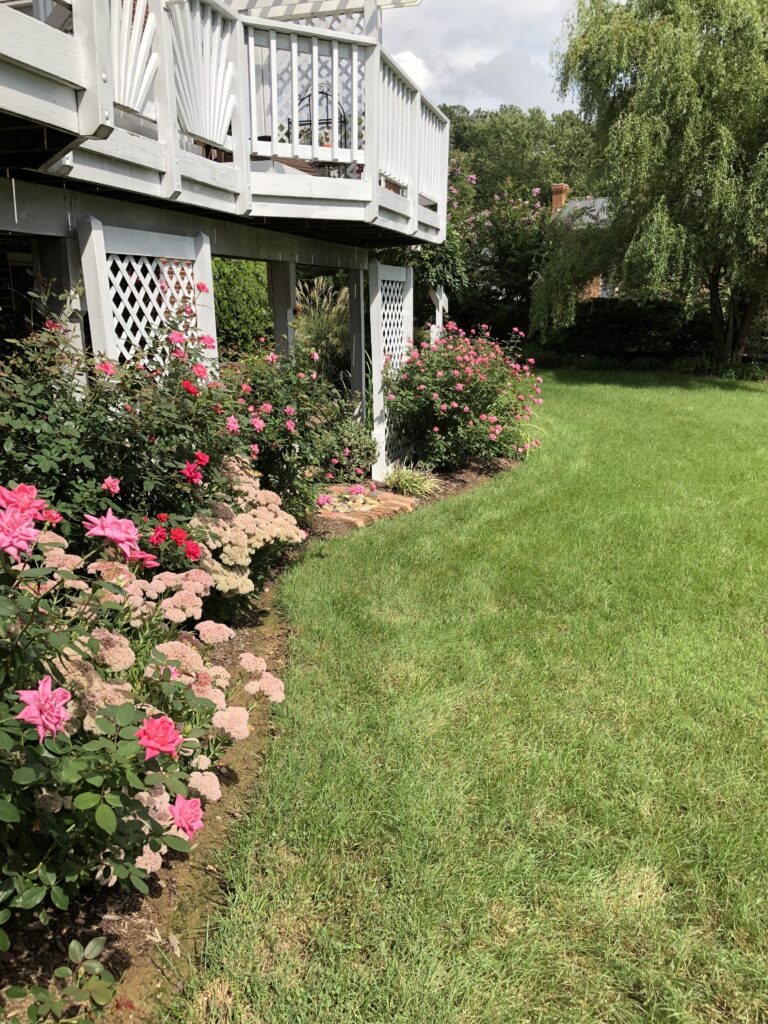
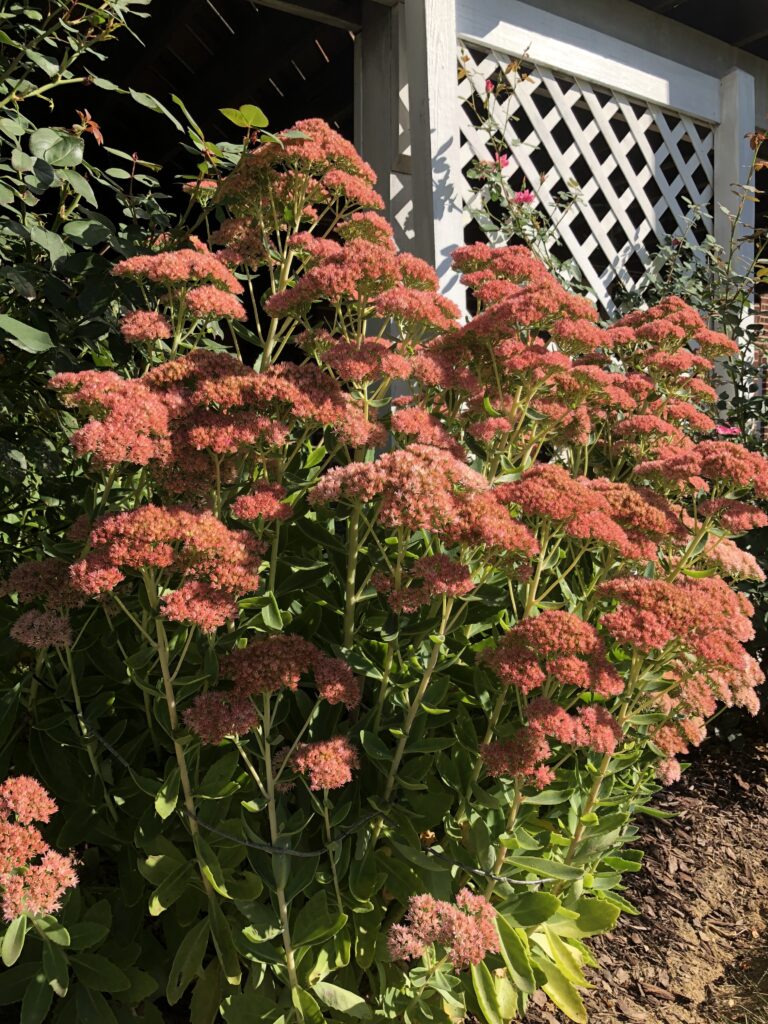
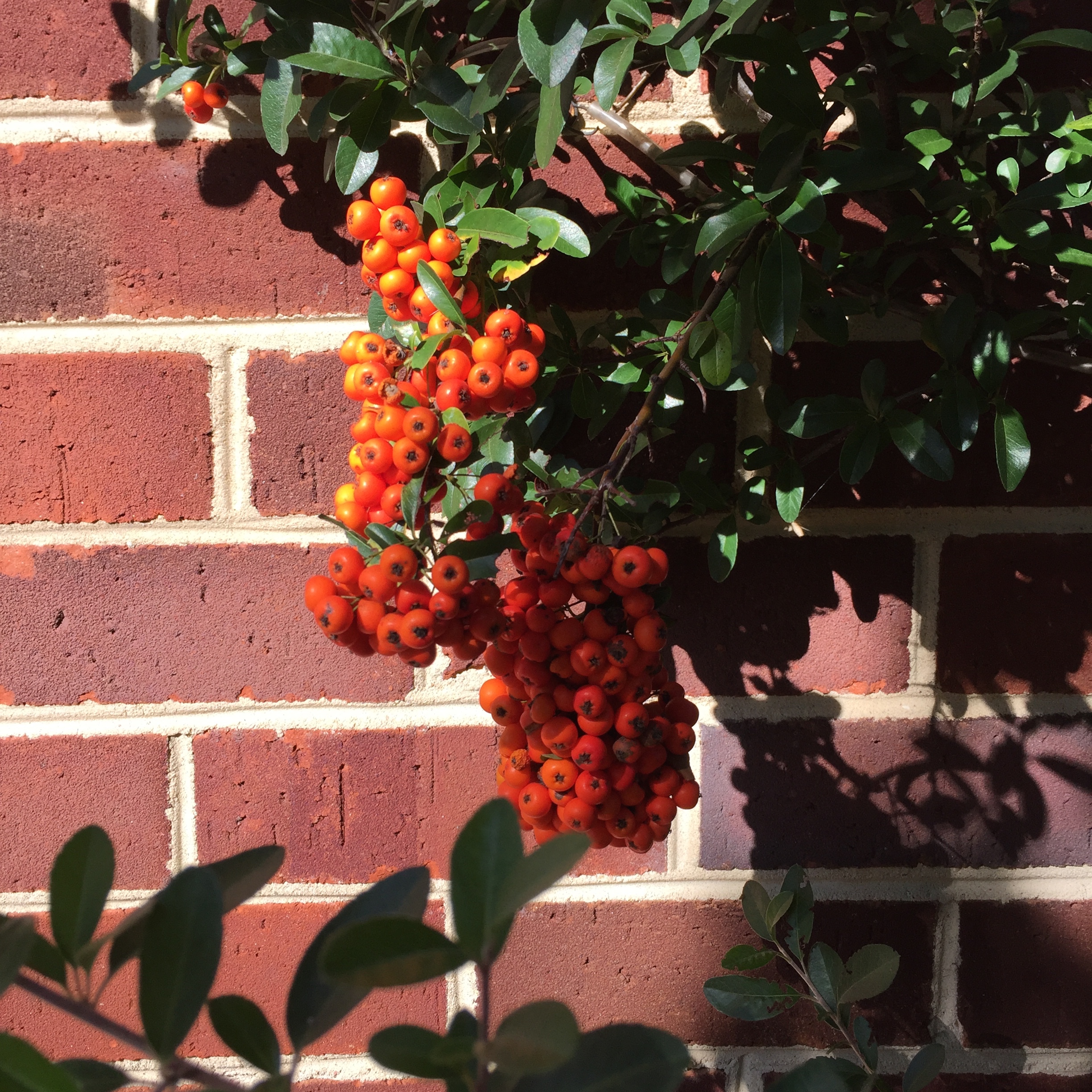
Also taking honorable mention are the Nandina and the Pyracantha which are both covered in berries. And, the Sedum which looked fabulous all summer and are now coloring up for fall.

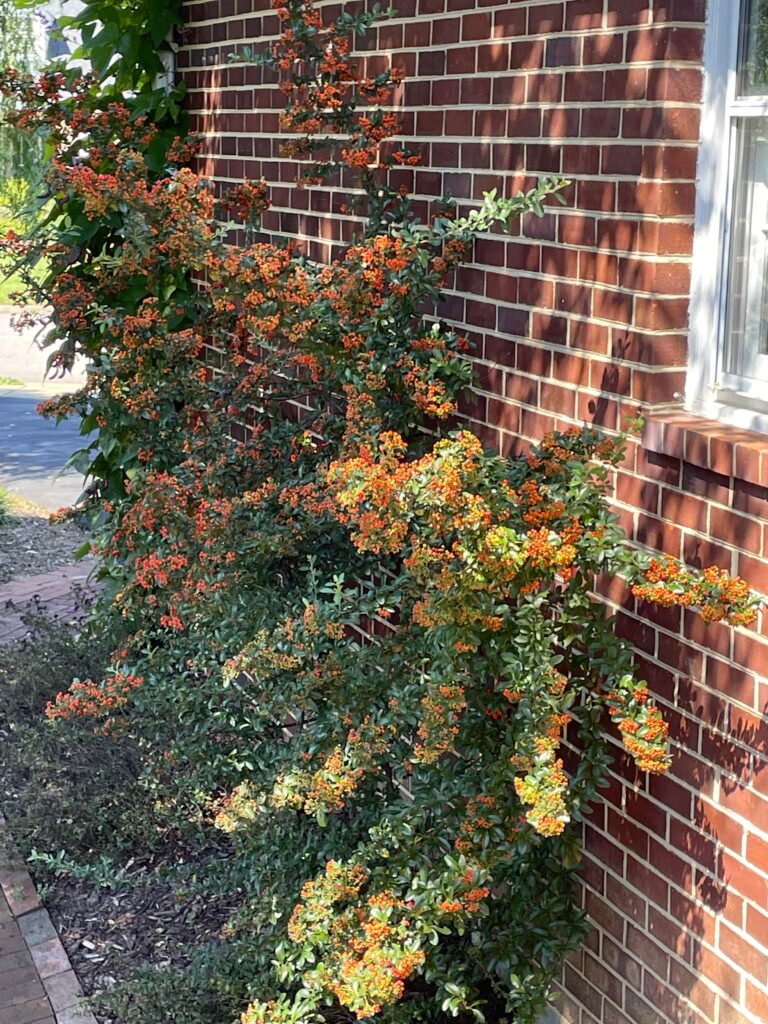
The Pyracantha has beautiful flowers in Spring, glossy leaves all summer, and bright orange berries in the Fall.

These plants all did extremely well, they are all tried and true in my garden, and I would recommend them to anyone who is looking for really hardy, tough, drought tolerant, yet beautiful plants for their garden. This summer was one for the ages, and a true test of endurance for both flora and fauna. Which plants did best in your garden? I would love to know.

Liriope is a terrific ground cover, whether you are looking for variegated or solid green, they do well in shade to full sun.


Fall Garden Renewal

There are now three Crepe Myrtle trees where the old Maple tree once stood.

Fall is here, and in many ways it seemed like it couldn’t get here fast enough. We had the hottest, driest summer, and it really was hard on the garden. We lost one tree to intense storm damage, another to disease, and an unusual number of branches on the Japanese hollies and azaleas. Just too hot and buggy.

All summer long I was thinking about what kind of tree I would like to replace my Maple tree with. I decided that instead of one large tree, I would plant three Crepe Myrtles instead. They are not as tall, with looser branching structure, so they will be wind tolerant, and faster growing, to mask an unfavorable view, so I think it will be a better choice all round. I had to move a couple of huge bushes in order to get the spacing right between the trees, but that gives me a chance to share some more of my ornamental grass with a neighbor who is re-doing her yard. It is a big change where the new trees stand, but a nice one. I look forward to the beautiful lavender flowers that they will bring in the future.

We lost a lot of branches in storms. Thankfully, our waste collection company recycles it into compost for use in the garden.


The area where my Peartree stood is also where we were thinking about repositioning the front walk, so I will add another tree or two to the front when that job is complete. This will provide more direct access up to the front door from the sidewalk, and improve the curb appeal as well. I will increase the area at the base of the front stairs so that a bench and possibly a post lamp will fit. I love to have as many places in the garden as possible to sit and view from different vantage points.


This is also a time to add some more stone into the garden. I love using natural products, and am planning to use the huge, natural slab bluestone from Pennsylvania. It is not far, so it won’t be adding too much to my carbon footprint, which is always a concern to me when choosing something new.  It will lend a natural feel, and I will be able to reposition the slabs in the future, if I feel like it. I love that aspect of it, because its always interesting to change things around after a few years.

A fresh coating of driveway sealant can make the driveway look like new again.


In addition to addressing both of those areas, I have also resurfaced the driveway. We have an asphalt surface, so every few years I add new coating. It is surprising how quickly it transforms and beautifies — almost looks like new, even though it is 30 years old!


Thanks to two hurricanes and a tropical storm, the lawn has come back to health. Croquet anyone?

The turf in the yard had become so dry that it hurt your feet to walk on it barefooted. It was sharp and had turned brown and mostly dormant. We have been getting some incredible rain for about ten days, off and on (thanks to Hurricanes Irene and Lee), and the grass has come back green and strong. I was getting worried that I would have to do some major lawn renovating, but it’s looking terrific. Some fall fertilizer and weed control will be all it needs. Now that it is a little cooler, I will trim out the dead branches on the bushes, and of course plant some beautiful Mums and Pansies.


It is great to get back outside. What projects will you tackle in your yard?


Getting the Garden Ready for a Hurricane

We now have Hurricane Irene on route to the eastern seaboard. Possibly a strong 3 from all the forecasts. There is much to do at our garden to prepare for the winds and potential flooding which could ensue.

Move all potted plants to a protected place, and cluster them together for wind protection.

I started by moving all the potted plants, and other small garden accessories under the deck. The pots are touching, to give them support against the wind. We are expecting the wind to come in from the Northeast, and the deck is on the Southeast side of our house, so this will hopefully give the pots the most protection.

Next, we removed the lattice panels from the arbors, laying them flat on the deck. We then flipped the patio table, adding it to the pile, then the chairs. I strapped the whole pile to the deck and joists below.

Strap down all outdoor furniture.

We have also removed the propane tank from the grill, and stored it in the garage. The grill will also be tied to the railing, as well as the deck joists, holding all the chair cushions. It is a good idea to bring in or tie down anything loose in your yard. In high winds things can become projectiles, causing more damage than anything else.

Don’t forget to check any low-lying doors and windows. We have a walkout basement with French doors that are at the lowest part of the yard. We sandbag the door, laying down plastic first to give extra protection. There is also an outdoor sump pump closeby, just in case.

Sandbag all low lying doors and windows.

If you rely on a sump pump, make sure you have back-up battery capability. If a storm is that intense, you could lose power, and will be very glad you have back-up.

Check all arbors, swingsets and even small trees to see if they might need to be tied down, or staked. Its also a good idea to check your gutters and storm drains for anything which might or is blocking them. Lastly, make sure your rain gutters on the house are cleaned out as well.

An outdoor sump pump can give added peace of mind in an intense storm. Just make sure you have a battery back-up system in place.

Mother nature is the biggest force we know, when she decides to make herself known, it can be quite daunting. I hope my tips will help you protect your garden. Stay safe!


The Victory Garden – Growing Our Own Food

Growing your own produce is one of the healthiest things you can do. Not only for your body, but your wallet as well.

With the skyrocketing price of great produce this year — $3.99/lb. for tomatoes, $2.99/lb. romaine lettuce, and even more if you want to have an artichoke or some asparagus with your meal — I am once again getting ready to grow some of my own.

I have tried many times in my current house to  have a vegetable garden, but we have problems with the wildlife eating everything we try to grow. I have had great success with herbs, they seem to leave them alone, but my strawberries and tomatoes are another story. I have decided that this fall I am going to try a cold frame, so that I can grow lettuce and spinach. I will post more pictures as this evolves. I am also going to try planting in pots and trays on my deck. I have done that in the past with limited success, as I found that things dry out quickly, so I will try putting them on trays with waterwicks.

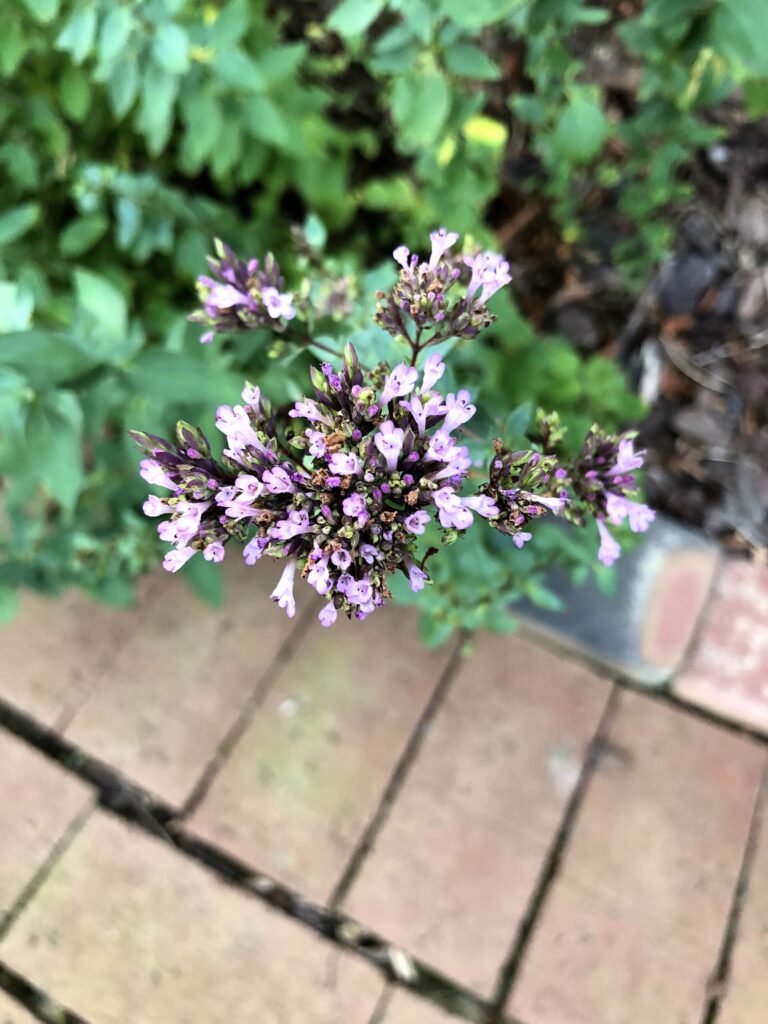
My border of oregano

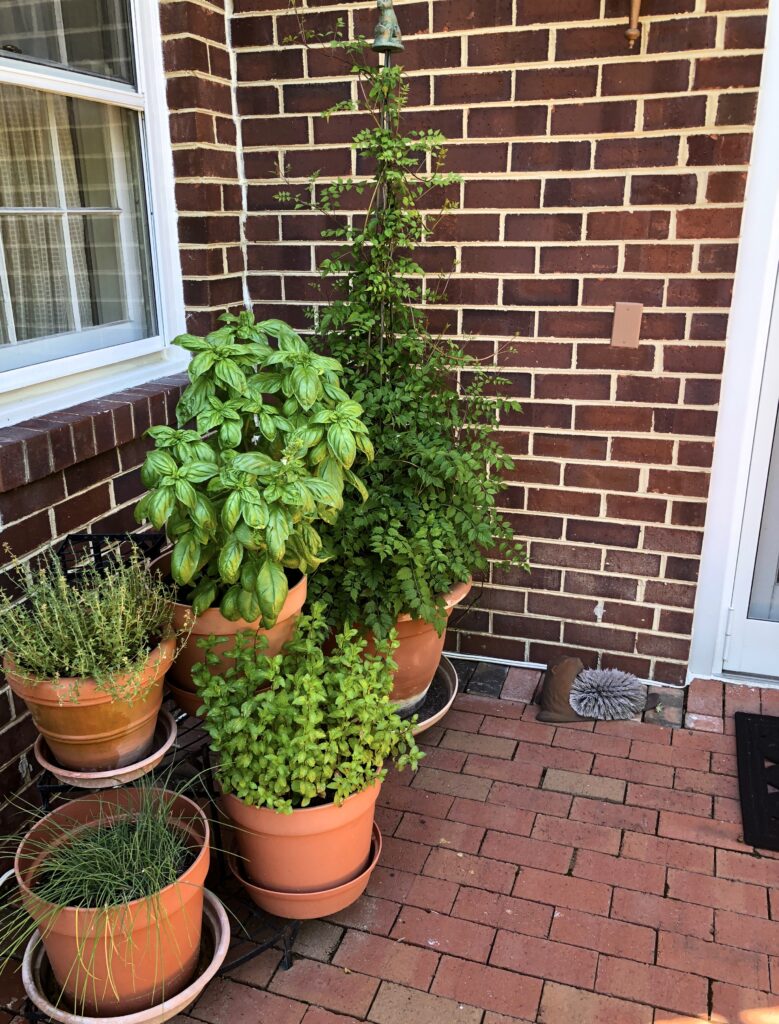
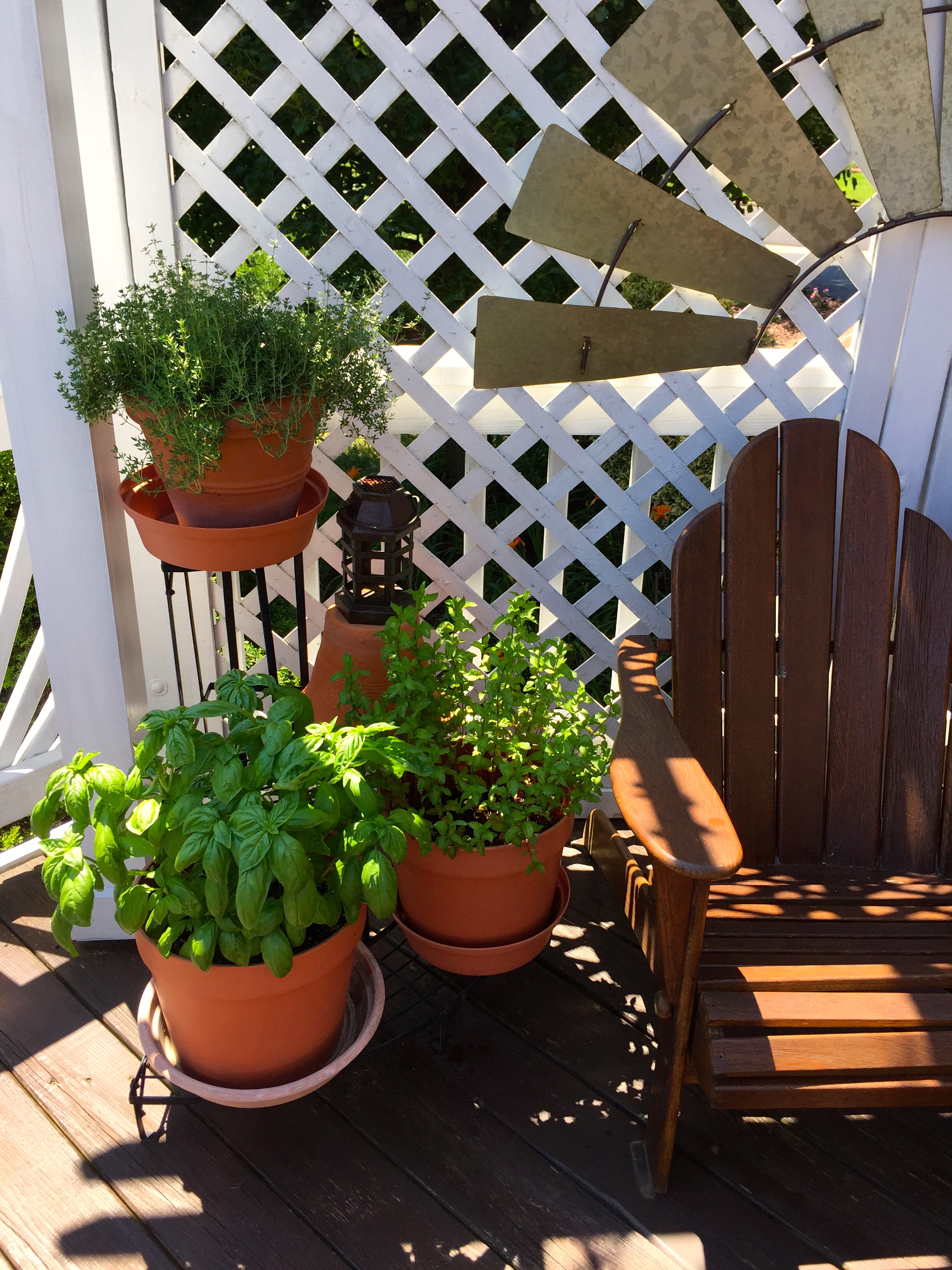
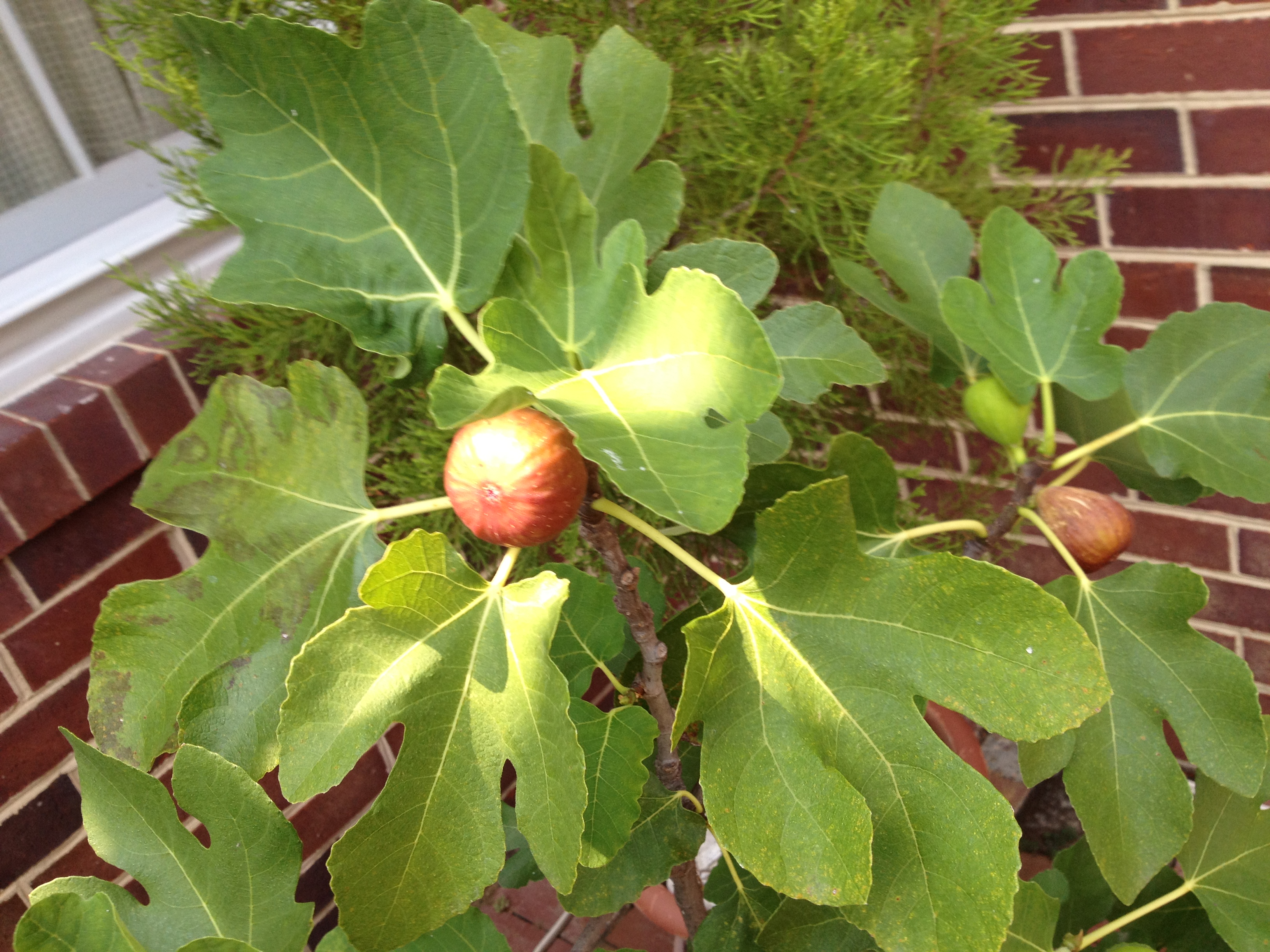
The herbs this year seemed to grow exceptionally well. I had a combination of pots, and many in the ground. I have an entire row of oregano which is now blooming, and cascading over on to the back walkway. Each year it gets more full than the last, and is as pretty as it is delicious. The other in-ground herbs I grow are chives, lemon balm, sage and thyme. These are all perennial and do best when they have become established. I grow the rest in pots: mint, because it is invasive; oregano, so that I can move it to a more protected winter spot; basil, because it is so sensitive; and catnip and cilantro for the same reason. I am hopeful that this year we will get some of the figs from my tiny little fig tree, but then again I think the chipmunks already have their eyes on them.

My fig tree, a cultivar from Mt. Vernon estate.

I am also looking forward to trying a cold frame to see how long I can extend my growing season into the cold weather. This has been such a hot and dry summer it wasn’t too appealing to spend long hours outside, so I am hoping that we will have some great fall weather, and do some catching up with some new projects.


Putting herbs in pots lets you maximize their best exposure.

My plan is to construct the cold frame by layering bricks about five courses high and placing my old storm door panel on top. The nice thing about doing this is you can change

location easily from year to year simply by moving the bricks. They also hold the heat and provide great insulating value.

I’m curious to know what others have and will try. So please let me know. Here’s to your health!

The Beautiful Peartree

Storm damage to mature peartrees is not uncommon.

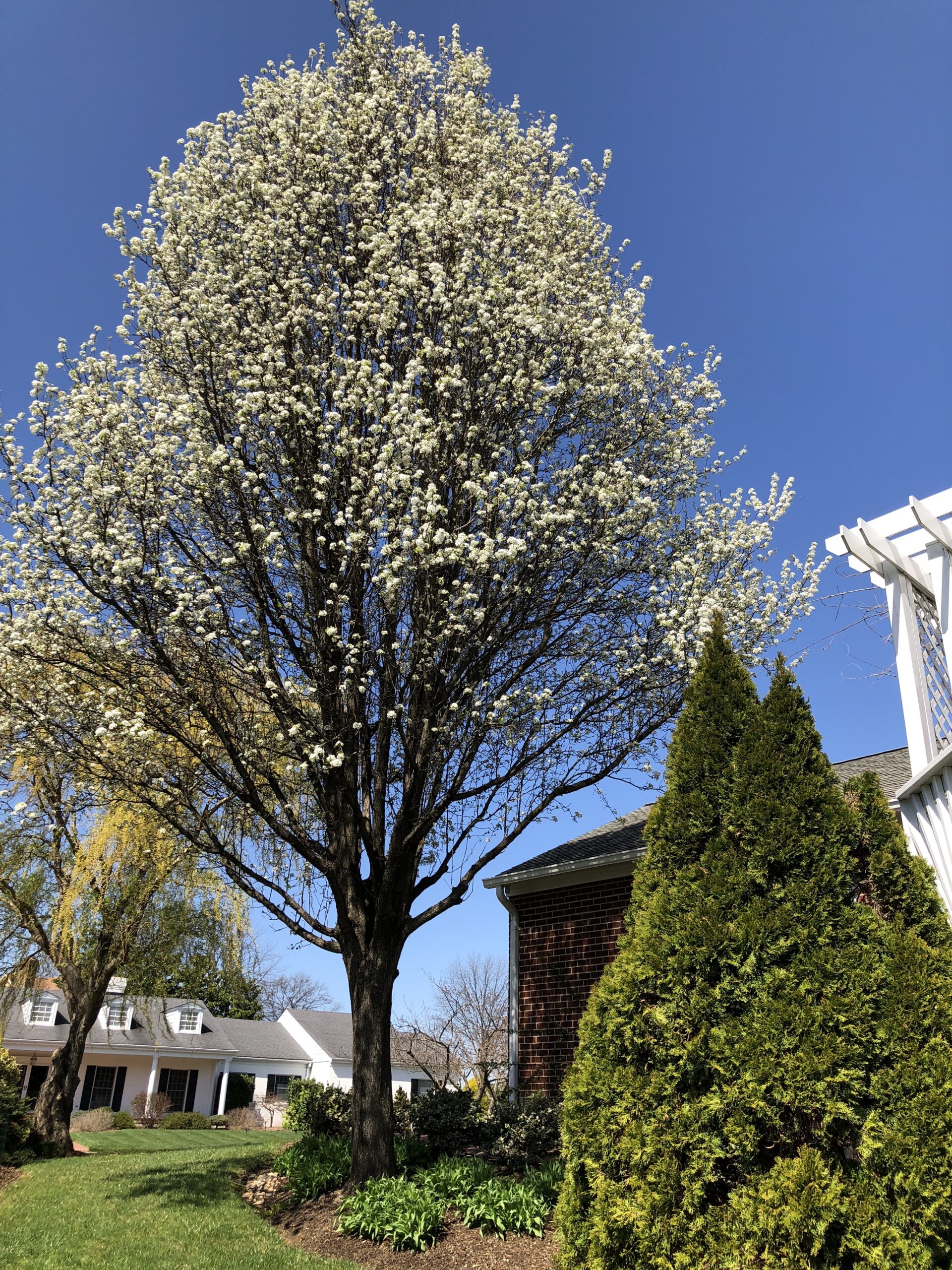
I am sorry to say, it has happened again. We had a massive wind and rain storm on Monday night, and it claimed 40% of our gorgeous peartree . It was a perfectly symmetrical gumdrop shape. Always beautiful, they are the harbinger of Spring opening up before anything else in the garden, looking cloud-like with white flowers. Also the last tree to lose its leaves in the fall after turning fabulous shades of yellows to maroons, and every color in between. I always have leaves on the peartrees still when I’m decorating for Christmas, so I have many times used pears in my front door wreath, and used that as my theme for decoration.

This is one of my Cleveland Peartrees, you can see how different the branching structure is than the Bradford Pears.

Peartrees are prone to having major branches break in wind and rain. They have an unusual structure that is not very forgiving. The Bradford variety usually has three or four branches which come out of the trunk, and all smaller branches grow out of these, making them exceptionally heavy. When you add rain and wind to the mix it is quite often more than the structure can support. If at all possible, in the winter months, when you can see the branches easily, prune out some of the heavier secondary branches. By doing this you will greatly reduce the weight and open up the inside of the tree. This will make it far less likely to succumb to wind damage.

Because each branch carries so much weight, they are easily ripped from the trunk in high winds.

In this picture you can see how much of the trunk was actually ripped away when the branch broke. If I were to leave this tree standing it would be very likely to die of disease, and bring it into the garden, so at this point it is best to take it down.

I have two other Pears in the yard. They are both Cleveland Pears. The branching structure is much stronger, because they are smaller in size and more plentiful. They can withstand the wind better, although they are not quite as magnificent shape-wise. They are a better choice for an exposed location like mine. But if you have other large trees to provide some wind protection, I would definitely encourage you to plant a Bradford, and enjoy its beauty for however long mother nature allows!

Unwelcome! Weeds and Insects…
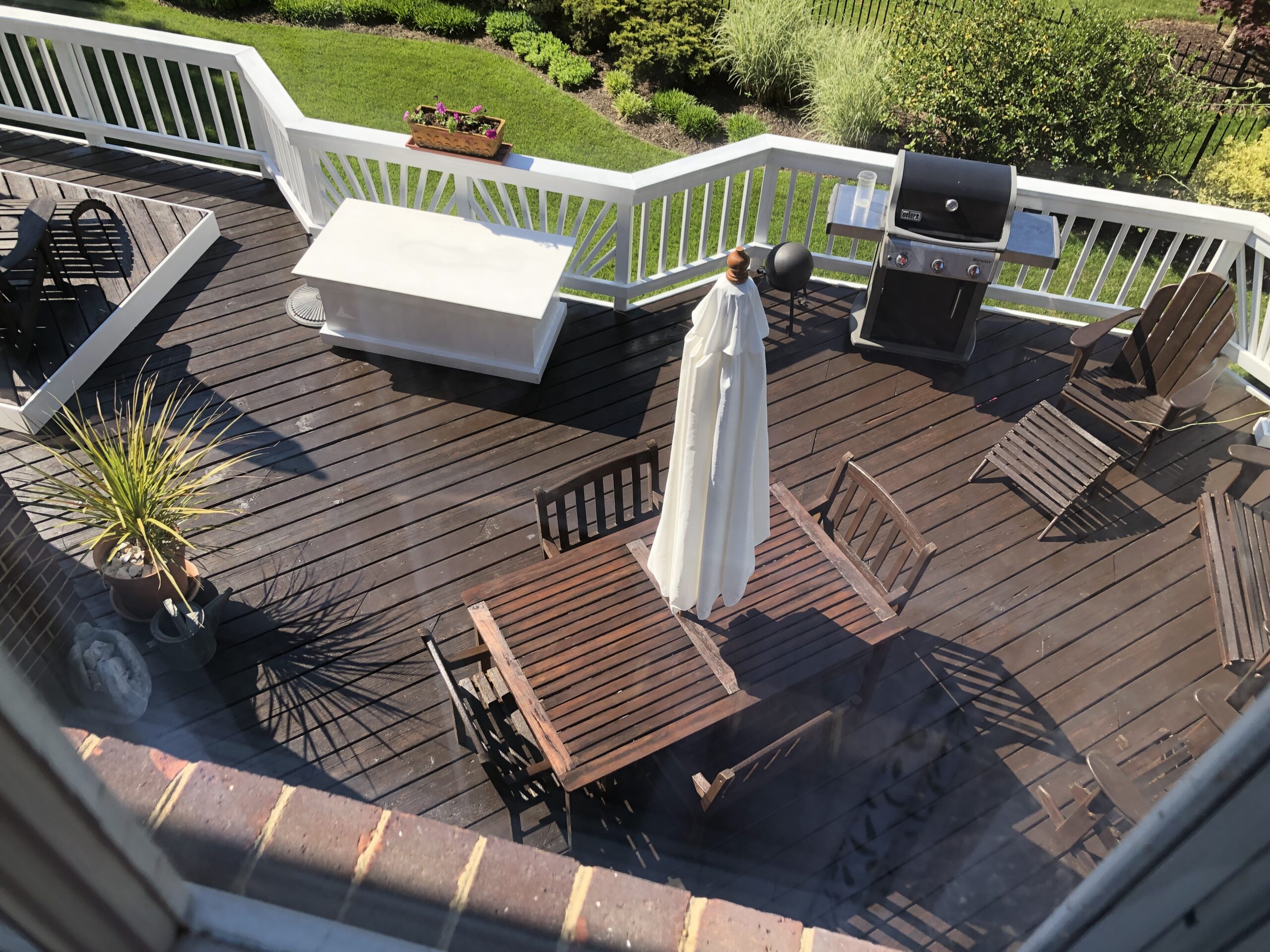
An unwelcome byproduct of all this heat is really tough weeds and some very unwelcome insects. I have some effective, yet safe, alternatives for you to try in your house and garden to get rid of these unwanted visitors.

Household vinegar is a safe and inexpensive way to kill weeds.

As far as the weeds are concerned, we are getting a huge amount of them this year. I religiously put down pre-emergent (gluten-based) granules in my yard and garden beds every year, but this year we have had so little rain that they are not leaching into the soil as they are supposed to. There isn’t even any dew in the morning, things are getting so dry. As a result, the oxalis, carpetweed, sedge and even some crabgrass are sprouting. If at all possible, try to pull them before they go to seed and multiply, if there aren’t too many.  If you have an overwhelming amount, I would suggest a spray of a selective herbicide that targets weeds only. Most of these now are available with spray containers attachable to hoses. They are quick and simple to apply.

On walkways, a simple non-toxic and inexpensive way to kill weeds is with household vinegar. I fill an old spray bottle with white vinegar and spray away on all my brick pathways, and within hours the weeds are dead! This also works to spray on cement sidewalks, in cracks, or joints where they seem impossible to remove in any other way. It is totally safe to walk on by people, pets, or wildlife.

An easy method to get rid of ants is with Borax. Simply sprinkle it onto ant hills.

For getting rid of bugs, whether it’s ants or fleas, my favorite method is with boric acid. You can buy it in the laundry section of your supermarket (I use the  Borax 40-mule team brand.) Just sprinkle it on ant hills or encircle your house with it.  A couple times through the summer months should do it, but if you are lucky enough to get drenching rain you might need to reapply. The insects walk through it, ingest it, and carry it into their nests, which gets rid of them all. You can even sprinkle it on your carpets, and furniture indoors. (Just sprinkle it on — let it sit for an hour or so — then vacuum it up.) This will get rid of all kinds of bugs that you or pets might have brought in from outdoors, but in the amount used, it will not be toxic to us or our pets.

If your bushes are being attacked by spiders, it’s because they are attracted to places that are dry and dark. This is easily remedied by opening up the bush by pruning out some of the branches, creating better air circulation and light, and then really washing the plant out with the hose (each branch!). By doing that, it will create the wrong type of climate for spiders to hide in. There are also predator insects which can help rid your plants of other insects; for instance, ladybugs will eat aphids, and praying mantis will eat spiders. Some of the predator bugs are available for purchase through garden centers and online.

I would love to hear from you with any non-toxic methods you know of regarding weeds or insects. There are so many highly dangerous products on the market, and I’d love to share any safe alternatives. We only have one Earth, so we need to protect it!

Keeping Gardening Enjoyable

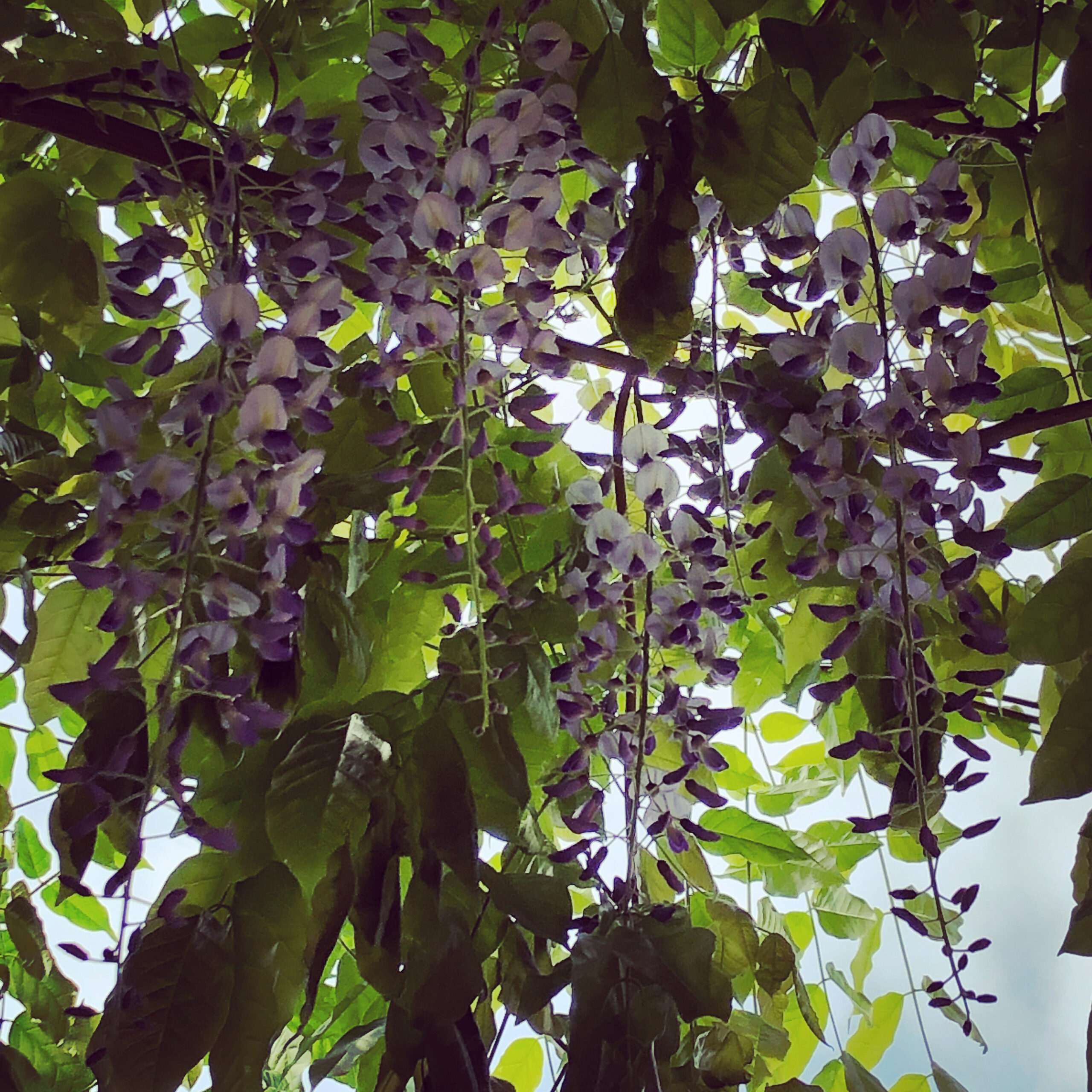
Although time consuming to keep trained, I grow this wisteria next to my back deck just because I love it. Sometimes that is all that counts!

If gardening wasn’t so much fun, it wouldn’t be one of the favorite hobbies of so many people. It lifts the spirit to work with the earth. It also happens to be great exercise, and you can tailor it to your own level of difficulty. I want to share some tips on keeping it fun, while getting everything done.

Right now, because of the extreme heat we have had, there are some flowers that are looking pretty haggard.  I have a rule — I’ll call it the “one hand rule” — each time I go out, I work on one area and pull, deadhead or trim one-hand’s worth of debris. This way I don’t get too hot, and its not overwhelming. Since I am out probably ten times a day, I actually accomplish quite a lot.

If you pick just one handful of weeds each time you go out, you'll be done before you know it.

Keep it simple; know your limits. Plant only what you know you can keep up with. The visual clutter of an unkempt garden is never good. I have seen far too many gardens fall victim to an overly ambitious plan that requires more time to manage than the well-meaning gardener has time to spend on it.  A single pot of beautiful, healthy flowers is always a joy, and in the end more rewarding than a yard full of mess. So if that is all the time you have, then you are using it wisely!

I have mentioned this next one before, but it bears repeating: segment your yard into manageable-sized sections. I call this one “divide and conquer.” You can quickly see the results when you work and complete one part at a time, and feel a great sense of accomplishment as you work your way around the yard.

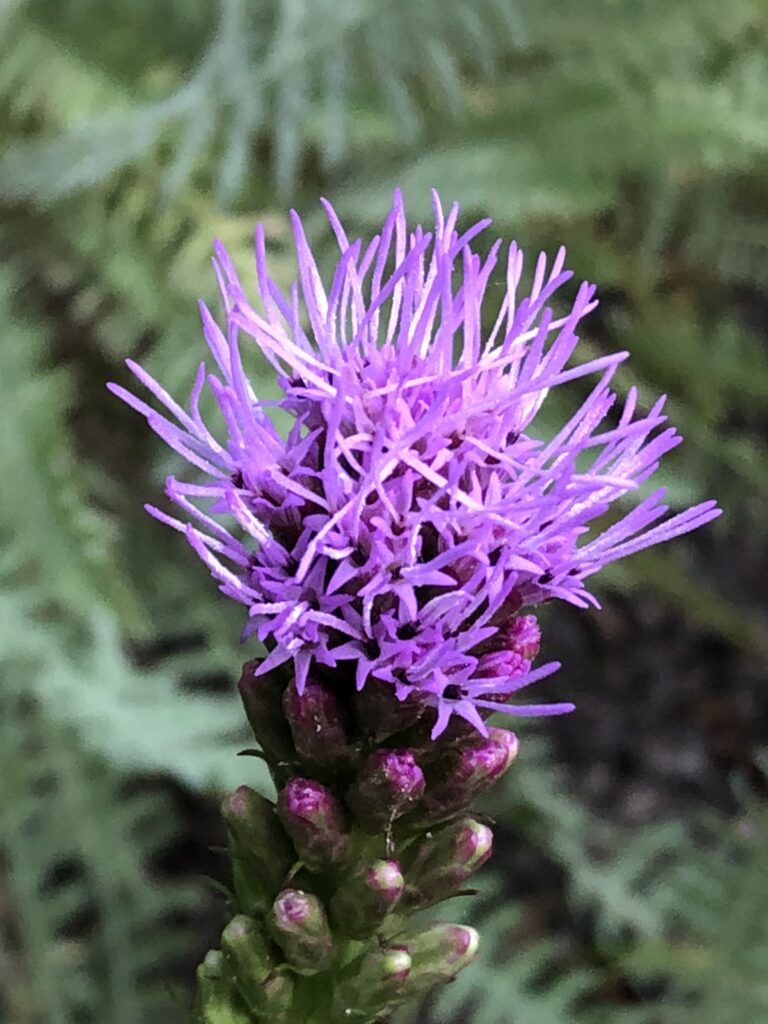
Liatris- one of my favorite perennials!

Most of all, make sure to include at least one thing that truly makes you happy. Whether its a window box under a kitchen window, or a beautiful collection of flowers by your door, it will put you in a good mood every time you look at them!

Enjoy!


Favorite quote of the day:  “Life’s a garden — dig it!” –  Joe Dirt

Summer Watering

Triple digit days are with us again!

Wow, is it hot out there! This summer so much of the U.S. is under heat advisory. Here in the D.C. area we have set countless records already, and it’s still July. After such a damp early spring we are now getting mudcracks in the garden. I would like to share some advise on watering in these extremes.
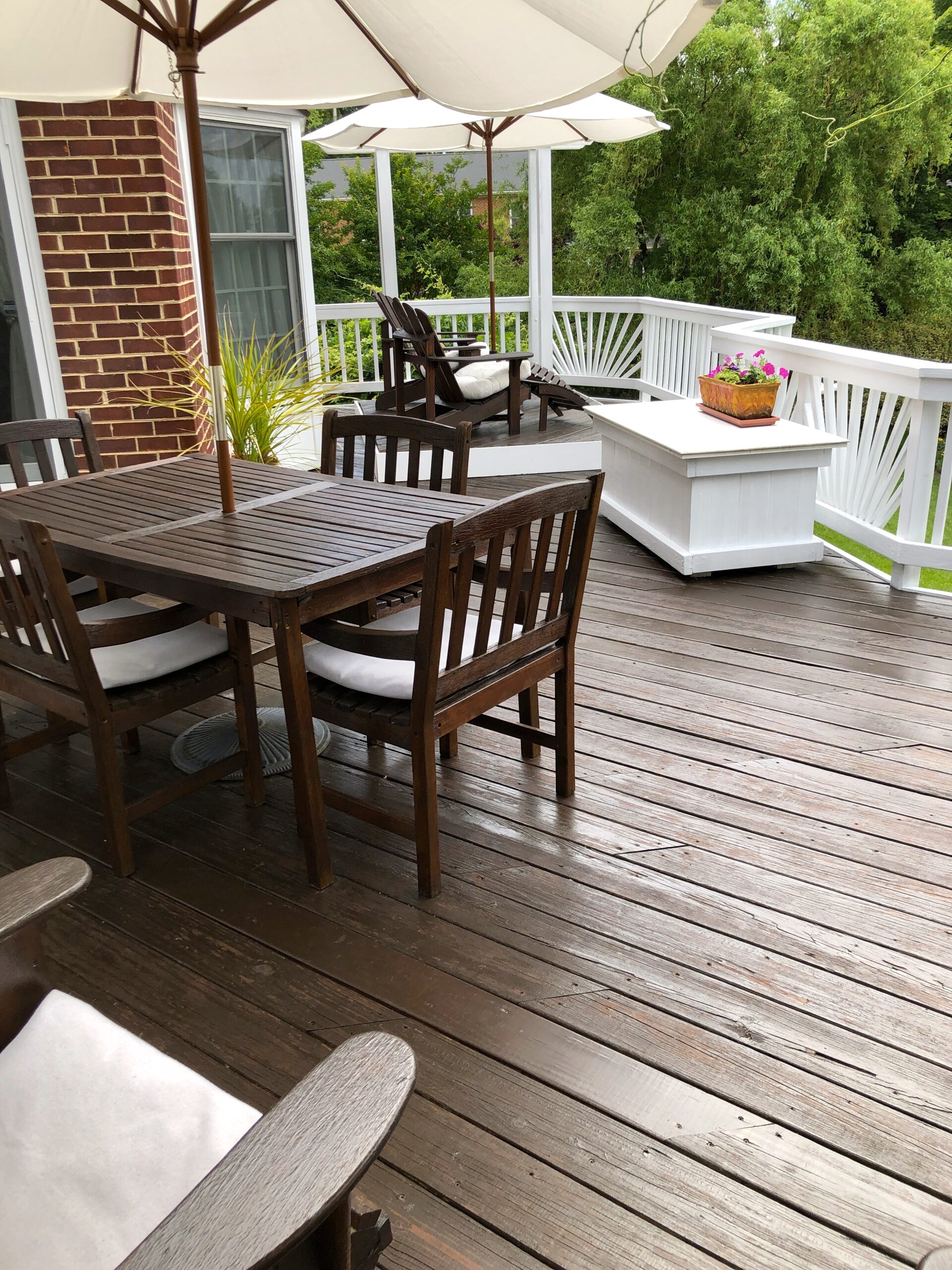
First- be careful. It is so hot I recommend late evening (8-9 o’clock), or early (pre-dawn to 7 o’clock) watering times. It can actually be harmful to the plants to get them wet in this extreme sun. You can end up with blistering on the leaves and flowers if the sun hits them before the water has dried off. It is also a good idea to drain the saucers on potted plants after an hour or two, if the water has not been absorbed. It is easy to end up with fungus and insect larva in the heat and humidity so many of us are experiencing.

I like to wear old clothes and rubber flip-flops when I’m out watering, that way I can hose myself off to stay cool as well! A big hat, sunscreen, bug repellent are all good ideas, but I really advise to just wait until the sun has gone down or at very least, has traveled off the garden before I water it.

One of my all time favorite inventions has got to be the soaker hose. If you combine one with a quick connect, and a timer on the hose, you can really

Some watering favorites- 2 Gallon Watering can, Soaker hose, Multi-spray nozzle, Flip-flops and Sprinkler.

accomplish everything you need to with out even having to brave the heat. With a soaker hose you get the water exactly where you need it on the root zone, so you aren’t wasting a bit of precious water. Even more water conscious would be a drip irrigation system, with individual emitters for each plant, but these systems are not as easily changed each year for different planting formations.

That brings me to the lawn, and whether or not to water or let it go dormant. I think that totally depends on your long term weather forcast. If you are experiencing just a short term dry spell then I would recommend watering. Most turf needs approximately 1″ of water/rain per week. If you long term forcast is an extended drought, I would suggest letting your lawn go dormant. It is healthier for the lawn to allow this, because it struggles too much when it is too hot and dry. Don’t worry, it will come back in the fall, and look healthy and green again.

Trees however should be deep watered at least every 2 weeks, if they are small, tender, or newly planted within the last year. I just let the hose trickle, so that the water sinks in immediately, or use a soaker hose coiled around the tree a few times, letting it run for about 20 minutes to 1/2 hour.

The best tip I can offer is to think cool thoughts, and imagine yourself in snow.

Imagine yourself in a cool place, it actually is proven to lower your temperature.

We will have cool weather before you know it!

Vertical Gardening

Whether you live in a city with not much space outside, or have just run out of horizontal room, vertical gardening is a great solution.

Flowerboxes on balcony in Germany

On a trip to Switzerland and Germany, I was awestruck at the beauty of the window boxes, which are on almost all homes and many of the businesses. They add a huge amount of beauty to the cityscape and really punch up the welcome factor. I was truly heartened to see the level of care people take to keep them so full and healthy looking. You see them being watered and tended carefully throughout the day. On many lamp posts there are hanging baskets as well. Most hang on cables, allowing them to be lowered to be watered. These days, there are many small drip-irrigation attachments which can be hooked up to hoses, and even put on timers, which make this task a lot easier. They allow you to place the water emitters exactly where you want them so the whole basket/box gets watered evenly.

Even walking through the narrow streets and alleyways, you see gorgeous examples of vertical gardening — hanging baskets, trailing vines, window boxes cascading with flowers.

An alleyway filled with hanging baskets and vines in Germany

In my own garden I have been training a pyracantha as an espalier to cover a wall next to my back walkway. Also, a couple of wisteria vines on arbors and a hummingbird vine onto a rail of the deck. Most recently I purchased a fig tree from a cultivar grown at Mt. Vernon. It has now grown big enough that I can start to train it as an espalier, which I hope to plant, and attach it to the chimney on the east facing side of my house. My goal is for the pyracantha to completely cover the wall in a solid mass. The fig will be trained in a more open design, allowing the branches more horizontal growth with space between. This makes it easier to pick the fruit.

When creating an espalier,  you can easily train the plant on a wooden or metal frame when they are small and still in a pot, then transplant to its permanent location as it matures. I find that masonry anchors work best when attaching the plant to my house (brick), but if you have siding there are many clips designed for this purpose. I just attach to the anchors with twist ties. On the wall  I am trying to cover completely, I have a number of wires which run horizontally, and I attach the branches to them. This cuts down on the number of anchor you need.

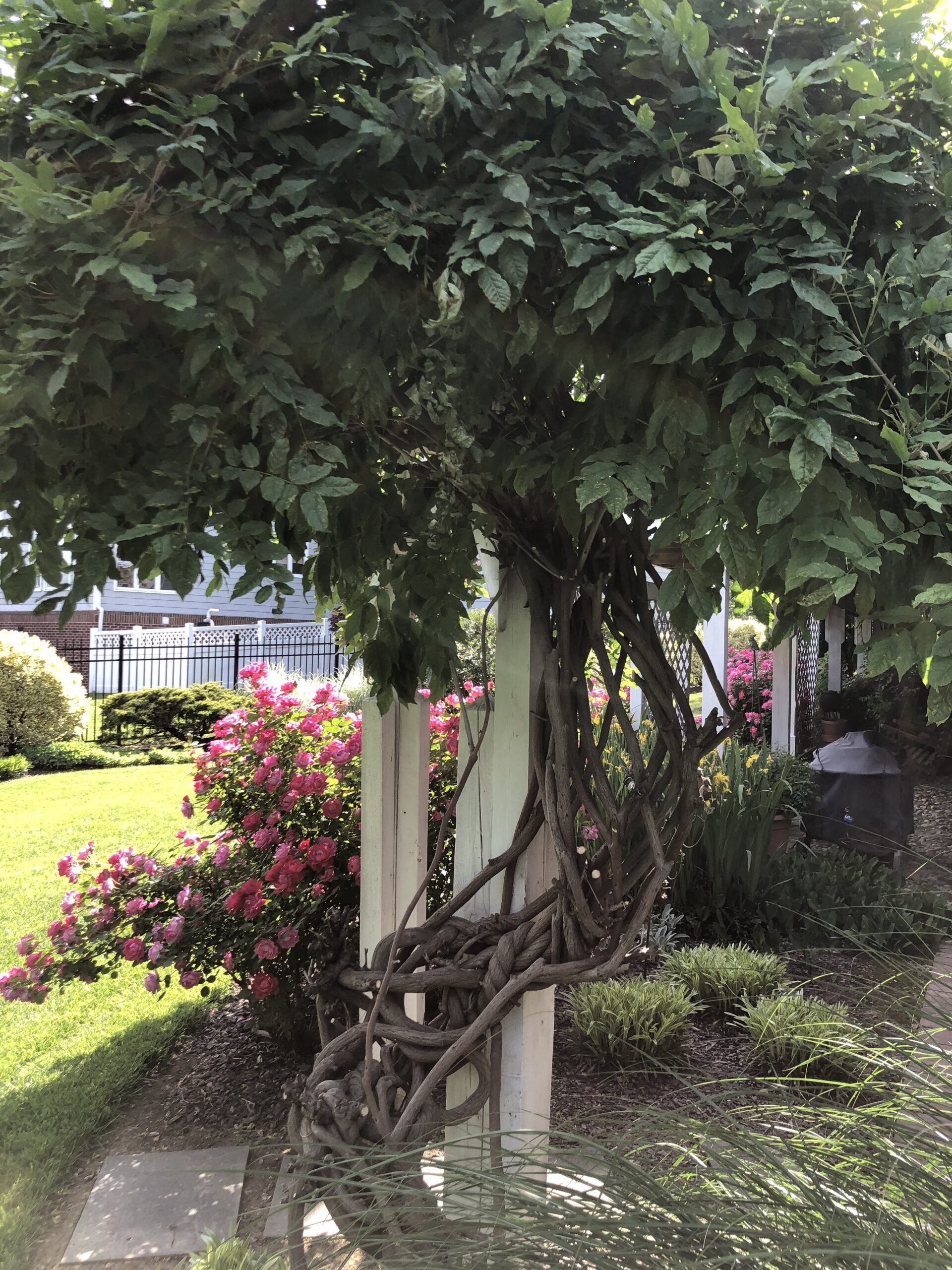
Wisteria on Arbor

Many vines will attach themselves without any anchors, by twisting around their supports (like wisteria), but be careful of vines with little roots (like ivy) which can literally destroy mortar and siding. Another tip is to make sure that the arbor is strong enough to take the weight of the vine. They can get quite heavy, and when coupled with a wind or rain storm, it needs to be secured strongly to take the weight. I had one topple over with a hummingbird vine attached to it a few years ago, but found that securing it with tent spikes helped during bad weather.

Pyracantha in my garden, trained as an espalier against the wall.

My last tip is for extra hydration during the hottest of summer days. Placing a handful or two of ice cubes around the base of flowers in hanging baskets or window boxes will help them to slowly absorb extra moisture and keep their roots a little cooler. This also works great in pots. Stay cool, and enjoy the beauty.

Camouflage for the Ugly Necessities

Isn’t it always the case that there is an ugly utility meter, or a garden faucet, A/C unit, or some other necessity right in the most visible location? Here are some of my solutions to camouflage, or at the very least minimize the visibility of objects which mar the beauty of our respective gardens.

Painting meters makes them less noticeable.

First, in regard to utility, we need to remember that access must still be easy. If it’s not, the meter readers and repair personnel will make their own way, which probably won’t be the way in which we would like it. I have found that a couple of stepping stones make a pathway obvious, and is usually respected. Aside from that, I have been known to paint meters to make them blend in better against the house. Make sure that is allowable first, though. I don’t want anyone getting in trouble!
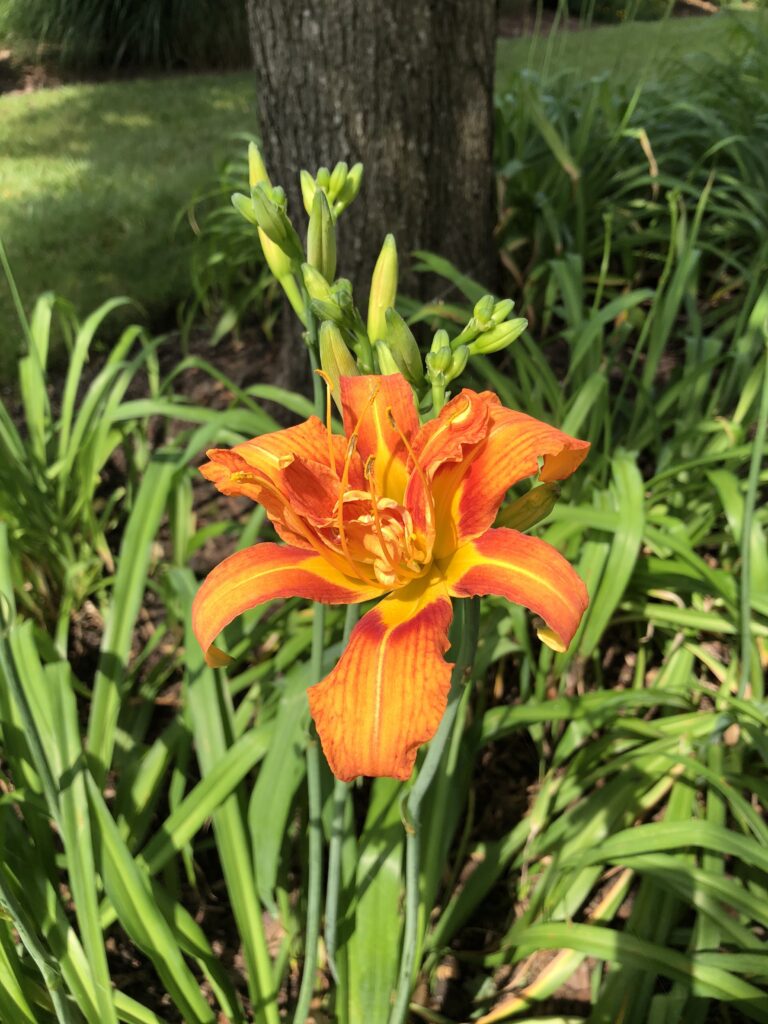
As far as masking a view with plants, try to plant something that can take a bit of knocking around, and is fast growing, if possible. That way, if someone gets careless, the plant will hopefully recover quickly. I would also encourage you not to use plants which are sharp or thorny. It seems so often a holly is planted too close, according to our A/C repairman. Make sure that you know where your underground utilities are buried so that you don’t accidentally hit one when planting around meters where they come up to the surface for connection. In many areas there is a free service provided where the utility companies will come out and mark in your yard where they are, and give you their approximate depth underground.

Bushes are good for obscuring A/C noise as well as visibility. But try to leave 1-2 feet of breathing room around units.

Some might also try a small trellis, or an arbor, or a section of fencing to cover the ugly area.  We have even gone so far as to make removable lattice covers for our A/C units at our last house. I’m not so sure that it was really an improvement though, because it was even more visible, although better looking. I had one neighbor who built a cabinet with old shutters to cover their array of meters. It was quite pretty, but the meter readers didn’t know where to look, and were hesitant to open what looked like a beautiful cabinet. No matter which route that you take try to leave at least a couple of feet for breathing room and access, if possible.

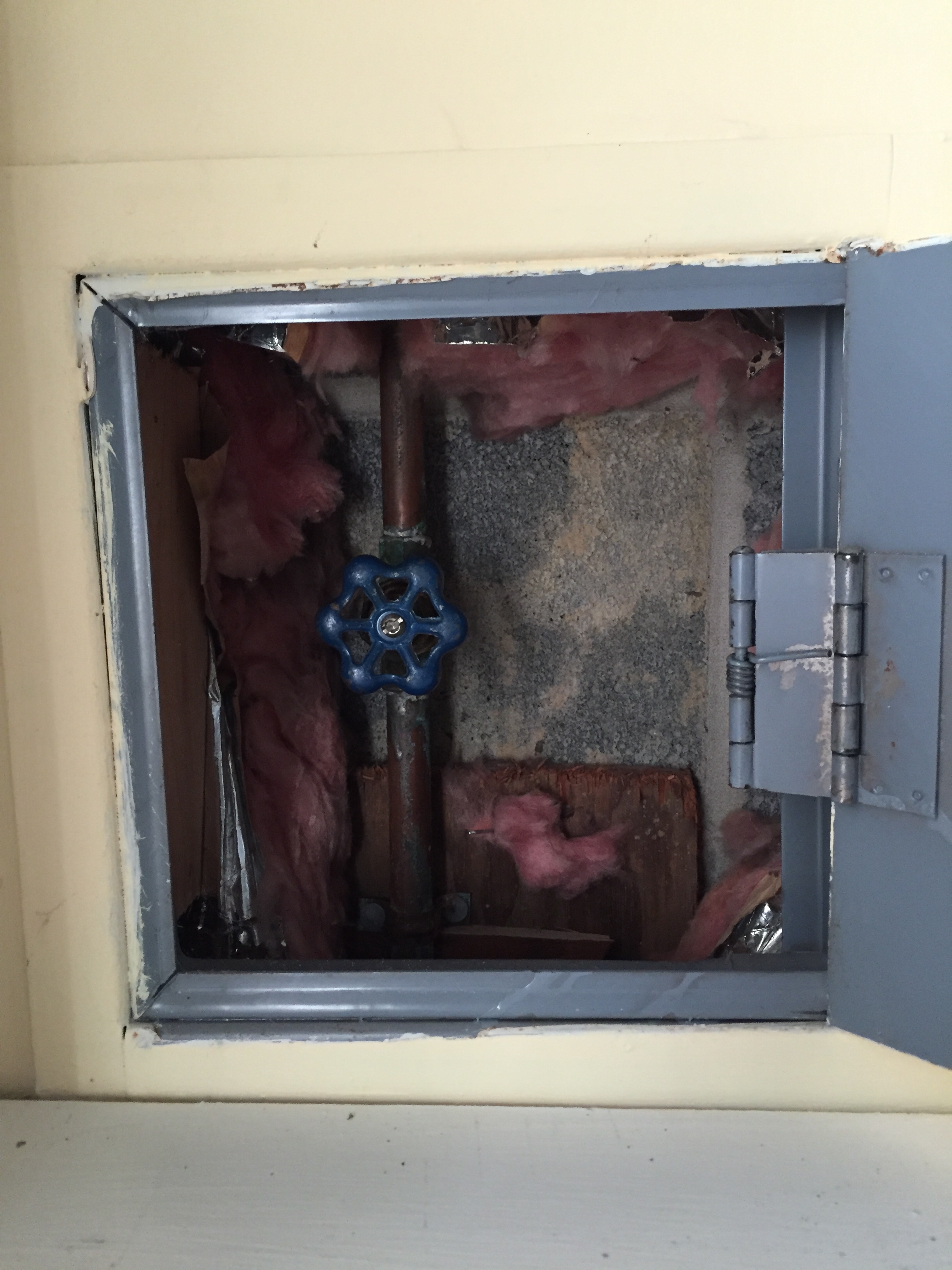
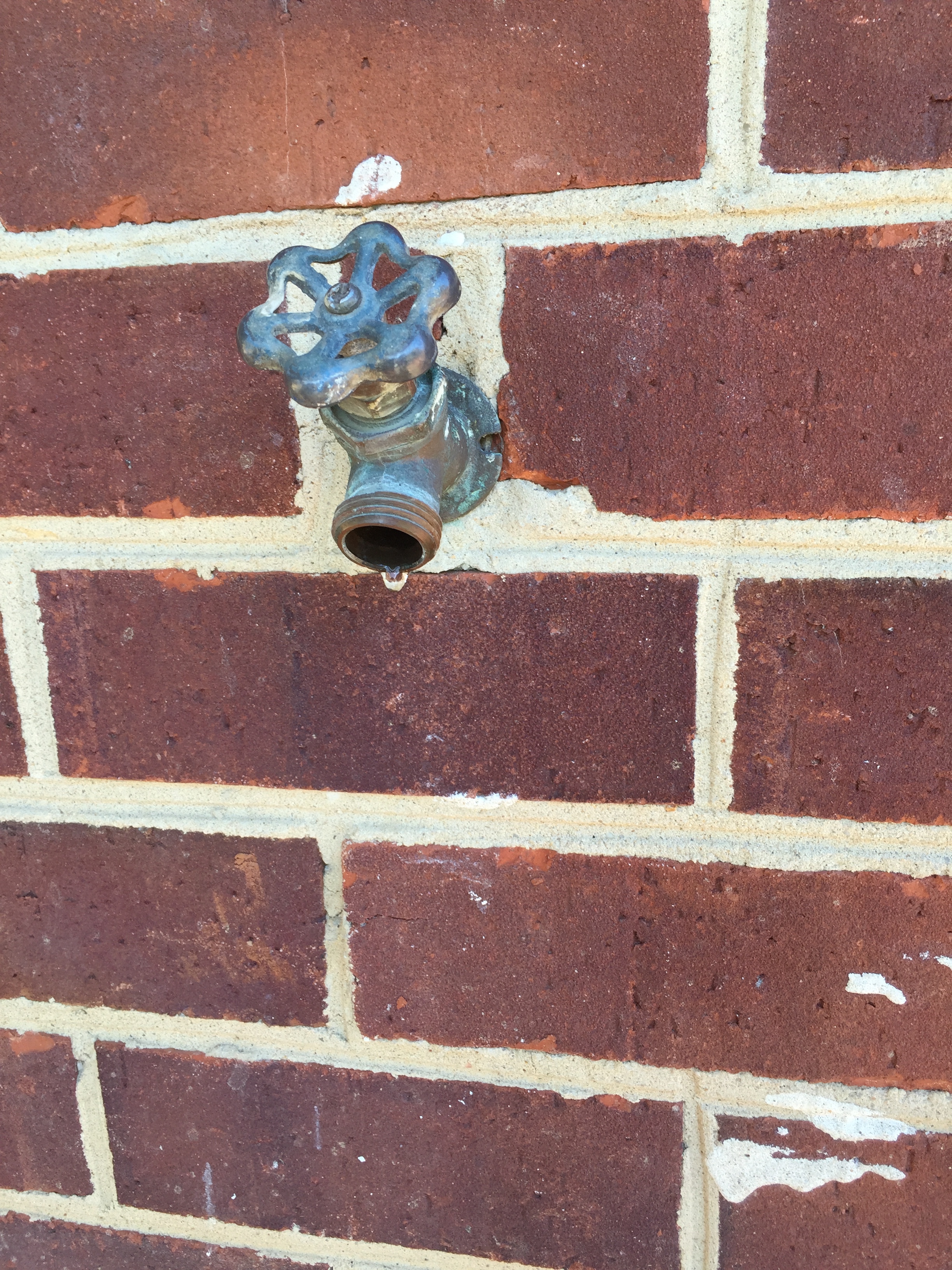
With faucets, you have some new options. Simple extensions can be added which allow the control location to be changed to a more convenient and less visible location quite easily. Just be sure to drain them before frost in the fall.

Please let me know of any creative ideas you have on any of these issues, I would love to share them!
Perfect Time for a Garden Critique

With the Fourth of July here, most plants in the garden have filled out to their maximum for the year. This makes it the perfect time to take a critical look at their placement.

Lillies under a peartree in my back garden. These require careful division each year because they are exceptionally fast growing.

You can easily see which plants will benefit from a move in the fall. Even though I try to respect the garden tags which show mature sizes of the plants when I buy them, they are not always accurate. It is also the perfect time to look closely at the perennials to see which ones are candidates for being split. Long ago I heard a phrase that is very accurate about perennials: The first year they sleep, the second they creep, and the third year they leap. If you follow that rule, every third year or so you would split or divide them. I find it helps to keep a notebook on this, because as your garden grows, there can be a lot to remember! In my garden I do the plant moving between mid-October and mid-November, but in your region, just pick a time after they are past their peak for the year, but still have time for the roots to establish before the full effects of winter are upon them.

That brings up another topic — the effects of winter. We had a couple of severe winters recently, and with them a lot of snow damage. I try to remove all the broken branches, but then leave them alone for a year to see if they will recover, before reshaping them back to a natural point. By doing this you can see where the plant can redirect its existing branches, and if it can fill in the holes left by the damage. If it isn’t going to be able to heal, by that point, I like to replace it with another.

In this garden I will be adding 3 Crepe Myrtle trees to help with the intense summer exposure.

I also like to evaluate how the plants are doing with regard to the sun exposure that they get.  Even if a plant is one that can tolerate full sun, it may need some respite from the intense afternoon sun, or moved to a location that gets a half-day worth of sun.

It is also a good time to trim up the lowest tree branches. If you keep them limbed up to six or seven feet it makes it much easier to mow and to stand under them.

Not that I need any more reasons to go out and enjoy my garden, but it is really gratifying to walk the entire yard and check out how things have grown. It is an important step to critique and edit, and I love planning towards the next year and beyond. Time to go enjoy the fruits of your labor, and don’t forget your notebook!

Revisiting Your Old Home

My family home as it was in the past.

I’m originally from the west coast, but my family moved to the Washington, D.C. suburbs in 1969. Since then I have lived in 8 homes in Alexandria, Virginia. It’s true, I always heard you should never go back to see your old house, yet I am drawn to my childhood home every once in while.

I just went by the house my family first moved to in Alexandria. My parents lived there for 25 years, before retiring from the area. It was always tended with the utmost care when my family lived there, and the yard was filled with special plants and trees commemorating certain events. There were two apple trees we planted when our great aunts visited from California, my mother’s favorite little peach tree in the front side garden, a pretty row of ilex and azalea bushes grew in front of the front porch, a weeping cherry tree we planted to mark our family pet cemetery area. It was kind of a living tribute to our family’s history.

It’s now been 17 years since they moved, and the yard is an overgrown jumble of vines, weeds and untrimmed bushes. I guess I’ll never learn not to go back, but when I do next time, maybe I will put a picture in their mailbox of what the house used to look like all those years ago. Who knows, maybe they will take heart and bring it back to its once beautiful appearance. At least that’s what I’ll hope, and in my mind’s eye it will always look like it did back then.

Adding Color to Your Garden

With so many choices and styles out there it is hard to know where to begin. I would suggest considering the following things to help with your choice. The color of your house and trim, style of architecture, your favorite colors, whether you want annuals, perennials, or flowering shrubs, and the longevity of your various choices.

If you have a colonial style house you can go with a more formal and symmetrical choice; Arts and Crafts Style a more cottagey, random mix would complement; Contemporary would be blocks of color, simple in design; Tudor style a more full blown English garden, etc. Using clues from your style of architecture will greatly enhance your home’s curb appeal.

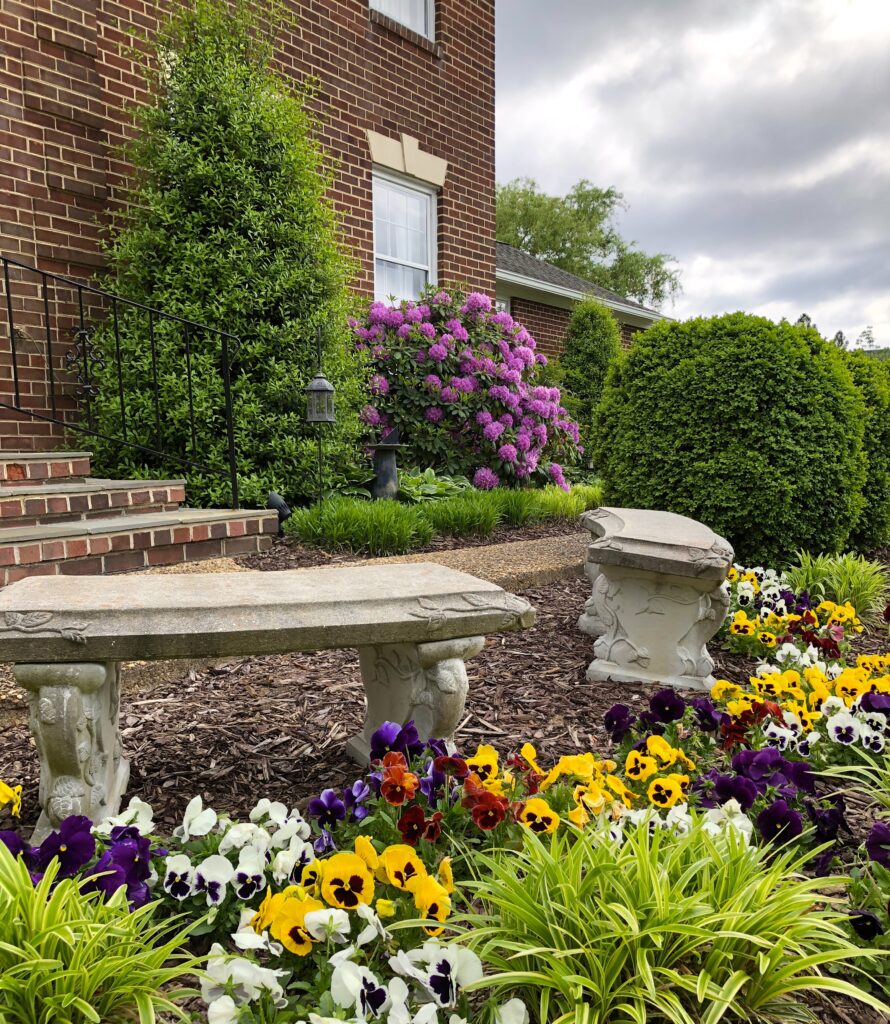
A contrasting garden with yellow and purple accents.

As far as color is concerned, aside from the obvious choice of choosing a color that is nice with your exterior field and trim house colors, make sure to pick colors that you love, after all it will welcome you home each time you return. It’s amazing  how  different your house can look with monochromatic, complementary or contrasting color schemes. I like to play with my color schemes, and alternate these from year to year for a change.

This year in my front garden I have a monochromatic scheme with all pink annuals. I like to use annuals in front so that I can easily change schemes from season to season. You can provide accents by using several types of flowers in the same color, also providing texture as well, or varying shades of the same color which can provide depth. In my back garden it is all about contrasting colors — yellows, purples, oranges come and go with perennials blooming throughout the spring, summer and fall.

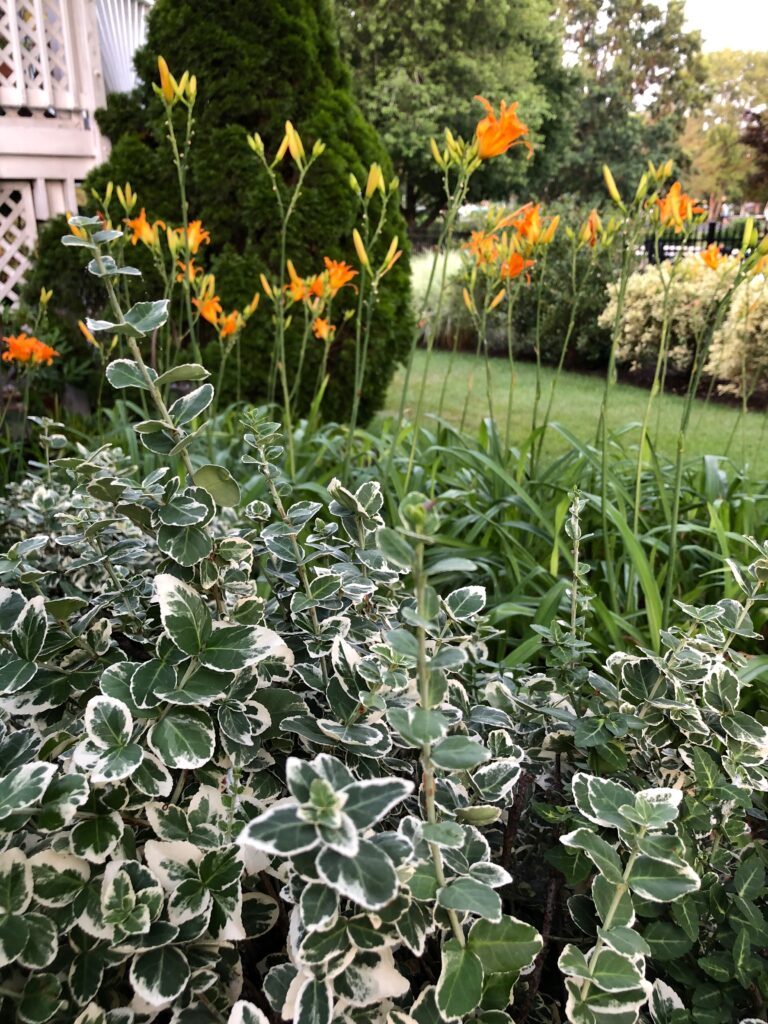
A mix of foliage creates a backdrop with texture.

I like to treat the greenery with the same approach, and layer in various shades of green, textures, variegated leaves, heights, etc. It helps to show off the beauty of each when you highlight the differences between them and, it creates a lot of interest to the background.

My last tip for today is to add a little bit of yellow to every garden. Yellow makes every color look brighter. Even if it is just the yellow eye of a daisy, just a touch is all it takes. I learned that tip long ago from a fellow shopper at a garden center, and consider it one of the best tips ever; it makes a huge difference.

Bringing the outdoors in – Fresh and Dried Arrangements

Using a single type of flower in mass makes a timeless arrangement

As some of you may know, I was the sole proprietor of a floral crafts business. It was during the heyday of English & French Country design, and everything revolved around bountiful floral creations. Although today the trend is more towards the tropical end of the spectrum, my heart still lies with the roses, boxwood, and other botanicals which I am so fond of working with. As the summer moves forward, many flowers in the garden are getting to the perfect stage to be dried, and I would like to share a few insider tips.

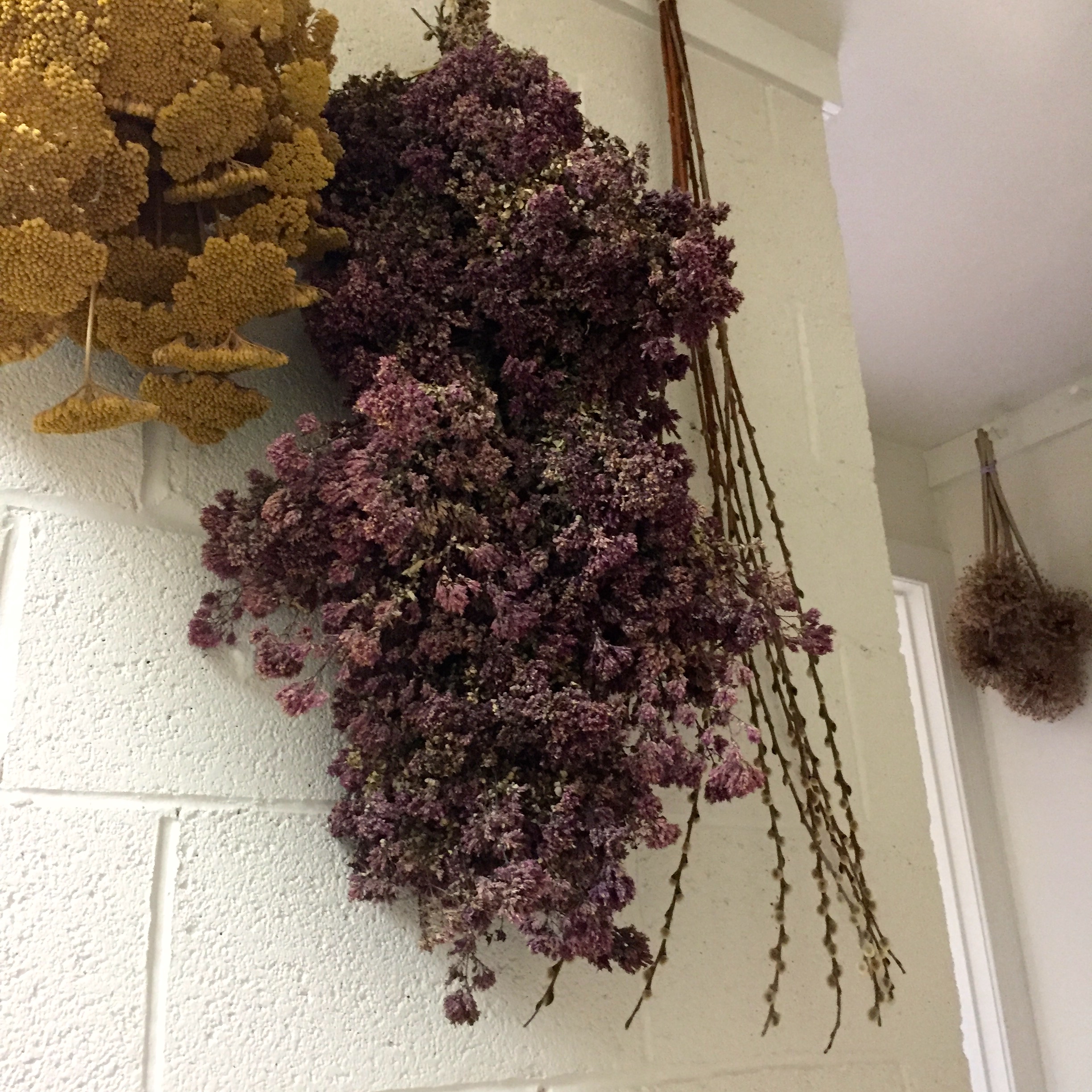
Here are some ways to dry flowers without having them end up looking dried. Many think it’s difficult to achieve, but it’s actually quite easy. One of the best ways is simply to lay them flat on an old screen in a single layer. Another way is to hang them in a small bundle. Both ways should be in a room with good air circulation (sometimes using an oscillating fan helps), and keeping them out of direct sun.

Small bundles of roses hang to dry in my workshop.

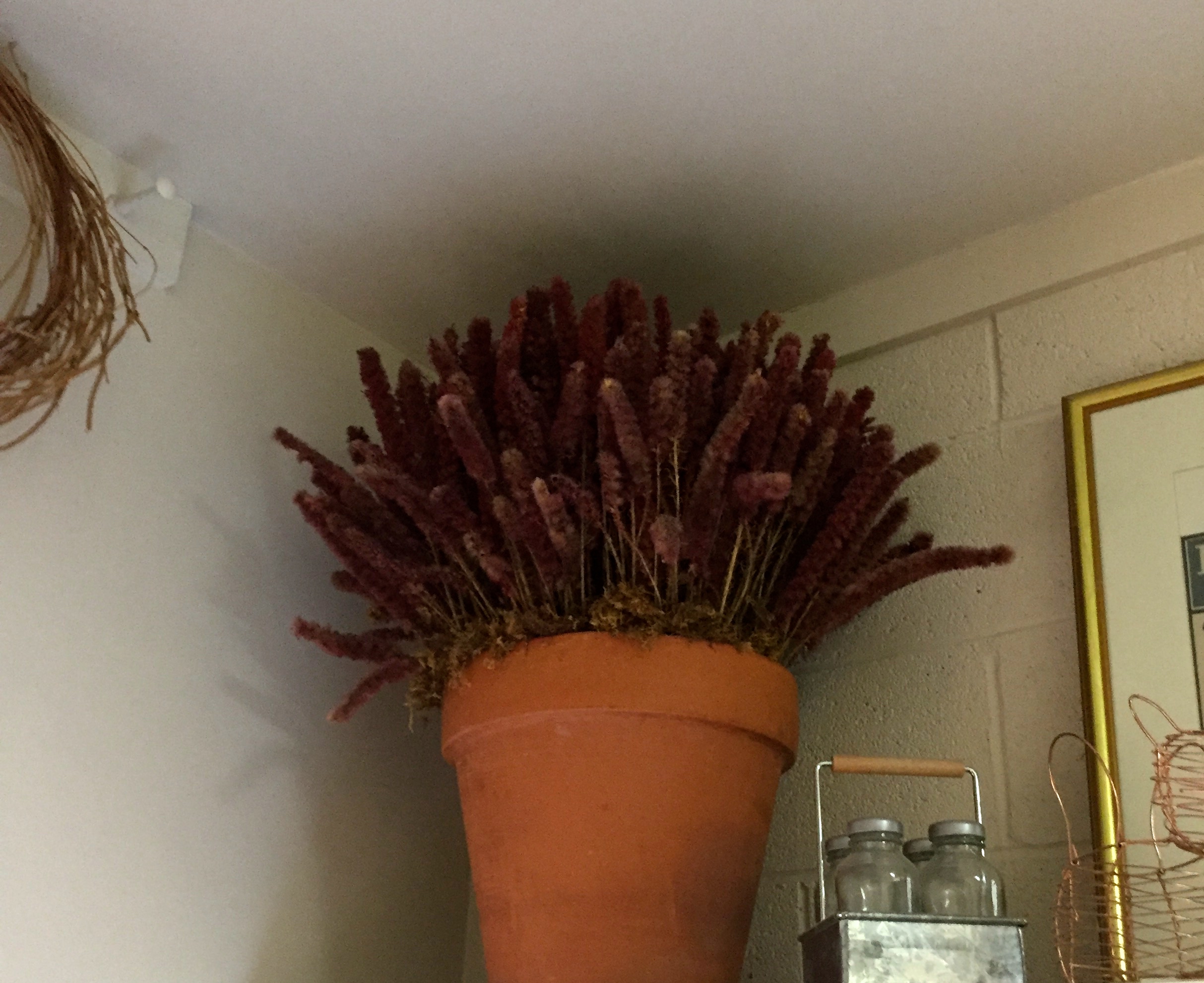
Most require only a couple of weeks to fully dry. Some of my favorites for drying are roses, hydrangea, amaranths, safflower, larkspur, yarrow, cockscomb, and liatris. There are many that dry exceptionally well and retain their colors for a long time. Botanicals that dry well include boxwood, lamb’s ears, artemesia, lemon leaves, branches like curly willow, eucalyptus and of course moss of all kinds.

Another method of preserving is with glycerine. This requires submersing the botanical in a tub of glycerine and water, and can be a bit messy, but the end result is a very pliable stem. This can also leave a shiny layer on the foliage, so it’s best used on branches, like eucalyptus or boxwood, not flowers.

A current, and highly popular style of arranging is using a single type of fresh or dried flower in large masses, it really plays up the beauty of the specific type of flower used, giving it importance.

Gerbera Daisy stems are supported by Apples in this arrangement.

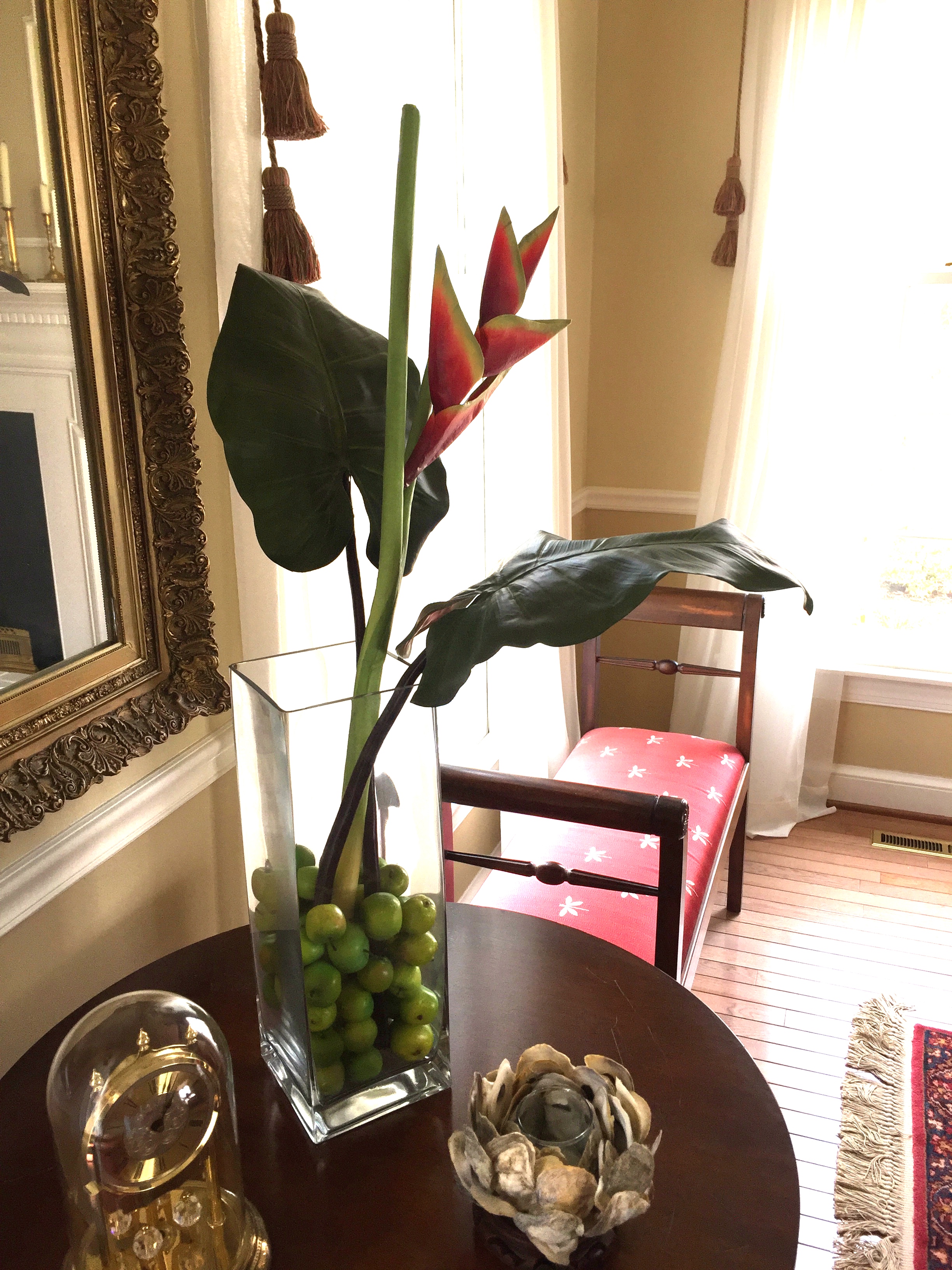
It is a style of arrangement anyone from beginner to expert florist can create and be proud of, and is the most requested design of florists nationally these days. Also a popular trend is filling the vase with fruit or nuts, or wrapping the stems with a large leaf. This can also serve to hold the stems of the flowers or branches in place.

I hope I have given a second chance to some beautiful flowers by way of drying and enjoying them inside in the months ahead. In my house I love having reminders of how my garden bloomed, and just bringing the outdoors in to enjoy again and again.

My Favorite Tools

I must admit, I love gadgets, but my favorite tools are all simple. They don’t require plugging in, or filling with gas. They are all hand tools.

Favorite hand tools - round shovel, spading fork, long shovel, scalloped edger, steel rake, pick.


I love my shark shovel, round-nosed and sharp; it will cut through the soil easily. My scalloped edger, also great, makes a perfect trench around the garden, not too deep, and with a perfect edge. Of course, the pick and spading fork for starting a garden. A long nosed shovel for transplanting, and a steel rake for scratching up the mulch. At the end of the day, I just hose them clean and let them dry in the sun. They will last a long time. None of mine were expensive, and all are more than a decade old (some three decades), but they are the workhorses in my garden.

I am not too fond of electric hedge trimmers, and I’m always sad when I see a mangled bush or hedge after it has been torn up by one. They rip the leaves in half, leaving a browned mess of a plant behind. I prefer to clip with bypass pruners. They leave a clean cut and can actually improve the health of a plant, instead of leaving it prone to disease, like a hedge trimmer or anvil-style shear can do. I am also not a big fan of blowers. It is like putting your yard through a hurricane. They are fine for walkways, but please don’t use them around garden edges or in the garden beds around bushes, where they can cause more harm than good.

I wouldn’t last too long without work gloves, or a foam kneeling pad. The gloves can save you from lots of blisters and pain, not to mention close brushes with poison ivy, and the kneeling pad from lots of joint pain, and even muddy clothes.

So there you have it – my favorite tools. Which are your favorites?

Friends in the Garden – Past and Present

For me gardening is a time to connect with nature, not just the plants I tend, but spending time with family and my furry and winged friends, both past and present.

This year we have 12 nests (that I know of), in the trees, vines and bushes in the yard. We have already had more than one round of hatchlings in several of them. Whenever we sit on our deck we can hear the baby birds squawking for more worms. I try to keep the bird baths full of fresh water, especially in the heat that we have had. Robins, finches and doves mostly, and they seem to come back to the same spots year after year.

Stomper


I also have a feral cat “Stomper”, who took up residence in the yard a couple of years ago. I share my potting bench with him, it doubles as his house, and he has a heated bed in there in the winter. When I am gardening, he is usually sitting just a few feet away watching. He is quite shy, and still won’t let me pet him, but will come close to kiss my hand occasionally. I hope that I will eventually earn his trust, after all, I do grow some pretty awesome catnip!

Buddy


But, the ones I miss most in the garden are my wonderful collie, Buddy, whose birthday falls this week, and who loved nothing more than sitting under the trees keeping a watchful eye on his family.

Also, my beautiful kitties, Mischief and Stinky, who loved to birdwatch from the roof of the garden shed my father built for me. There are so many memories to reflect on when out in the garden, another reason I treasure my time there.

Mischief (on top) and Stinky


Soon the butterflies will take over in the side garden looking for nectar in the buddleia bushes, and at night the first fireflies have already appeared, both of which remind me of my grandfather. Who is in your garden?

When Spring becomes Summer

Here in the Northern Virginia area we moved from Spring into Summer with a vengeance this year. It went from wet and mild, to dry and hot! More than 100 degrees today, and last week as well.

That means it is time to clean up the remains of Spring — deadheading iris, azaleas, rhododendron, clearing out old bulb foliage which is now brown, and I like to clean up the lilly foliage as well before it starts to bloom.

When the temperature goes back down a little, I will also start some pruning. The boxwoods have growing quite huge this year. Each spring I prune about 1/4 of the branches out. This keeps a beautiful shape, and encourages lots of growth throughout the plant. The same with the azaleas and the hollies. The rhododendrons are a little different. I break off the flower when it’s done, and trim back the new growth as needed. They shed their inner leaves, as well as the euonymus and pyracantha, so now that that has happened, it is best to remove all the fallen debris.

Shell mulch discourages squirrels from digging in pots.


I also like to scratch up the mulch a bit so that it does not become too hard. This helps water to percolate through, as well as help to hold it in. I also follow that up with another application of weed preventer (every 3 months). While I’m on the mulch subject I want to share a tip: If you have trouble with squirrels digging in your pots, like I do, fill them in with shells. I have been doing this for years. They are too heavy for the squirrels to scratch out, so they leave them alone. It also looks beautiful and is a great mulch!

Another tip I have on days like this one is to use a market umbrella in a sturdy stand that you can move around to wherever you are working. I’ve even been known to set up the sprinkler to keep cool while weeding, and of course, don’t forget the lemonade!

Despite our best efforts…

Sometimes things beyond our control can mess up even the best made plans. I have had a string of “disasters” myself.

Tornado damage- tree torn in half.


Over the last few years my yard has been attacked by a small tornado, several rounds of utility digs (one in which they dug 13 grave-sized pits), a cherry tree being killed by the same disease that caused the Irish potato famine, and most recently, my once beautiful purple-leaf maple succumbing to a three-foot gash on the trunk.

The maple tree in better days.


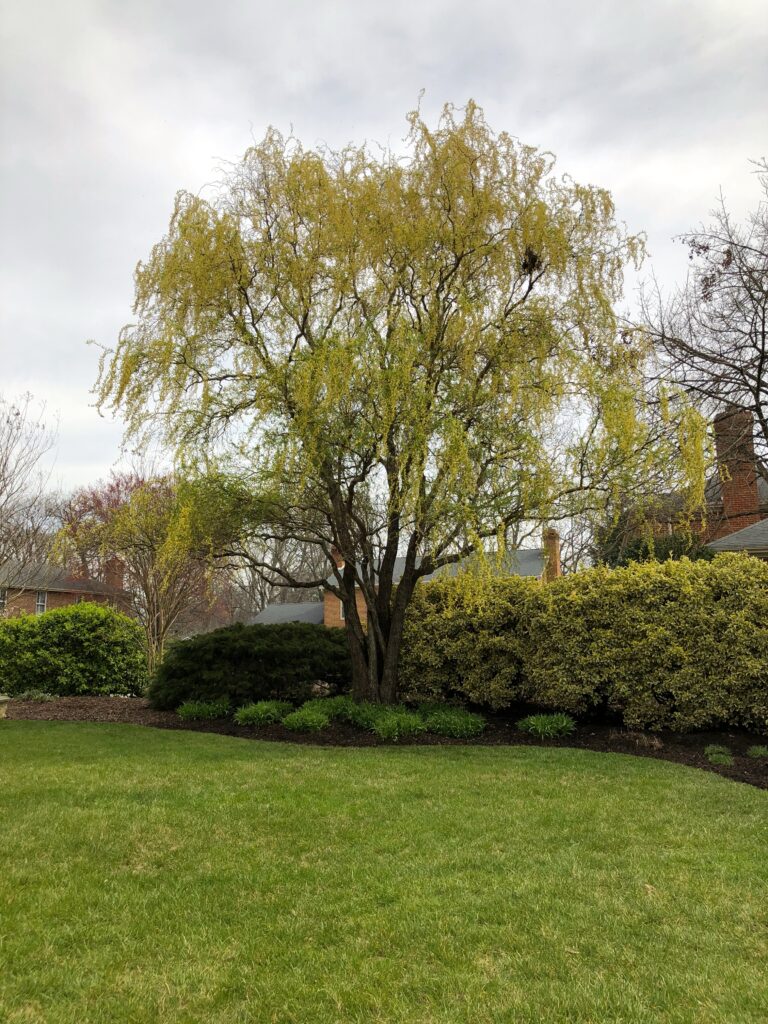
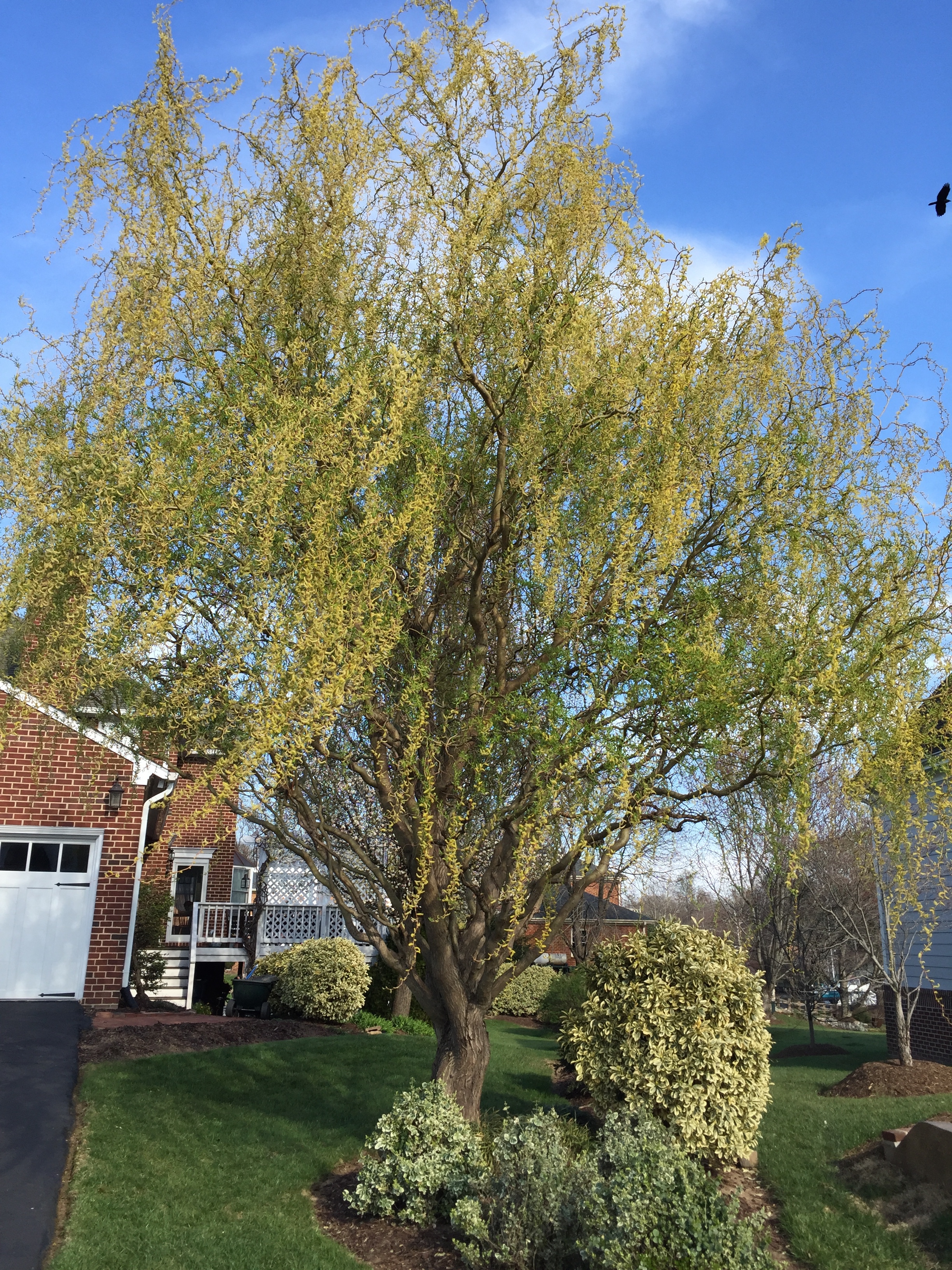
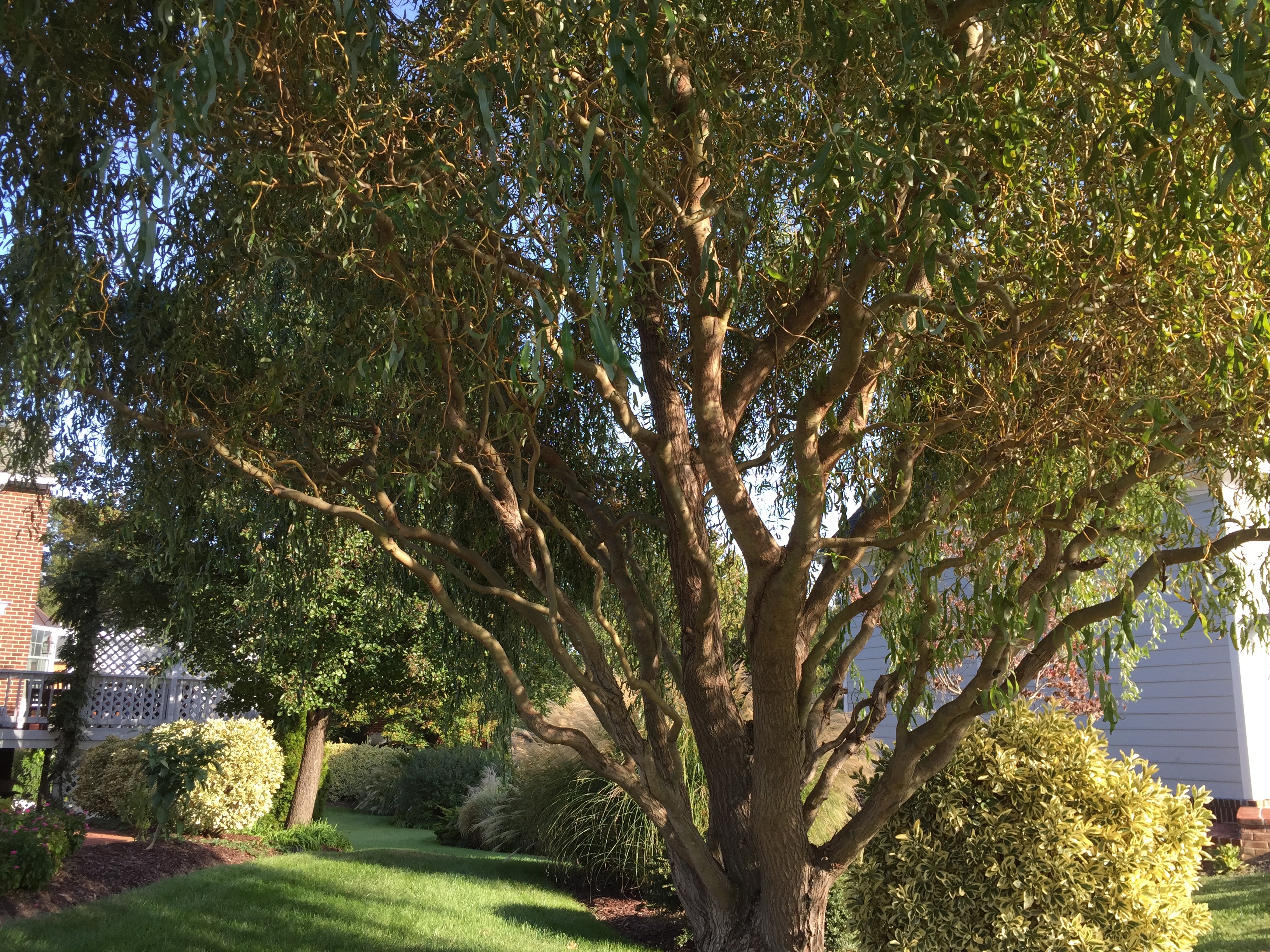
When the cherry tree died, I sent a branch to our local Horticulture Extension Service and the lab technician said something to me that is very worthy of sharing. She said, “Try not to think of the tree dying as a failure, but rather as an opportunity to try something new.” So when I look out at my yard today and see the corkscrew willow that replaced the cherry, I think how right she was. It is so tall and beautiful now, and so I will tell myself that, as the maple tree comes down, there will be a beautiful group of crepe myrtle trees to hold its place.

The Purple Maple today.


I guess after so many years of nurturing the trees along, they really do become my garden friends, or so I think of them that way. So, I leave you with the thought of trying something new, where you might never have thought you would, if circumstances had not changed. Sometimes a fresh change can give you a whole new perspective.

Stay tuned….

Herb Gardens

A couple of decades ago I was so inspired while looking at a cookbook that I set out to create my own herb garden. I lived in a tiny 200 year old house where space was at a premium. It didn’t hold me back, though. I started my herb garden in pots on a baker’s rack, next to my kitchen door. I tried many new herbs in different ways. I was hooked! Herbs quickly became my favorite thing to grow.

Whenever possible, use brick for paths. They radiate heat back into the planting areas.


Through the years, at each new house, I have always planted an herb garden. Here in the Northern Virginia area we are known to have awful soil and intensely hot summers, usually accompanied by a drought. Herbs love this, so many are very well-suited to our region.

Of all my gardens – ever – without a doubt my favorite was my herb garden at my last house. I was lucky to have extra bricks left over from when the house was built, and a sloping, west-facing area, not very suitable to growing much of anything but herbs. Laying out the design, I made sure to leave plenty of walk paths, so that each section could be accessed easily. The overall size was about 25′ x 20′, and it had 8 planting beds. After preparing all the soil, I planted at least 20 varieties of herbs and kept two beds for starting perennials and vegetables.

Although many of the veggies were eaten by wildlife, they usually left the herbs alone. It was a fantastic place to be. The scent of the herbs on a hot afternoon after a rain was intoxicating. It was also one of the most beautiful areas in the entire yard. Always one that drew notice, as well as being totally practical!

My Williamsburg Style Herb Garden


There are many perennial herbs that provide the basis for my garden – oregano, chives, sage, rosemary, lemon balm, and mint are a few, and I always plant basil, cilantro and catnip each year. Which herbs will you have in your garden?

A Welcoming Entrance – Indoors and Out


A gracious welcome to your house and garden is always appreciated. It sets the mood for all who enter. I like to think of my front entrance plants and flowers like “house jewelry”. It’s important to me to mark the seasons with fresh plantings of flowers and greenery — not just at Christmas and summer, but year round. Even though it’s sometimes hard to part with a flower or a pumpkin that is still O.K., I like to give each season its due with a clean slate. It creates a focal point to the front yard, and the front entrance area is most worthy of your care and attention as far as curb appeal is concerned.

Seasonal color is always welcoming


The front entrance isn’t the only place in the yard worthy of this treatment. Look at other views from windows and doors to see what you would like to highlight.

I like to frame a view of my hammock in the backyard by looking through a wisteria-draped arbor. It gives me peace every time I look out, even if I don’t have time to go out and enjoy at that time. A sort of momentary vacation.

Framing a view


Framing a view is a great way of giving greater importance to an object of art, or other feature you would like to be noticed. Another way is by funneling your attention between two taller plants or trees. Even narrowing a pathway, then widening it again, can visually create a new entrance. There are many ways to draw your eyes into a destination. Using graduating color is another way to discretely frame an object. The eye is always drawn to the boldest color first.

With so many beautiful “jewels” out there I hope you find just the right ones to make your entrance sparkle!

Gardener’s Gold – Plant Sharing

When I first moved to my house the yard was in a derelict condition. What few plants were there had all grown into each other, having been planted 19 years before. New mulch had been thrown over knee-high weeds. Nothing had been trimmed correctly. Many of the plants were dead, and the ones that remained were diseased and had grown one-sided in their struggle for sun.

I started by clearing out the dead plants, transplanting, and then pruning the others. This quickly started looking better, and attracting attention from long-time neighbors. Many of the original owners still lived here, and were so glad to see that someone was turning the place around. I started receiving gifts of plants from my gardening neighbors — 3 kinds of iris, lillies, lamb’s ear, all kinds of wonderful cuttings. Fabulous gifts!

This tree and all plants in this garden were started in the last 10 years.


I had also brought with me from my last house small divisions of my perennials and herbs. Just one of everything to start with at that point. When I look at my garden today, it amazes me to see how bountiful so many of these gifts have become. A true Gardener’s gold! It has given me the opportunity to share all of these with other friends and new neighbors, and spread the wealth and beauty. To a gardener, there is no greater gift.

So many plants are easy to divide or start from cuttings. You can really fill a yard quickly and have ample surplus to share. Some of my very favorites are: Corkscrew willow (seen in photo), sedum, liriope, yarrow, lillies, coreopsis and many ornamental grasses. These are all tried and true in my own yard; what about yours?

Garden Rooms

I love to create garden rooms.

In my current yard I do not have much shade, so I hung a porch swing under the deck. As I sat there enjoying it, I realized what a great space it could be, and set out to do just that.

My favorite space


It started out as a mulched area, but as I was adding lots of garden around the yard, I kept digging up rocks – lots of rocks! So I started a cobblestone “floor”, bordered by some spare bricks under my swing. This grew to be quite expansive, and actually is quite attractive. Never underestimate what you can do with the unexpected when you put your mind to something!

I had been using the under-deck area for new plants that I had been starting, and I still do; it is ever changing, which is fun. My potting bench and a garden hutch are there, too. All in all, I call it my “office,” although, gardening is never work to me.

This spring it was filled with flowers — Lilly of the Valley, pansies, astilbe, azalea and iris. It is just a wonderful place to sit with a tall glass of Iced tea, and look at the garden, and think about what is next.

I hope this will inspire you to make a garden room of your own. I like to think of mine as my own slice of heaven.

Choosing Plants

Now that we have created the perfect bed for our plants, we can choose what to put in it. Try to create a plan that is good for year-round beauty.

Using a background of evergreens in a cold winter environment will keep the garden interesting looking even on the coldest of winter days. I try to choose plants that I can use in holiday decorating. Some of my favorites are holly, boxwood, juniper, euonymus and rhododendron.

Example of foundation evergreens

These are easily shaped, and provide a nice backdrop. In front of these you can layer in shorter bushes or, depending on your desires, perennials and ground cover.

Emphasize entrances, walkways, and corners with taller plants. This draws your attention, and creates a focal point. It is important when planting to not plant too closely to the house. If you plant so that you keep a foot between the house and bushes, your house will be much easier to maintain, and bushes will stay much healthier. When planted too close they can become one sided with all the foliage facing out, while bare on the back. I also would encourage shorter plants under windows, for safety as well as preserving your views.

Repeat your plant material throughout your yard to keep a flow. I would also encourage planting in multiples if your yard is large. By doing this it won’t look cluttered or hodgepodge. I like to plant in drifts, or waves, with each drift comprised of the same plant, overlapping the corners of the drifts. This carries your eye through the garden and draws you in.

Example of merging drifts and layering heights


When planting in drifts, try to follow the lay of the land. You can accentuate changes in terrain, creating lots of visual impact. Using plants with varying textures will really highlight the various drifts.

Lastly, using ground cover to fill in as a border, or as erosion control on a hillside, can really complete the garden. With so many choices out there, have fun!

Garden creation

For me, this is where the fun begins.

I like to layout my garden shape by using a hose or a rope to define the outer edge. Try to incorporate large sweeping curves whenever possible, this adds grace and visual interest. Follow by cutting a smooth edge with a scalloped edger.

Curved edges create visual interest


At this point, if you have grass that needs removal this is the time to do that. I prefer to set the grass to the side for use later.

The double digging method of prep is my favorite. I start by using a pick to loosen the soil (in my area it is as hard as concrete, and this is the easiest method). If you have big strong kids, this is the perfect job for them. Then start digging — go down one shovel-full, set aside, dig down one more shovel-full, set aside. This is a  huge amount of work, but will pay off with a deep, wonderful bed.

Once you have dug out the bed completely, you can start reloading it. First, by putting the grass layer back in, but, put it in upside down. The grass will break down into nutrients for the garden. Next, layer in the soil you removed, adding any amendments you need, breaking up the soil into a smooth texture as you go. In my location, I always add compost, grass clippings and sand, but in your area this may be different. Let the garden rest for a couple of days, then with a spading fork, give it one more stir. At this point you have the most luxurious garden bed you could ever ask for.  Next up: plants!

Divide and Conquer – Segmenting your garden beds

Now that you have thought through an overall plan for your yard, it’s time to start planning the individual garden beds. In my own garden I designate a name to each bed by location (for example: front left, front right, side yard, etc.), another way would be to number them. I try to divide them into sections that can easily be maintained in less than 15 minutes on a normal schedule. It depends on how much time you personally have to spend in your yard at one time. I find that if I work my way around the garden in this manner, I can know exactly where to stop and start back up.

Prioritizing maintenance from most to least visible, is another way of making sure that the garden looks the way you want it to. For instance, I will do a quick walk through of the previously worked on sections, before starting in on another. I find this is the easiest way to keep a mental note on what to work on next time I get to that section. I always start with the front door — that’s just me — but I always like it to be as nice as I can make it.

A lot of people ask about how deep and wide to make a garden bed. For this, I think a good rule of thumb is to look at the height of your house. In general your ideal depth should be 1/3 to 1/2 the overall height. My house is approx. 30 ft. high, so my front bed is 15 ft. deep. As well the width should span to 1/3 to 1/2 the overall height beyond the edge of the house. This keeps the proportions right. You always want the surrounding beds to visually anchor the house to the land.

Now that you know my formula for sizing and segmenting beds into manageable sections, I hope it will help you to divide and conquer your own garden.

A close look – Getting to know your garden

For my first blog I am starting at the beginning.

It’s important to know your terrain. All the hills and valleys, where it’s flat, etc. Walk your entire yard, and look at your property from every window, walkway and driveway, even from across the street. All of these areas will become important in figuring out your focal points. Once that is done you can start with your plan.

There are many solutions to terrain imperfections. For instance, you might consider creating some elevation to a flat yard by adding a berm, or terracing a steep yard to maximize your usability.

Another consideration is where to steer your rain water, and downspouts.  There are many good options, and more being thought up all the time. (Dry wells, rain barrels, rain bladders, rain gardens, ponds, etc.)

This is also the time to decide where you want your walkways and drives to be. Consider installing them in the sun if you live where it’s snowy, and in the shade if you live where it’s hot. Also, designated areas for relaxing (decks, patios), and recreation (pool, open space, etc.).

Knowing your yard is your most important step in planning, and worth a lot of thought. It can save you countless hours of redoing in the future, not to mention expense and effort. I will discuss each of these topics, and many more, in future blogs at greater length, so stay tuned.

I promise to keep my blogs short and meaty, so that’s my food for thought today. Enjoy!